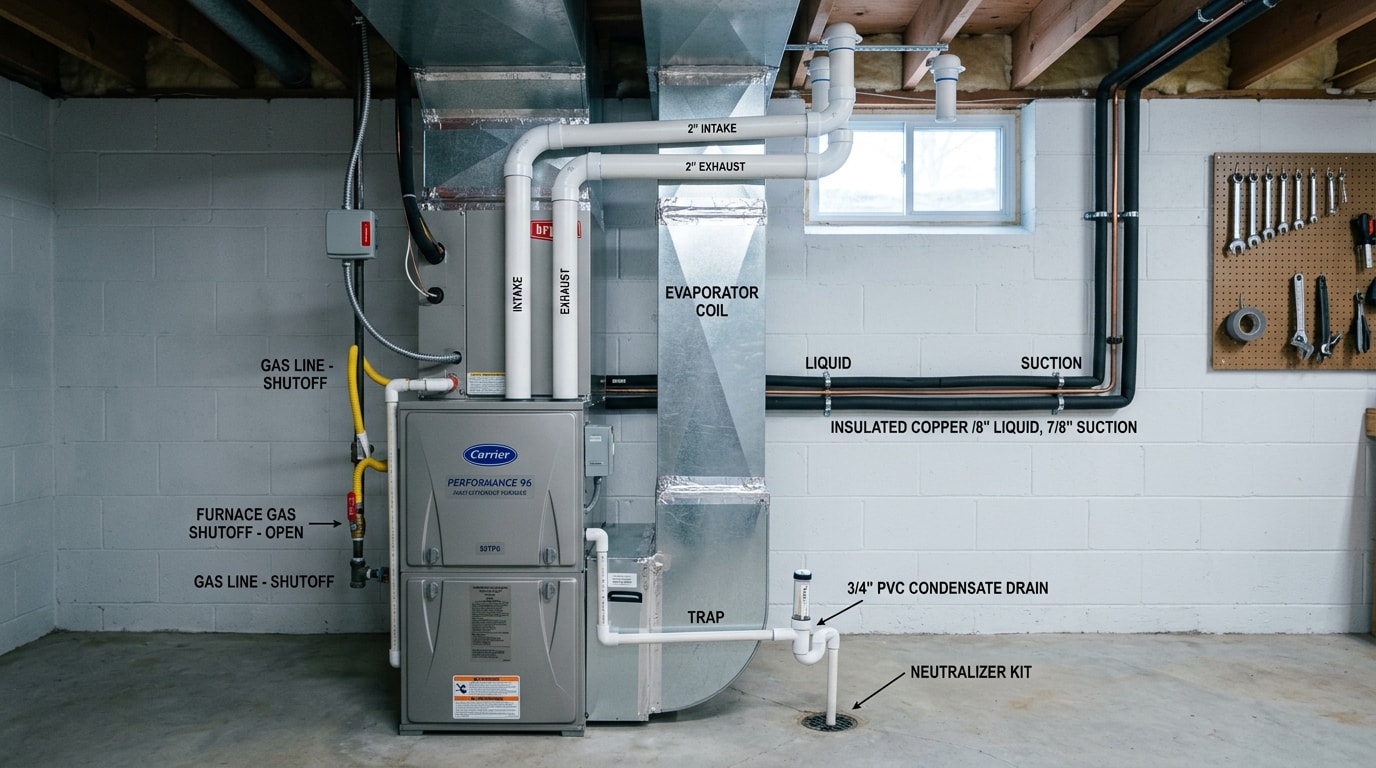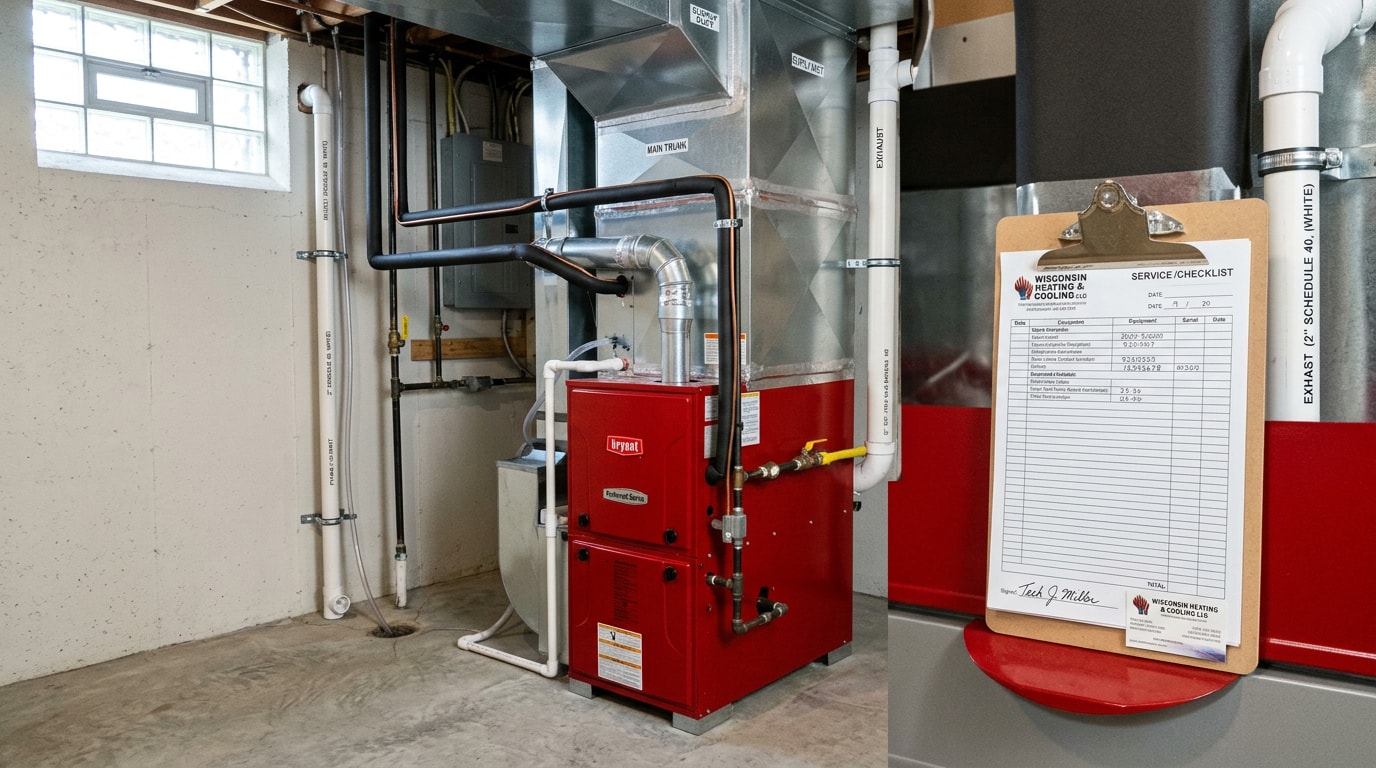
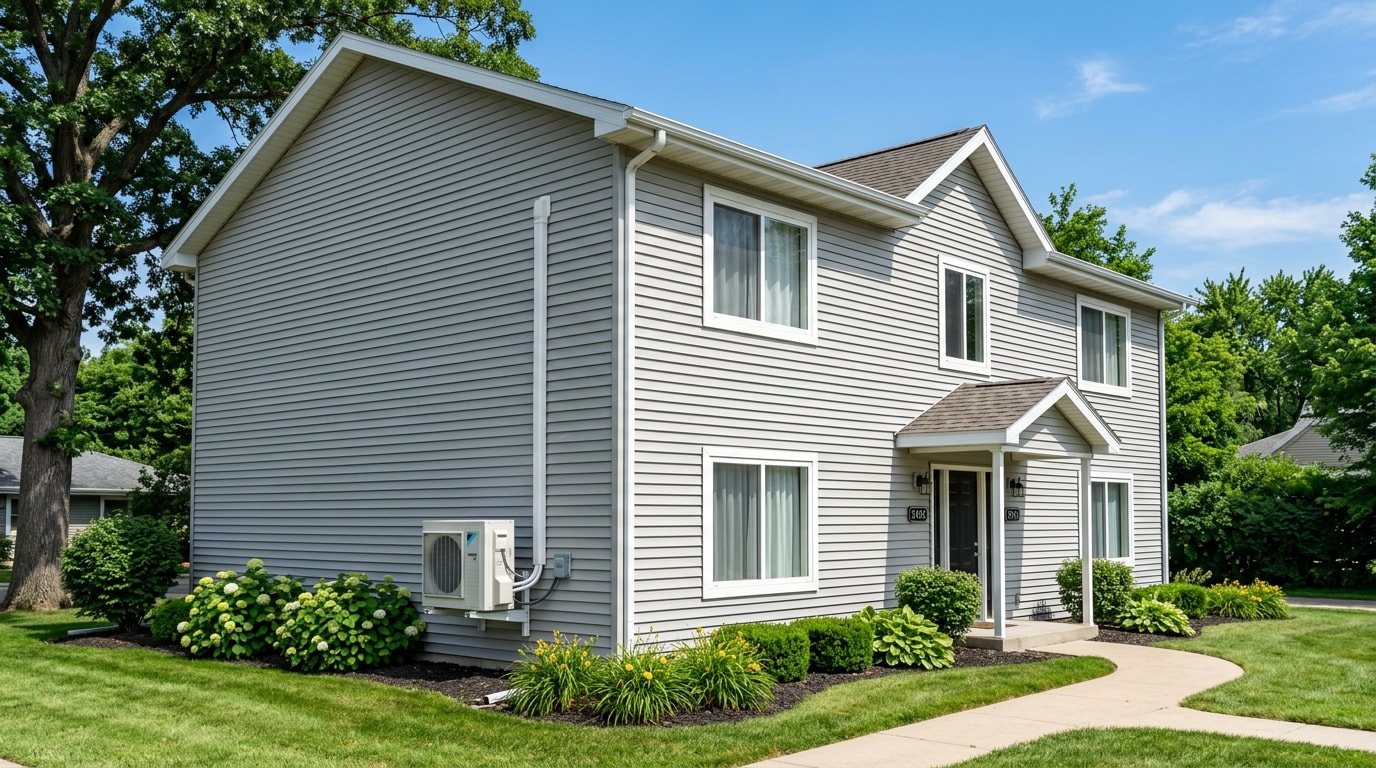
An apartment air conditioner in Holcombe, WI has to work around lease rules, a small footprint, and a tight budget, not just raw BTUs. This guide breaks down every cooling option renters and condo owners actually have, what each one costs installed, and how to vet the contractor who installs it.
Apartment & Condo Air Conditioner Options Compared
Most Holcombe apartments and condos don't have central ductwork, so the real choice is between four portable-to-permanent options. Each one trades off upfront cost, noise, and how much say your landlord or HOA gets.
| Option | Typical Cost | Noise | Lease/Landlord Notes | Best Room Size |
|---|---|---|---|---|
| Window AC | $150-$450 | Moderate | Often allowed with notice; check the lease | 150-350 sq ft |
| Portable AC | $300-$600 | Moderate-loud | Easiest for renters; no permanent window kit | 150-400 sq ft |
| Through-wall AC | $400-$900 | Low-moderate | Usually needs landlord sign-off and pro install | 250-450 sq ft |
| Ductless mini-split | $2,000-$5,500 | Very low | Best suited to owners/HOA-approved condos | Whole apartment |
In older Holcombe duplexes and condo conversions, we routinely find load-bearing or masonry walls that rule out a through-wall sleeve entirely, which pushes renters toward a window unit or a mini-split mounted on an exterior stud wall instead. That's a detail a tape measure won't catch, but a site visit will.
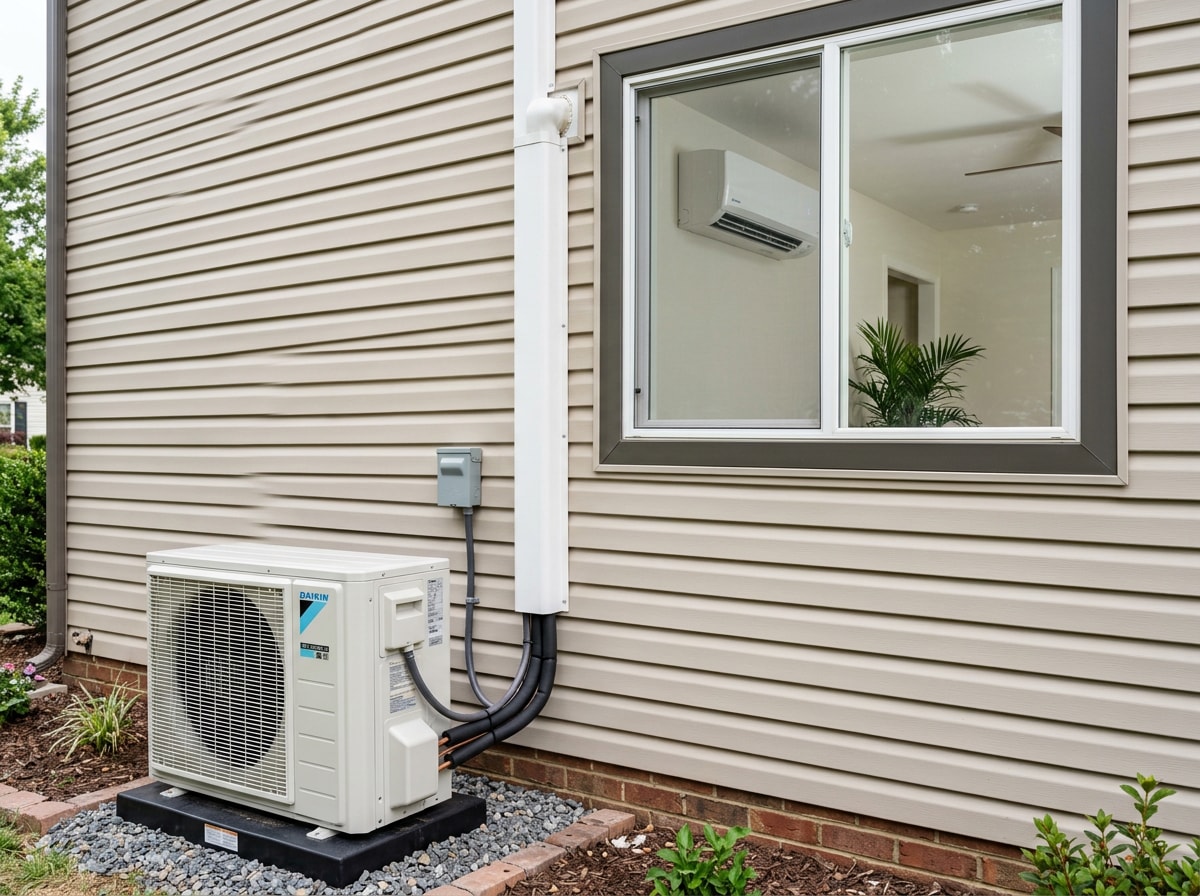
A wall-mounted mini-split or heat pump saves energy and runs quieter than an older window unit, and the outdoor compressor can often mount on an exterior wall without touching the building's facade. One indoor unit usually handles both cooling and dehumidifying in a small apartment, so an aging or poorly maintained system can struggle even when a newer unit of the same size would keep up easily.
How to Size an Apartment AC Correctly
Sizing starts with square footage, not guesswork. The most energy efficient air conditioner is sized to the square footage of the space to be cooled, and getting the right size means getting the comfort and the energy efficiency right.
ENERGY STAR's published chart gives a starting capacity by room size, for example around 6,000 BTU/hr for a 150-250 sq ft room and up to 18,000 BTU/hr for 700-1,000 sq ft. From there, adjust for conditions in the room:
If the room is heavily shaded, reduce capacity by 10 percent.
If the room is very sunny, increase capacity by 10 percent.
If more than two people regularly occupy the room, add 600 Btu/Hr for each additional person.
If the unit will be used in a kitchen, increase capacity by 4,000 Btu/Hr.
Full details, including built-in and casement-window models, are in ENERGY STAR's room air conditioner guidance.
The Professional Installation Process, Step by Step
A proper AC installation isn't just mounting a box in a window. Installers typically work through the same sequence regardless of unit type:
- Walk the room to check insulation, window placement, and sun exposure before recommending a size.
- Confirm electrical capacity, since larger units need a dedicated circuit.
- Mount the outdoor unit (mini-split) or set the indoor unit in place (window, portable, through-wall).
- Route refrigerant lines and electrical connections for split systems, then pressure-test for leaks.
- Start the system and verify temperature drop, airflow, and drainage before calling the job done.
Skipping the first step is the single most common mistake we see. An undersized unit runs constantly and never quite cools the room; an oversized one cools fast but leaves the air clammy and cycles on and off more than it should.
Ductless Mini-Splits for Apartments Without Ductwork
For apartments with no existing ductwork, a ductless mini-split usually beats trying to retrofit ducts into a finished space. These systems pair an outdoor compressor with one or more indoor air handlers, delivering heating and cooling without cutting into walls or ceilings, which matters for renters who can't make structural changes. Check out HVAC system installation options if you're comparing a mini-split against replacing an aging window unit.
AC Maintenance That Protects Your Investment
Whatever unit you run, a short maintenance routine keeps it near its rated efficiency and avoids a mid-July breakdown.
Clean evaporator and condenser air conditioning coils, since dirty coils reduce the system's ability to cool and cause it to run longer, raising energy costs and shortening equipment life.
Check refrigerant level and adjust if necessary, because too much or too little refrigerant makes the system less efficient and wears it out faster.
- Clear leaves and debris off an outdoor condenser twice a year.
- Replace or clean filters monthly during cooling season.
- Replace thermostat batteries every few years, before they fail mid-summer.
See the full maintenance checklist from ENERGY STAR for the complete seasonal list. If your coils haven't been cleaned in a while, coil cleaning service is usually cheaper than a service call for a system that's quietly losing capacity. A unit that's low on charge also needs a refrigerant recharge rather than a full replacement.
Hiring a Licensed HVAC Contractor in Holcombe
Wisconsin treats HVAC contracting as regulated work. The state only exempts a person, entity, or business from HVAC contractor registration when the work is done on a dwelling that same party owns and occupies. That means almost any apartment or rental-unit installation should be handled by a registered contractor, not a handyman. You can review the registration rule directly on the Wisconsin Legislature's administrative code site(b)).
Before you book anyone, ask for:
- Proof of Wisconsin HVAC contractor registration
- A written estimate that lists equipment model, labor, and permit costs separately
- A timeline for the thermal assessment, install day, and final test
This guide was reviewed by a Delmar Air LLC HVAC technician who has sized and installed window, through-wall, and mini-split systems in apartment buildings across Chippewa and Clark counties, including units with the same load-bearing-wall issues described above. For a firm number on your unit, get a free estimate before the next heat wave.
If you're also comparing seasonal service plans, our Holcombe AC servicing guide covers costs and a pre-summer checklist in more detail. Renters near the county line can also check AC replacement options or browse coverage by area, including Holcombe, WI and Chippewa County, WI. Start at our homepage for the full service list.
FAQ
Why Is a Thermal Assessment Important Before Installing an AC?
A thermal assessment checks a room's insulation, size, and window placement before installation so the installer can calculate the correct system capacity. Skipping this step risks an undersized unit that overworks itself, or an oversized one that wastes energy and short-cycles.
What Size Air Conditioner Do I Need for My Apartment?
Start with ENERGY STAR's chart: roughly 6,000 BTU/hr for a 150-250 sq ft room, up to 18,000 BTU/hr for 700-1,000 sq ft. Then adjust up 10% for a sunny room, down 10% for heavy shade, add 600 BTU per extra occupant past two, and add 4,000 BTU if the unit cools a kitchen.
Is a Portable or Window AC Better for Renters?
A window unit usually costs less and cools better for its price, but it needs a compatible window and landlord permission to install a kit. A portable AC skips the window-kit hassle entirely, which makes it the easier choice for strict leases, though it typically costs more to run per BTU.
How Can I Tell If My Air Conditioner Is Working Efficiently?
Watch for warm spots in the room, a system that runs constantly without the room reaching its set temperature, or a summer electric bill that's noticeably higher than last year's for the same usage. Any of those point to a dirty coil, low refrigerant, or a unit that's undersized for the space.
Does My Landlord Have to Allow or Provide Air Conditioning?
In most states, landlords aren't required to supply air conditioning, though many must allow tenant-installed window or portable units if they're installed safely without property damage. Rules vary by city and county, so check your lease and Holcombe's local housing code first; this isn't a substitute for legal advice.
How Long Does a Mini-Split Installation Take in an Apartment?
A single-zone mini-split install typically takes a half day to a full day, depending on how far the outdoor unit sits from the indoor head and whether electrical work is needed. Multi-zone systems with two or more indoor units usually take a full day or longer.