Searching for heat and air conditioning repair near me in Holcombe, WI usually happens on the worst possible day: a minus 10 morning with a dead furnace, or the first 90 degree stretch in July. This guide gives you real 2026 price ranges, the symptoms that justify an after-hours call, the two checks that sometimes cancel the service call entirely, and the five questions that separate a straight-shooting contractor from a sales pitch.
What Heat and AC Repair Costs in Holcombe, WI (2026)
Prices move with parts availability and refrigerant type, so treat these as planning ranges, not quotes. Most Chippewa County homeowners land in the middle of each band.
| Repair | Typical 2026 range | What drives the number |
|---|---|---|
| Diagnostic / service call | $89 to $189 | After-hours and holiday calls sit at the top of the range |
| Furnace igniter or flame sensor | $185 to $450 | Part cost is small; access and testing time drive it |
| Furnace blower motor (ECM) | $650 to $1,500 | ECM modules cost far more than older PSC motors |
| Inducer motor or pressure switch | $400 to $900 | Model-specific parts may need a supply-house run |
| AC capacitor or contactor | $175 to $425 | Fast fix, usually same visit |
| AC refrigerant leak diagnosis | $250 to $600 | Dye, nitrogen, or electronic leak search adds time |
| Refrigerant recharge (per pound) | $70 to $200+ | R-22 systems cost the most; A2L refrigerants are newer |
| Evaporator or condenser coil replacement | $1,200 to $3,000 | Often the point where replacement math wins |
| Compressor replacement | $1,500 to $3,200 | Warranty status changes this dramatically |
Two line items decide whether a quote is fair: the diagnostic fee and whether it is credited toward the repair. Ask before the truck rolls. For a deeper breakdown of heating-side pricing in this exact market, see our guide to HVAC heating repair in Holcombe) and our air conditioning repair) service page.
What "Near Me" Actually Means Out Here
Holcombe is not a dense service grid. The honest version of a response window includes drive time and parts logistics, and most companies will not volunteer that.
Here is the local reality we work with:
- Holcombe and Lake Holcombe addresses sit roughly 25 to 35 minutes from Chippewa Falls, longer in blowing snow on County Highway M.
- The nearest supply houses are in the Chippewa Falls and Eau Claire corridor. A part that is not on the van adds a round trip, not five minutes.
- Seasonal lake properties often have older equipment and odd retrofits, which stretches diagnostic time compared with a 2010s subdivision furnace.
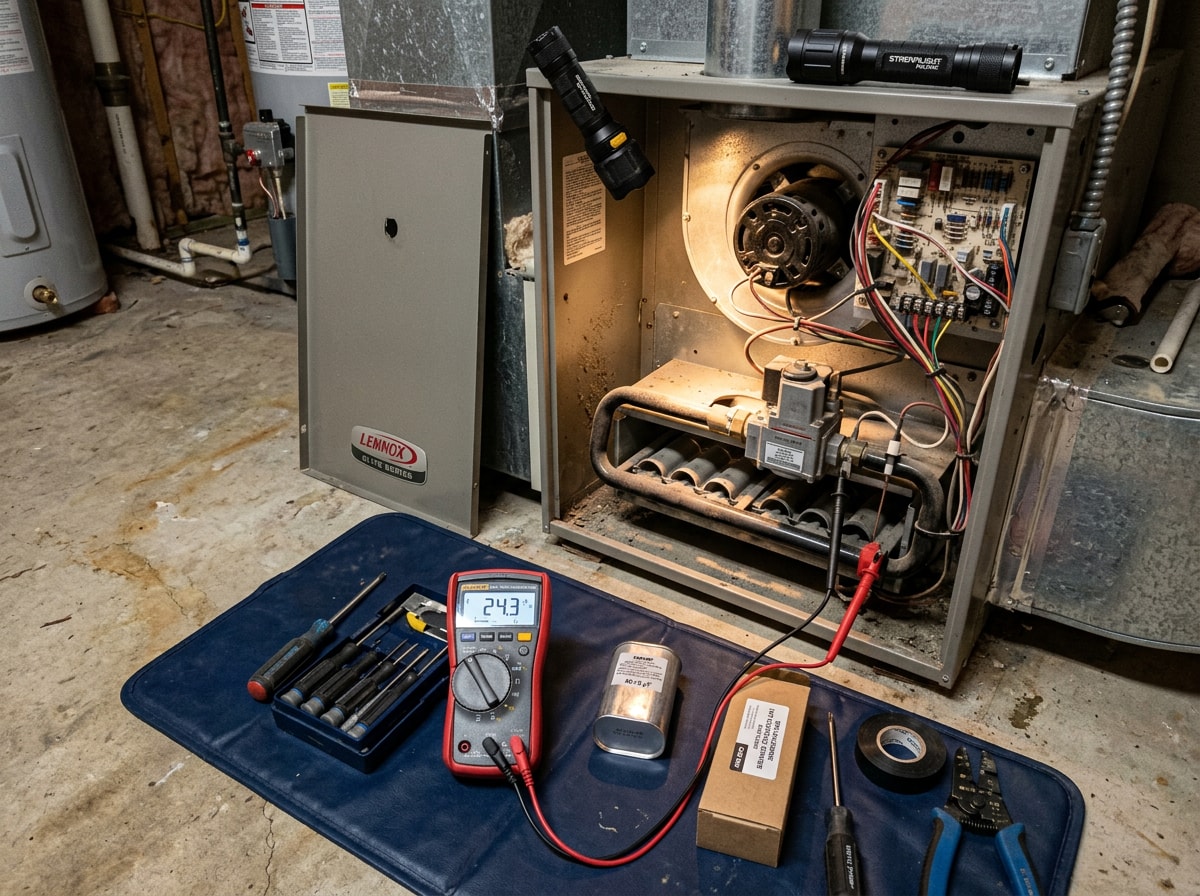
That is why a van stocked with igniters, flame sensors, capacitors, contactors, pressure switches, and common universal control boards fixes more calls on the first visit than any marketing promise does. When you call, ask one question: "Is the likely part on the truck today?"
We cover Holcombe, Lake Holcombe, Cornell, Jim Falls, and the surrounding Chippewa County townships. Local service details are on our Holcombe service area page.
Symptoms That Should Not Wait Until Morning
Call for emergency furnace service or emergency air conditioning service for any of these:
- No heat with outdoor temperatures below freezing, especially with pipes in exterior walls or crawl spaces.
- A gas smell, a burning smell, or soot marks near the furnace cabinet.
- A carbon monoxide alarm sounding. Get everyone outside first, then call from outdoors.
- Repeated lockouts: the furnace tries three or four times, then shuts down and flashes a fault code.
- Ice forming on refrigerant lines in summer along with a compressor that keeps running.
- Water pooling under a high-efficiency furnace or an indoor coil.
These can usually wait for a scheduled slot: a noisy outdoor fan in mild weather, one room that runs a few degrees warm, a thermostat that looks dated but still controls the system.
Carbon monoxide deserves its own rule. A cracked heat exchanger or a blocked flue is invisible, which is why detectors matter more than nose tests. The CDC's carbon monoxide poisoning basics covers symptoms and detector habits worth reviewing before heating season.
The Snow Rule: The Single Biggest No-Heat Cause We See Here
Here is the field note that does not show up in national HVAC articles.
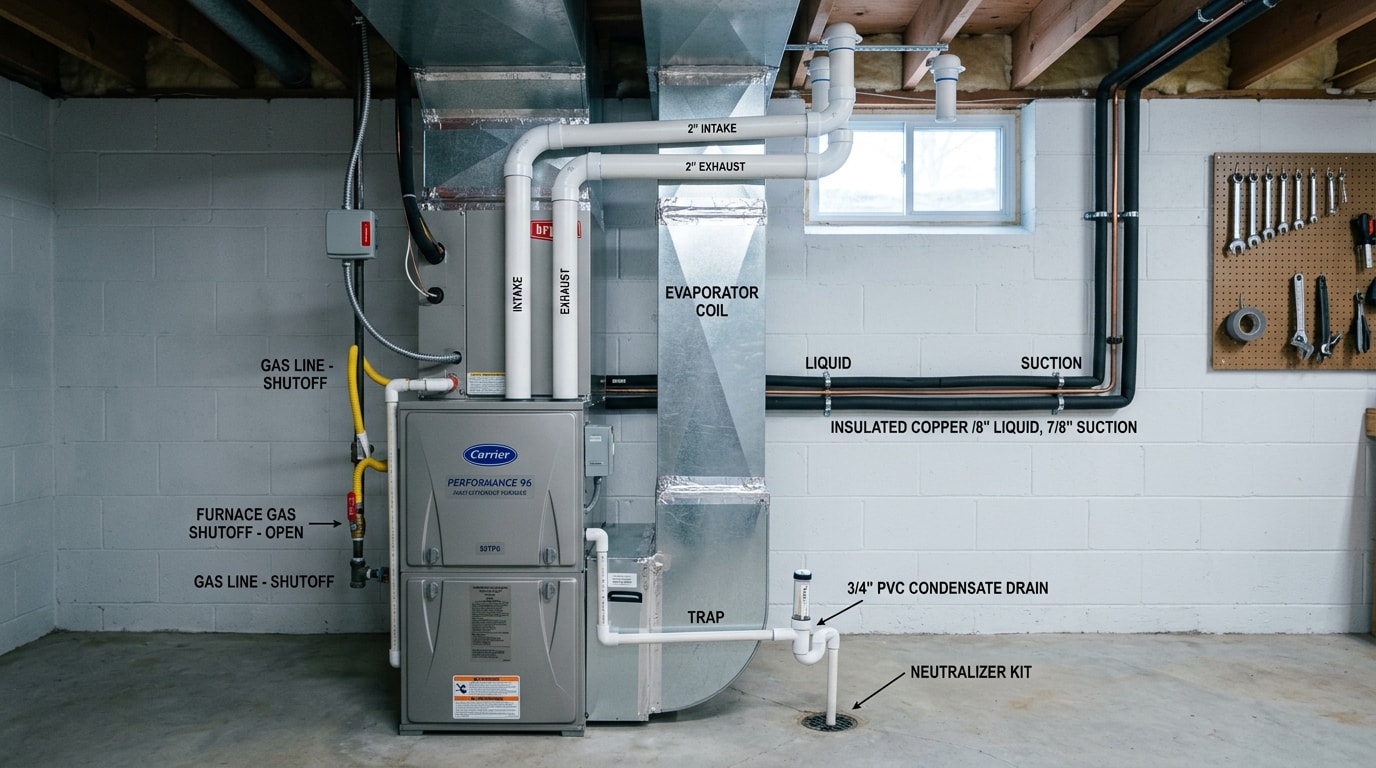
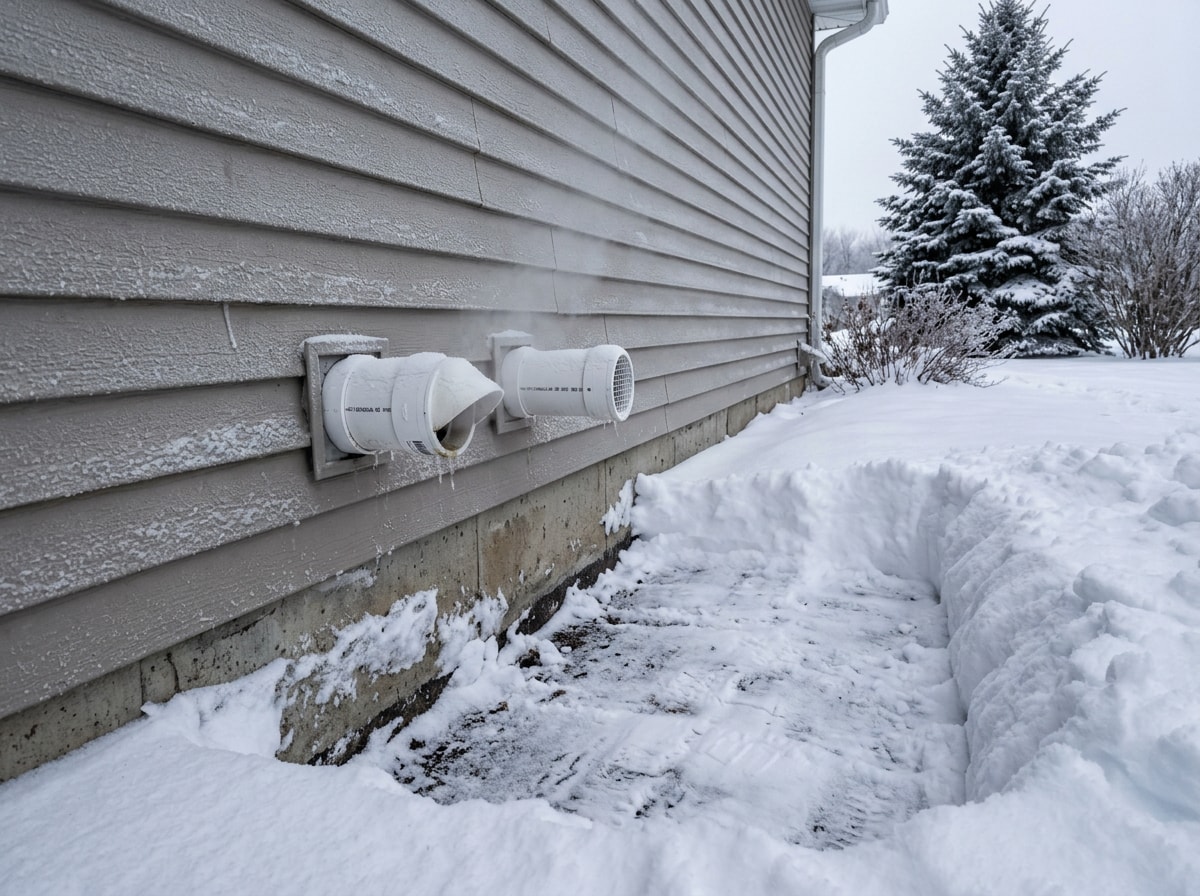
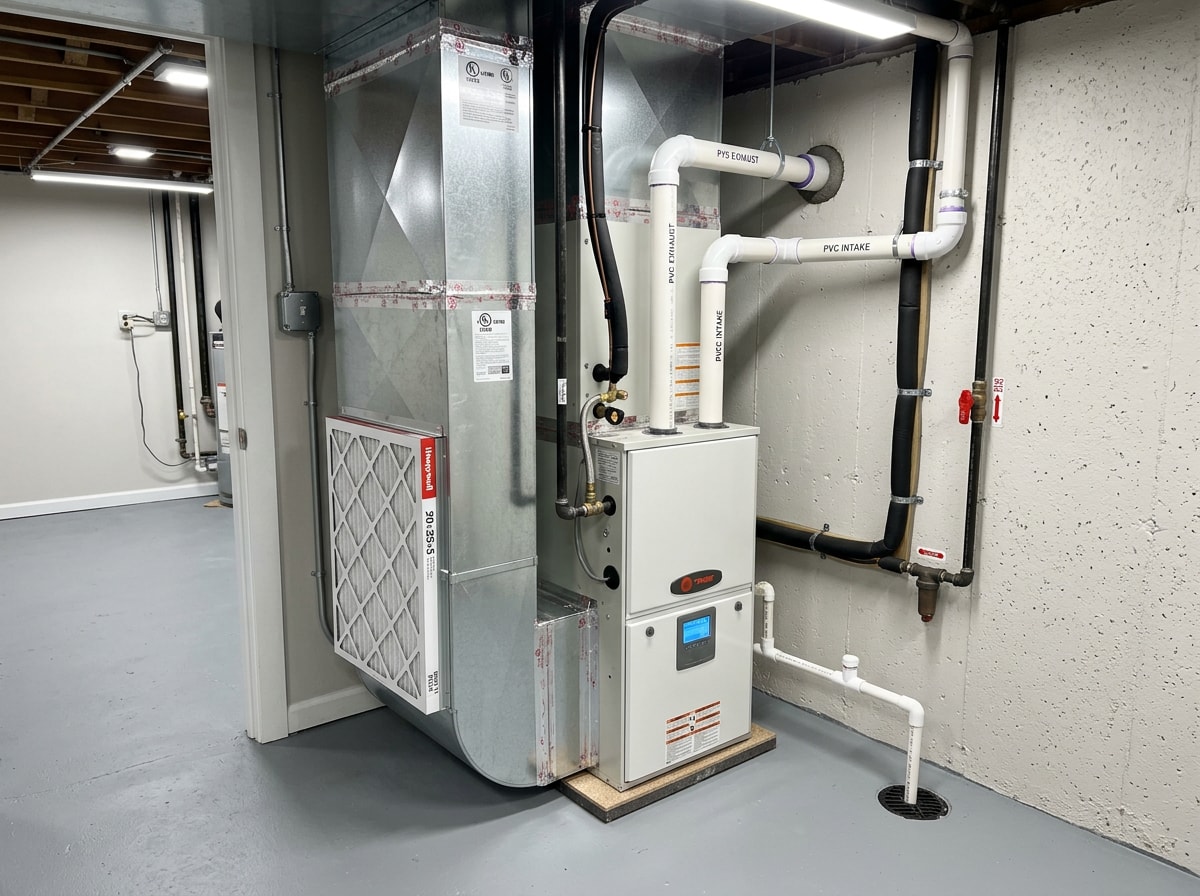
On high-efficiency condensing furnaces, the intake and exhaust are white PVC pipes that terminate through a sidewall, often two to four feet above grade. In Holcombe, drifting snow, a plow bank, or freezing rain can seal those terminations. The pressure switch senses the blocked vent and locks the furnace out, which looks exactly like a failed part.
After every significant storm, walk the outside of the house and clear a foot of space around both PVC pipes. Do the same for the top and sides of a heat pump. That one habit prevents a meaningful share of the mid-winter lockout calls in this area, and it costs nothing.
Two Checks to Do Before You Call
Five minutes, no tools. Stop at the cabinet door: gas lines, the electrical panel, and the inside of the furnace belong to a licensed technician.
Thermostat
- Confirm the mode is Heat (or Cool) and the setpoint is clearly past room temperature.
- Replace the batteries even if the screen still lights. Weak batteries cause intermittent dropouts.
- Check the breaker labeled furnace or air handler, then the switch on the unit that looks like a light switch. A cleaning crew or a basement project knocks these off more often than you would think.
If the display is dark or unresponsive after that, the wiring between the thermostat and the board is a technician-level fix.
Airflow
- Pull the filter. If light will not pass through it, replace it and retry the system.
- Open every supply and return register. Closing vents in unused rooms raises static pressure and shortens blower life.
- Keep three feet clear around the furnace, and never store paint, solvents, or boxes against it.
ENERGY STAR recommends checking the filter monthly and replacing it when dirty, since a clogged filter forces the system to work harder and can lead to early equipment failure. Their HVAC maintenance checklist also outlines what a professional visit should include. ENERGY STAR advises inspecting, cleaning, or changing air filters once a month, noting that a dirty filter can increase energy costs and damage equipment, leading to early failure.
What a Proper Diagnostic Visit Includes
A real diagnostic is more than a part swap. Before anyone quotes a repair, expect:
- A system-wide visual inspection, including the flue, condensate path, and wiring.
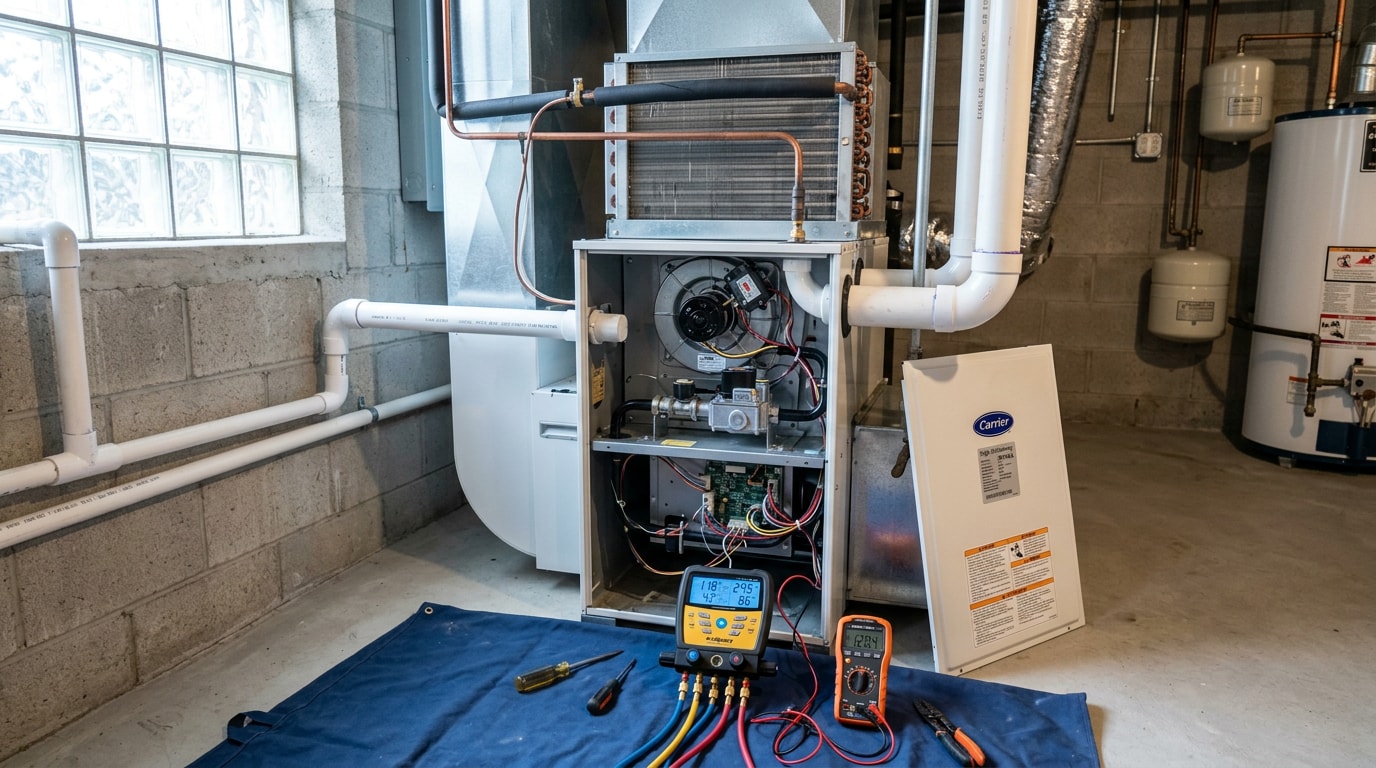
- Electrical readings: capacitor microfarads, amp draw, control voltage, and safety switch continuity.
- Temperature rise on the heating side, or supply and return split on the cooling side.
- Static pressure or at least an airflow sanity check, because many "bad" systems are really restricted systems.
- A written finding and a price before any part is installed.
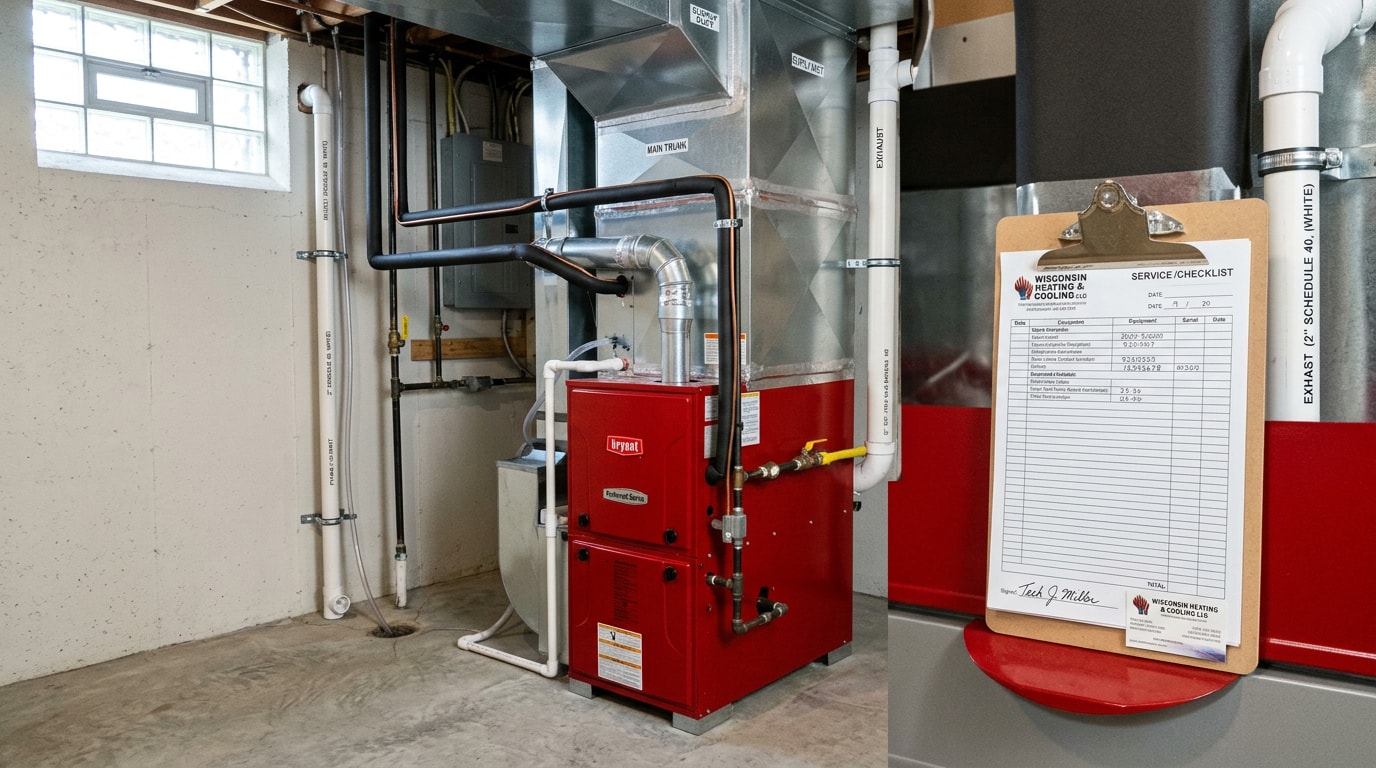
If a tech names a part within 90 seconds of walking in, without a meter in hand, get a second opinion. Browse our full HVAC contractor services to see what each visit covers, or review completed work on our projects page.
Refrigerant, "Freon Refills," and the 2026 Rules
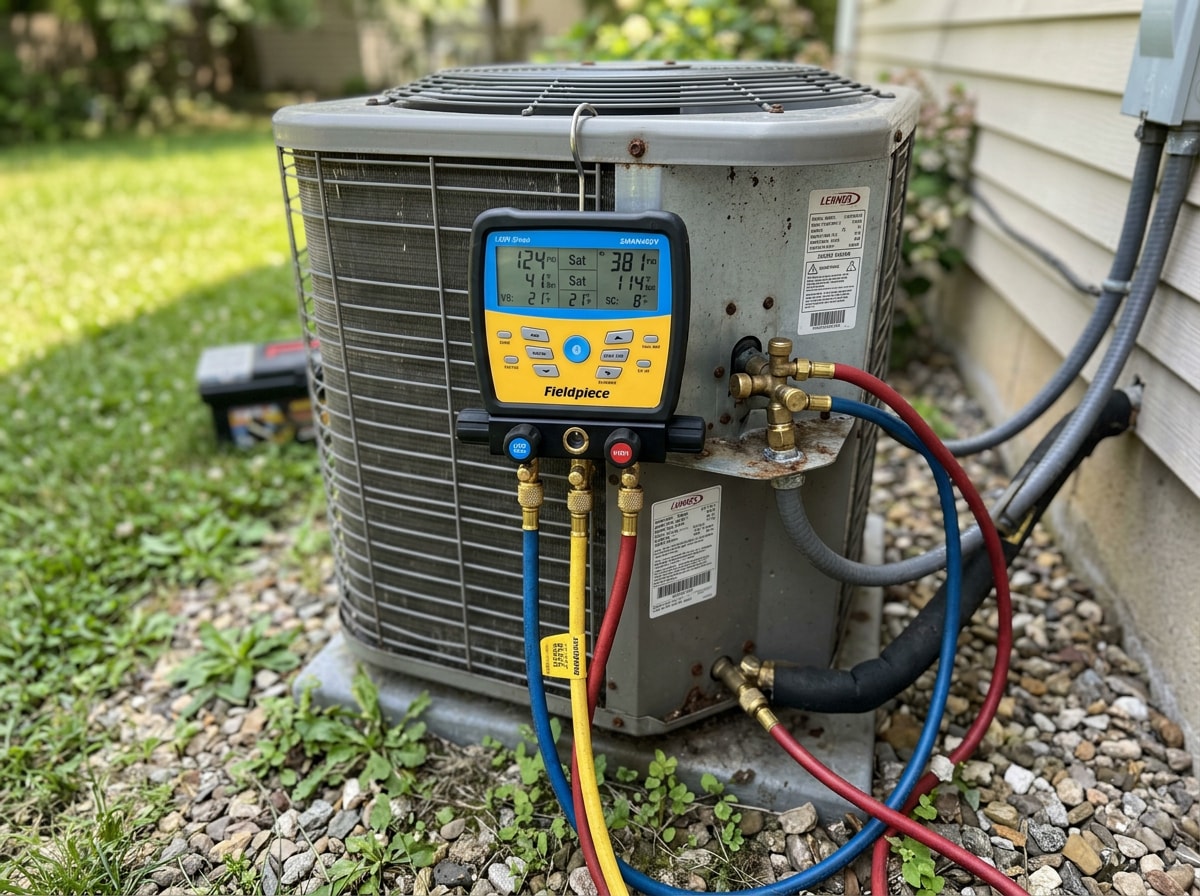
An AC that runs but will not cool is the classic refrigerant complaint. The money-saving fact: refrigerant is not consumed like fuel. If a sealed system is low, it leaked. A recharge with no leak search is a patch you will buy again next season, which is why refrigerant recharge work should always start with leak detection.
What you pay depends on which refrigerant you have:
- R-22: no longer produced, served by reclaimed supply at a steep per-pound price. On an older system, replacement math usually wins.
- R-410A: still fully legal to service.
Manufacturing of R-410A residential equipment stopped January 1, 2025, and new systems now use low-GWP A2L refrigerants such as R-454B or R-32 , so expect service pricing to drift as supply tightens.
- R-454B and R-32: the A2L refrigerants on most new equipment. They require different tools, leak detection, and handling procedures. You cannot drop them into an R-410A system.
Only a certified technician may legally buy and handle refrigerant. EPA regulations under Section 608 of the Clean Air Act require technicians who maintain, service, repair, or dispose of refrigerant-containing equipment to be certified by passing an EPA-approved test. You can read the requirements on the EPA's Section 608 technician certification page. Ask whether a cooling quote covers leak repair or recharge only, and get both numbers.
Maintenance That Prevents the 2 a.m. Call
Book heating service in fall and cooling service in spring, before the schedule fills. September and October are the right window in northern Wisconsin.
A professional furnace tune-up should cover:
- Burner and heat exchanger inspection
- Flame sensor cleaning and microamp signal check
- Gas pressure and temperature-rise measurement
- Blower wheel condition and amp draw
- Electrical connection tightening and safety control testing
- Condensate trap and drain clearing on condensing units
- Filter replacement
Two payoffs matter. First, many manufacturers can deny a warranty claim without documented annual service. Second, a weak igniter caught in October is a scheduled repair, not a February emergency with a parts delay.
See heating system maintenance and A/C system maintenance for what each visit includes.
How to Vet a Holcombe HVAC Company
Verify the license yourself. Wisconsin credentials are publicly searchable through the DSPS credential and license search, which shows current status and any disciplinary history. The DSPS lookup is publicly searchable by name or license number, and results show current status, expiration date, and any disciplinary actions on record.
Then ask these five on the phone:
- Are you licensed in Wisconsin and insured, and can you email proof today?
- Do I get a written diagnosis and price before any repair is authorized?
- Is billing flat-rate or hourly, and is the diagnostic fee credited toward the repair?
- How long is the parts warranty, and what is the labor or workmanship guarantee?
- Does the quote include permits when they are required?
A company that answers all five plainly, without redirecting to a sales conversation, is usually the one worth booking.
Book Heat and AC Repair in Holcombe
If your system is down right now, skip the research and call it in. If you are planning ahead, a fall tune-up booked in September costs a fraction of a February emergency.
Get a Free Estimate or learn more about our work on the Delmar Air homepage. You can also compare related services for furnace repair and A/C system repair.
FAQ
How much does it cost to repair an air conditioner?
Most residential AC repairs in this area run roughly $175 to $900, with capacitor and contactor jobs at the low end and coil or compressor work well above it. Cost depends on the fault, the part, and refrigerant type. Always ask whether the diagnostic fee is credited toward the repair.
How much does a furnace repair cost in Holcombe?
Common furnace repairs run about $185 to $1,500 in 2026. Igniters and flame sensors sit at the bottom, ECM blower motors and control boards at the top. Parts availability matters more than brand: a stocked universal part gets fixed today, a model-specific board may take a day or two.
Is it worth repairing an old furnace or AC?
Use two tests. If the repair costs more than a third of a replacement and the system is past 12 to 15 years old, replacement usually wins. If the system uses R-22 and needs refrigerant, replacement almost always wins. Otherwise, repair it.
How fast can someone get to Holcombe for emergency service?
Ask for a specific window, not a "24/7" slogan. The honest answer from any local company includes 25 to 35 minutes of drive time from the Chippewa Falls area plus whatever is ahead of you in the queue. Confirm whether an on-call tech is dispatched overnight or first thing the next morning, and what the after-hours fee is.
Why is my AC running but not cooling?
The usual causes are a clogged filter restricting airflow, a dirty condenser coil, a failed capacitor leaving the compressor idle, or low refrigerant from a leak. If the lines are iced, shut the system off, leave the fan running to thaw it, and call. Running a frozen system can damage the compressor.
How often should I service my heating and cooling system?
Once per season, per system: heating in fall, cooling in spring. ENERGY STAR recommends annual pre-season check-ups and notes that contractors book up once the weather turns. Keeping a system at peak performance means having a contractor do annual pre-season check-ups, with cooling checked in spring and heating in fall.
Does my heating system really need a tune-up every year?
Yes, for a gas furnace. It burns fuel inside your home, and combustion safety checks are not something you can perform without instruments. Annual service also preserves most manufacturer warranties.
What are the most requested heating and air conditioning services?
Furnace and AC repair, seasonal tune-ups, igniter and flame sensor replacement, refrigerant leak repair, duct and airflow corrections, and system replacement when the repair math stops working. Cooling-side specifics are on our air conditioning repair service page.
Do I have to replace my R-410A system in 2026?
No. Servicing and recharging an existing R-410A system is still legal. The regulatory change applies to new equipment, where A2L refrigerants like R-454B and R-32 are now standard. Plan for refrigerant service costs to rise over time rather than for a forced swap.
---
About the author: This guide was written and reviewed by the service team at Delmar Air LLC, EPA Section 608 certified HVAC technicians serving Holcombe, Lake Holcombe, and Chippewa County, Wisconsin. Questions about a specific symptom or quote? Reach us through our contact page.