If you are searching for hvac heating repair near me Holcombe, WI, the furnace is probably already down and the house is already cooling. This guide gives you the real 2026 repair cost ranges, the free checks that solve a surprising number of no-heat calls, and the one failure mode that hits Lake Holcombe homes harder than anywhere else in the state.
Emergency and Same-Day Heating Repair in Holcombe
Not every heating problem is an emergency. These four are:
- No heat with outdoor temperatures below freezing
- A gas smell or a burning odor from the registers
- A carbon monoxide alarm sounding
- Water leaking from a boiler or around the furnace base
A thermostat reading two degrees off can wait for a normal appointment. The four items above cannot.
What to do while you wait for a technician:
- If you smell gas or suspect CO, leave the house first and call from outside.
- Shut the system off at the furnace switch if there is any burning smell.
- Open cabinet doors under kitchen and bathroom sinks so warm air reaches the supply lines.
- Keep one faucet trickling on an exterior wall to slow freeze-up.
- Close off unused rooms and concentrate heat in the living space.
Carbon monoxide is odorless and colorless, which is exactly why an alarm matters more than your nose. CDC guidance notes that CO is produced any time fuel burns in stoves, grills, fireplaces, gas ranges, or furnaces, and that it can build up indoors and poison people and animals who breathe it. Read the full CDC carbon monoxide basics page if you have a fuel-burning appliance and no alarm installed.
When the heat is out, book emergency furnace service or go straight to Get a Free Estimate and flag the call as no heat.
What HVAC Heating Repair Costs in Holcombe, WI (2026)
Most no-heat calls end in a single part replacement, not a system failure. Call early and you usually pay for a $40 part plus labor instead of a motor.
| Symptom | Likely failed part | Typical 2026 cost range* |
|---|---|---|
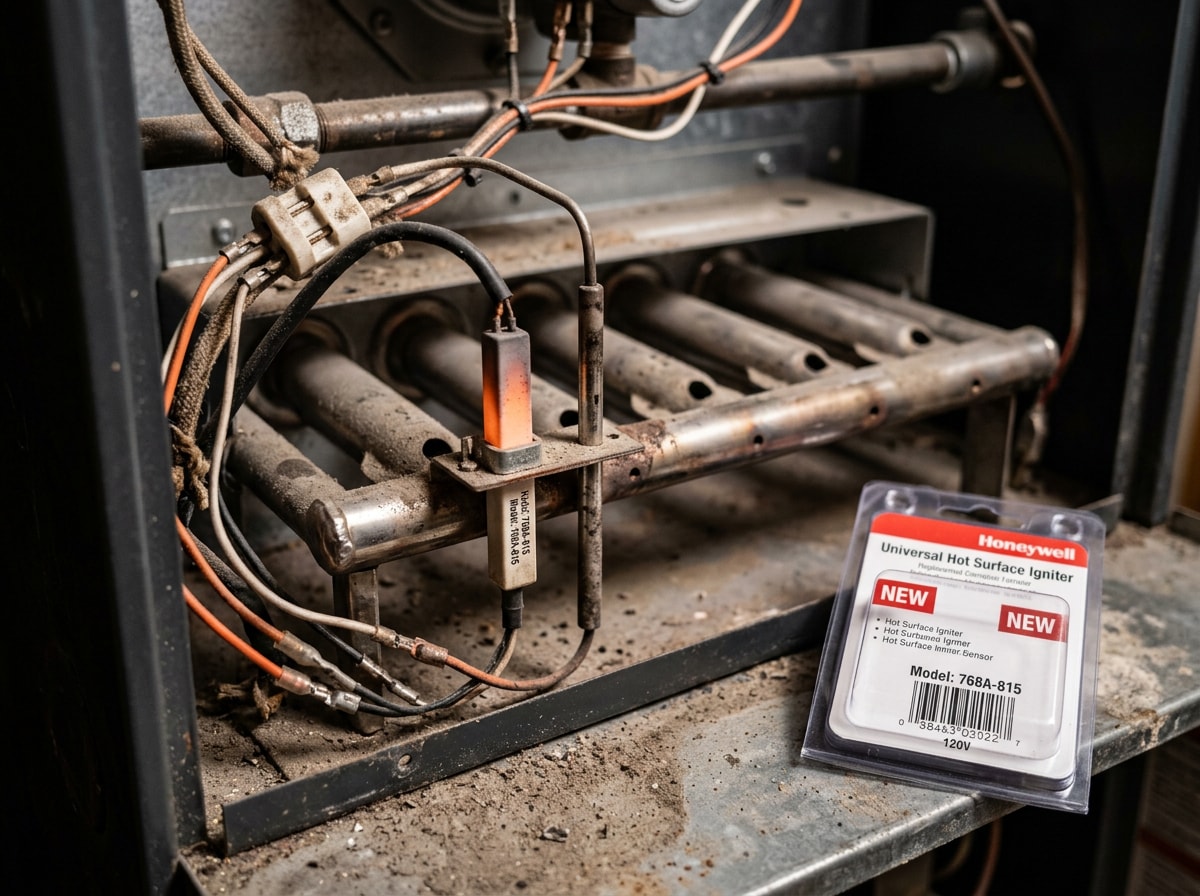
| Clicks, no flame | Hot surface igniter | $175 to $450 |
| Fires, then shuts off in seconds | Flame sensor | $150 to $350 |
| Hums, blower will not spin | Run capacitor | $150 to $400 |
| Weak or no airflow | Blower motor | $500 to $1,400 |
| Rattles, never starts the sequence | Pressure switch or draft inducer | $300 to $900 |
| Boiler short cycles, no circulation | Circulator pump | $400 to $900 |
*Budgeting ranges only, not a quote. Your actual furnace repair cost depends on the part, equipment age, access, and whether the call is after hours.
Three line items show up on nearly every invoice:
- Diagnostic or service call fee. Commonly around $120 in the Chippewa Valley, higher nights and weekends.
- Labor, usually flat-rate by task rather than hourly.
- Parts, where OEM-specific control boards and variable-speed motors drive the top end.
Ask whether the diagnostic fee is credited toward the repair. Many shops apply it. Some do not, and that is a $120 swing you should know before dispatch.
The Holcombe Failure Mode Most Cost Guides Miss
Here is the part national repair articles never mention, and it causes a real share of our winter no-heat calls around the flowage.
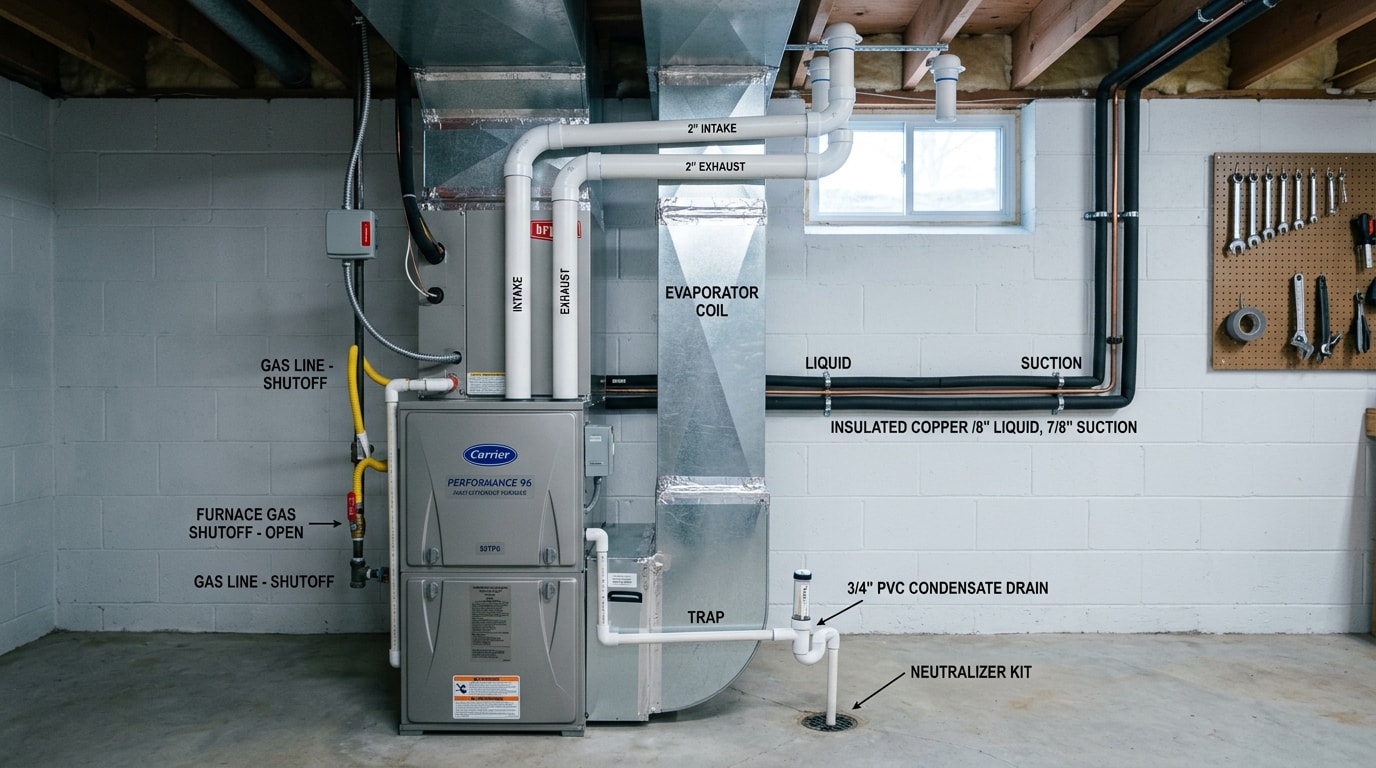
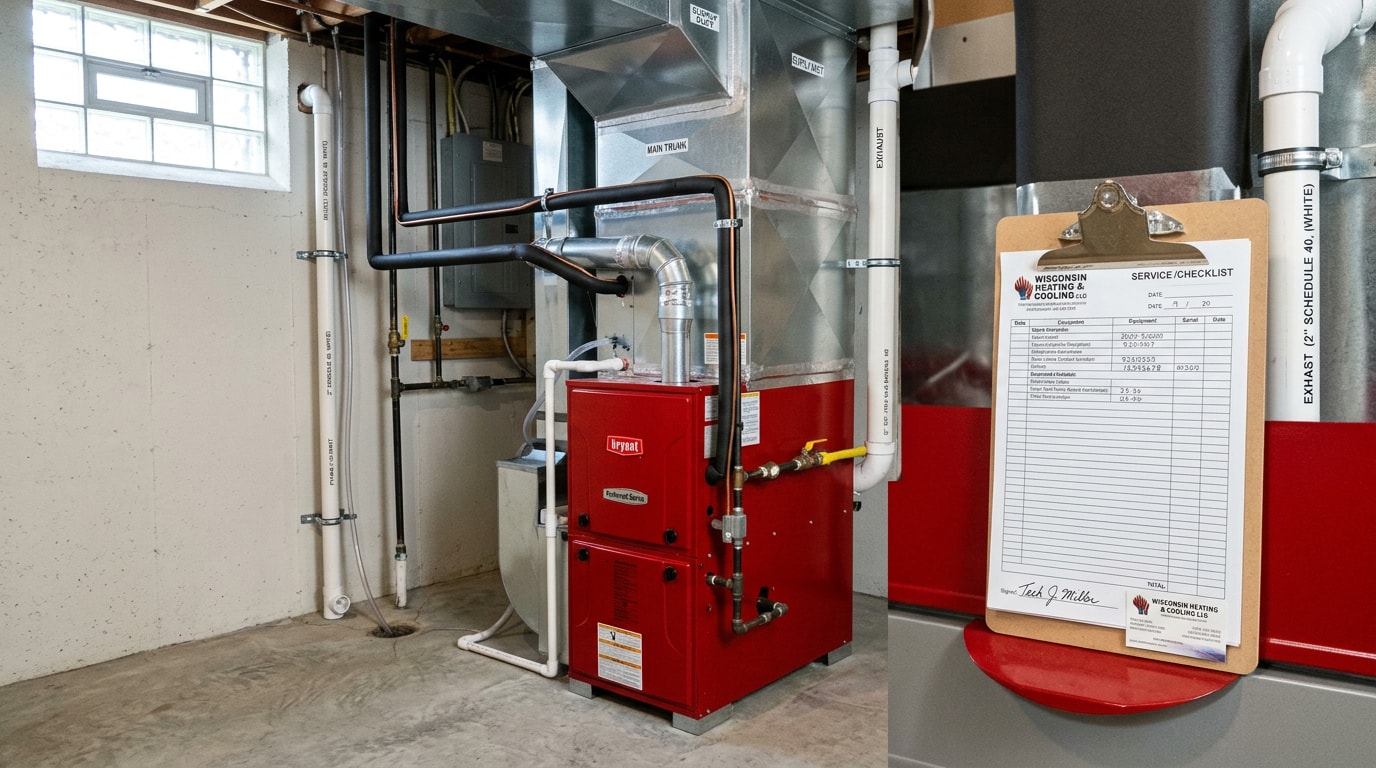
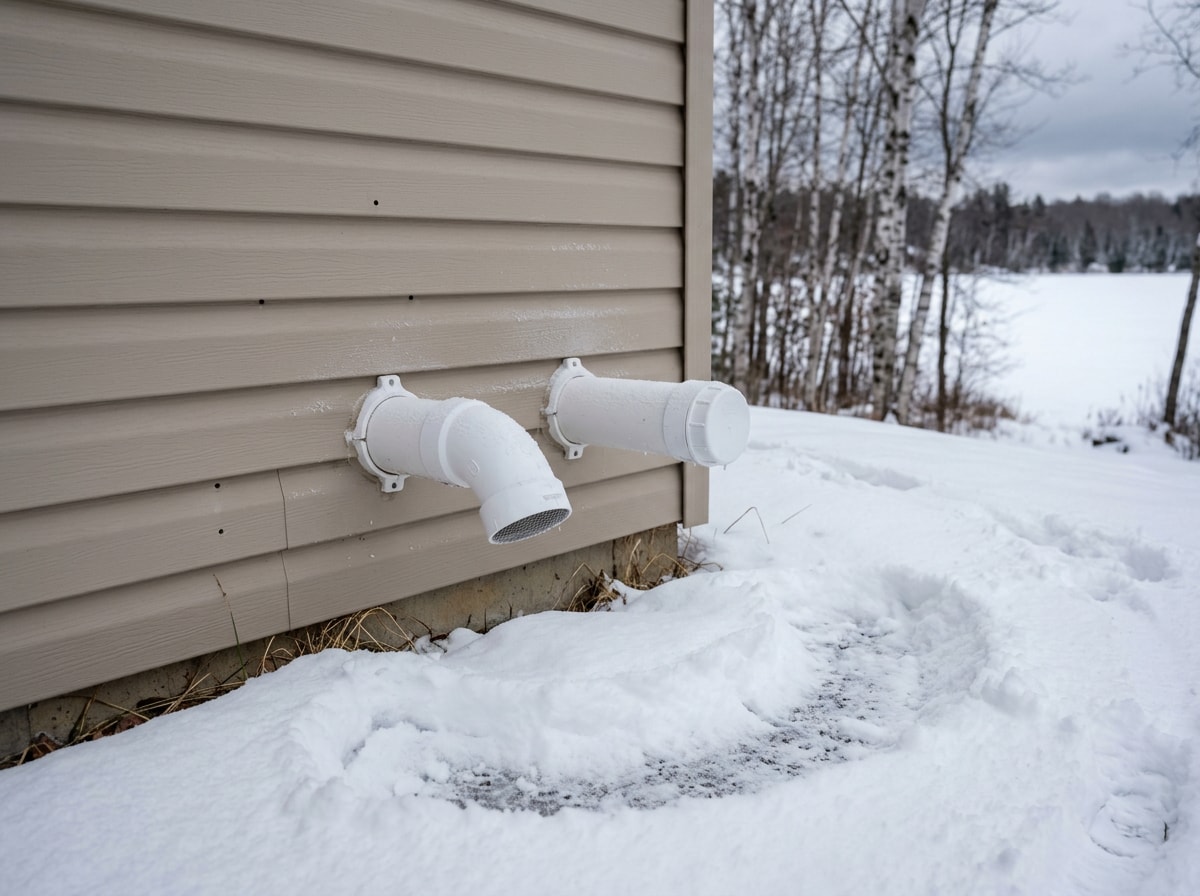
High-efficiency condensing furnaces, the 90%-plus units, vent through PVC pipe that terminates low on an exterior wall. In Holcombe that termination sits in blowing snow, drifts off the lake, and freezing fog. When the intake or exhaust ices over or drifts shut, the pressure switch reads the blocked airflow and locks the furnace out on purpose. The homeowner sees a dead furnace. The actual fault is outside, under six inches of snow.
What that means for you:
- Walk the exterior wall where two white PVC pipes exit. Clear snow a minimum of 12 inches around both openings.
- Check again after every drifting wind event, not just after a storm.
- If the pipes are clear and the furnace still locks out, the pressure switch, hose, or inducer is the next suspect and that is a technician job.
The same logic applies to a side-wall vented boiler. A blocked termination triggers a safety lockout before it triggers a repair bill, which is the system working correctly.
Seasonal cabins add a second local wrinkle: a propane tank that reads fine in October can run dry by February if the furnace cycles longer than expected. An empty tank is one of the most common no-heat causes in rural Chippewa County, and it is not a repair at all.
Warning Signs You Need Heating Repair
Failures announce themselves before they strand you. The signals fall into four groups.
Noises. Banging on startup, metallic scraping, high-pitched whistling, or a hum with no blower movement.
Smells. A persistent burning odor after the first few runs of the season, or a sulfur or rotten-egg smell at any time.
Performance drops. Short cycling, weak airflow, uneven room temperatures, or a furnace blowing cold air.
Bills. A heating bill climbing with no change in weather or thermostat habits.
Two of these are safety issues, not scheduling issues. A yellow or flickering burner flame instead of a steady blue one, and a rotten-egg odor, can both point to combustion problems or a cracked heat exchanger. Shut the system down and call. Do not wait for a convenient appointment.
For component-level work on gas, electric, or propane equipment, see heating system repair. For hot water systems, boiler repair covers circulators, expansion tanks, and controls.
Free Checks to Run Before You Call
Work this list first. It takes five minutes and it resolves a meaningful share of calls.
- Thermostat. Fresh batteries, set to HEAT, target set above current room temperature.
- Breaker panel. Look for a tripped breaker or blown fuse on the furnace circuit.
- The furnace power switch. It looks like a light switch near the unit and gets flipped by accident constantly.
- Filter. If it is gray and matted, replace it.
ENERGY STAR recommends checking the filter monthly during heavy-use months and changing it at a minimum every three months, because a dirty filter slows airflow and makes the system work harder. See the ENERGY STAR heating and cooling maintenance guidance for the full checklist.
- Registers and returns. Open and unblocked in every room, including furniture pushed against returns.
- Fuel level. Check the propane or oil tank gauge before anything else if you are off the natural gas main.
- Vent terminations. Clear snow from the exterior PVC intake and exhaust, as described above.
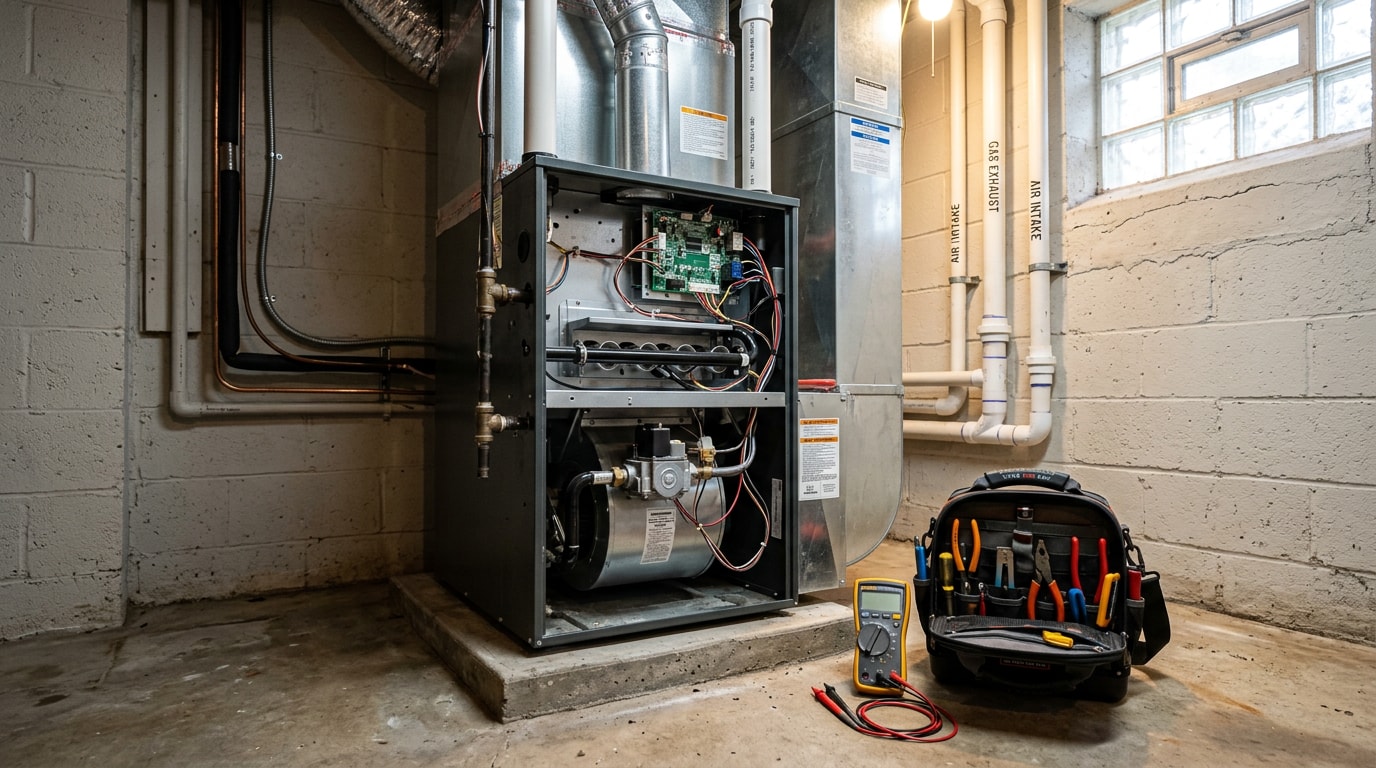
What not to do: do not open the burner compartment, do not jumper or bypass a safety switch, and never relight a pilot if you smell gas. If the thermostat has power but will not call for heat, the wiring and control board are technician territory.
Repair or Replace Your Heating System
Three factors decide it, and they have to be weighed together.
Age. A gas furnace typically runs 15 to 20 years. Past 18, every major repair is money spent on borrowed time.
Repair history. Two or more paid repairs in the last two heating seasons is a pattern, not bad luck.
Repair cost versus replacement. The common rule, that a repair exceeding roughly half the replacement price on an aging unit favors replacement, is a starting point and not a verdict.
Efficiency carries more weight in northern Wisconsin than it does farther south, simply because the heating season is long. ENERGY STAR currently sets its gas furnace criteria at 97% AFUE or greater for the U.S. North , which you can confirm on the ENERGY STAR furnace product criteria page. The gap between an aging 80% AFUE unit and a 97% model shows up on every single bill from October through April.
Wisconsin's Focus on Energy program has historically offered incentives on qualifying high-efficiency equipment. Terms and eligibility change, so confirm current offers directly before you budget around them.
When replacement is the right answer, start with furnace replacement or heating system installation.
How to Vet an HVAC Heating Repair Company Near You
Confirm five things before anyone drives out:
- Credentials and insurance.
Wisconsin's DSPS lets you check the status of a credential using the public LicensE lookup , and you can start from the Wisconsin DSPS HVAC contractor page. Ask for current liability insurance separately, since that is not in the credential record.
- Diagnostic fee disclosed before dispatch, including whether it is credited to the repair.
- A written, itemized estimate separating parts and labor, delivered after diagnosis and before work begins.
- A stated workmanship guarantee with a term in writing.
- After-hours policy, including evening, weekend, and holiday surcharges.
Then look for experience that matches your equipment. Ask which fuel types and brands the technician works on daily, whether the truck stocks igniters, flame sensors, and capacitors, and what the actual response radius is from their shop. A tech who services propane and mini-split equipment weekly is a different hire than one who only sees natural gas furnaces.
Our team works the Holcombe and Lake Holcombe area year round, and the vent-blockage pattern described above came straight off our own winter dispatch logs. You can review the full HVAC contractor service list, check the Holcombe, WI service area, or browse recent work on our projects page. More background on the company is on our homepage.
If cooling is also on your list for spring, our guide to [air conditioning servicing in Holcombe](){{SITE_URL}}/blog/air-conditioning-servicing-near-me-holcombe-wi) covers the same ground for the summer season.
FAQ
How much does furnace repair cost in Holcombe, WI?
Most single-component repairs land between roughly $150 and $900, with blower motors, control boards, and heat exchanger work running higher. The bill combines the service call fee, labor, and parts, plus an after-hours surcharge for nights, weekends, and holidays. No one can quote accurately over the phone before diagnosis.
Why is my furnace running but blowing cold air?
The blower is working, but combustion is not happening or heat is not reaching the ducts. The usual causes are a clogged filter choking airflow, closed or blocked vents, an ignition lockout after several failed start attempts, or an empty propane or oil tank. Work the free checklist above before you schedule.
What are the most common heating repairs?
Igniters, flame sensors, run capacitors, blower and draft inducer motors, pressure switches, and thermostats account for most calls. Flame sensor cleaning, capacitor swaps, and igniter replacement are usually one-visit fixes because technicians carry those parts. A control board or OEM-specific blower motor may need ordering, which adds a day or two.
How fast can someone get to a no-heat call in Holcombe?
A no-heat call placed during a cold snap should get you a live person and an arrival window measured in hours, typically same day. Ask for the window before you agree to the dispatch fee, and say the words "no heat" when you call so the call is triaged correctly.
Is it worth repairing a 20-year-old furnace?
Usually not, if the repair is a major component. At 20 years you are at or past expected service life, parts availability gets thin, and the efficiency gap against a modern unit is large over a northern Wisconsin heating season. A cheap igniter to get through the week is fine. A $1,200 motor is not.
What is the difference between heating repair and heating maintenance?
Repair is reactive: something broke and a technician fixes it. Maintenance is proactive cleaning, testing, and adjustment before failure. An annual fall tune-up matters more here because the system runs hard for six-plus months. Schedule it through heating system maintenance.
Should I set the thermostat lower while I wait for a repair?
No. Leave the thermostat at your normal setting so the system runs if it recovers on its own, and never drop a home below 55 degrees in winter. Lower settings increase the risk of frozen supply lines, which turns a furnace repair into a plumbing repair.
Do you service boilers and hydronic systems too?
Yes. Older homes and additions around the flowage often run hot water heat, which needs different diagnostics than forced air. See hydronic heating repair or boiler system maintenance.
Get Heat Back On
If the house is cold right now, do not work through this guide first. Clear the vent terminations, check the fuel gauge, then call. For everything else, including planned repairs, tune-ups, and replacement quotes, Get a Free Estimate and a technician will confirm the diagnostic fee and arrival window before anyone is dispatched.