Getting an HVAC quote in Clark County, WI is easy, but judging one is not. Two bids on the same farmhouse can differ by thousands of dollars and both look perfectly reasonable on paper, because the gap usually hides in equipment tier, labor scope, and whether permits and ductwork made it onto the page at all. Here is how local pricing works in 2026, the line items a complete quote must show, and how to normalize three bids so the totals finally mean something.
What an HVAC Quote Costs in Clark County, WI
Statewide, Wisconsin homeowners commonly see full system replacement quotes in the range of $5,400 to $14,000 in 2026. A Clark County project almost always lands inside that band. What moves it up or down is system type and scope of work, not the county line on a map.
Furnace-only replacement and full-system replacement are two different conversations.
Swapping a furnace while keeping a functional air conditioner, coil, and line set is a smaller job. Replacing both sides of the system, plus a new coil, thermostat, and any venting corrections, sits at the upper end of the range.
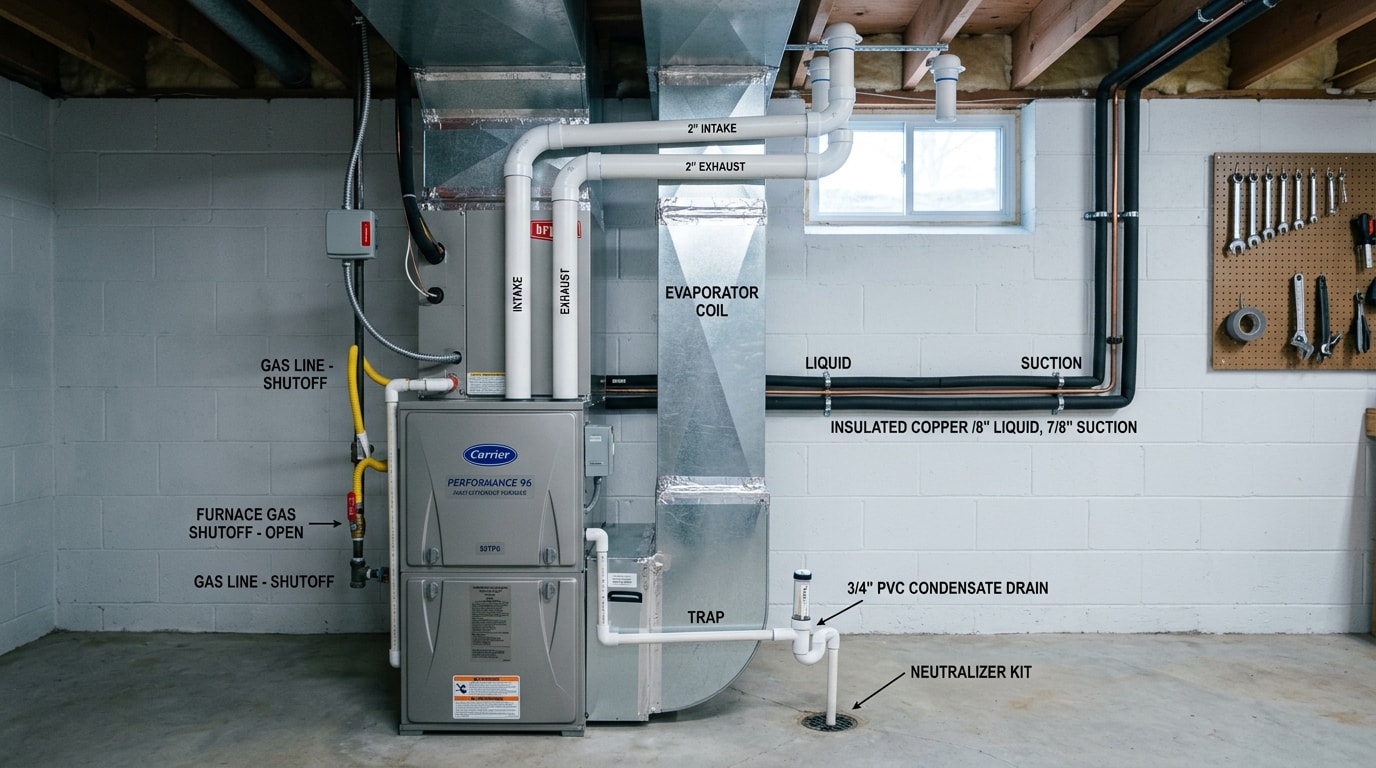
High-efficiency condensing gas furnaces are the default replacement choice here because the heating season is long. North-central counties like Clark are generally mapped into the colder climate zone (6A) rather than the 5A band covering southern Wisconsin, which affects sizing and equipment selection, so confirm the design conditions your installer used.
None of these figures is a quote. A written, in-home estimate from a qualified contractor is the only real number, and our HVAC contractor services pages explain what each scope of work actually involves.
Typical Installed Ranges Around the State
Installed pricing varies across Wisconsin more than most homeowners expect. Treat the table below as a sanity check, not a bid.
| Market | Typical installed range (full system) |
|---|---|
| Milwaukee metro | $6,500 to $15,000 |
| Madison | $6,300 to $14,500 |
| Eau Claire / Chippewa Valley | $5,600 to $13,500 |
| Wausau / north-central | $5,500 to $13,500 |
| Clark County (Neillsville, Thorp, Owen) | $5,400 to $14,000 |
Contractor density explains much of the spread. In Milwaukee, a homeowner can often collect five to eight qualified bids in a single spring week. Western and north-central Wisconsin offers lower baseline pricing but a thinner contractor pool and longer waits once heating season starts.
Why Rural Quotes Read Differently
Homes in Neillsville, Greenwood, Loyal, Thorp, Owen, Withee, and Abbotsford sit a real distance from the nearest metro supply houses.
Trip charges and mid-job parts runs show up in rural pricing in ways a statewide average never captures.
Timing is the second variable. With few after-hours crews in the county, an emergency furnace replacement in January carries rush and overtime rates that the same job in July does not. Booking in the shoulder season is the single easiest way to lower your own quote, and our Clark County service area page lists the communities we schedule, from Thorp to Gilman.
What Should an HVAC Quote Include?
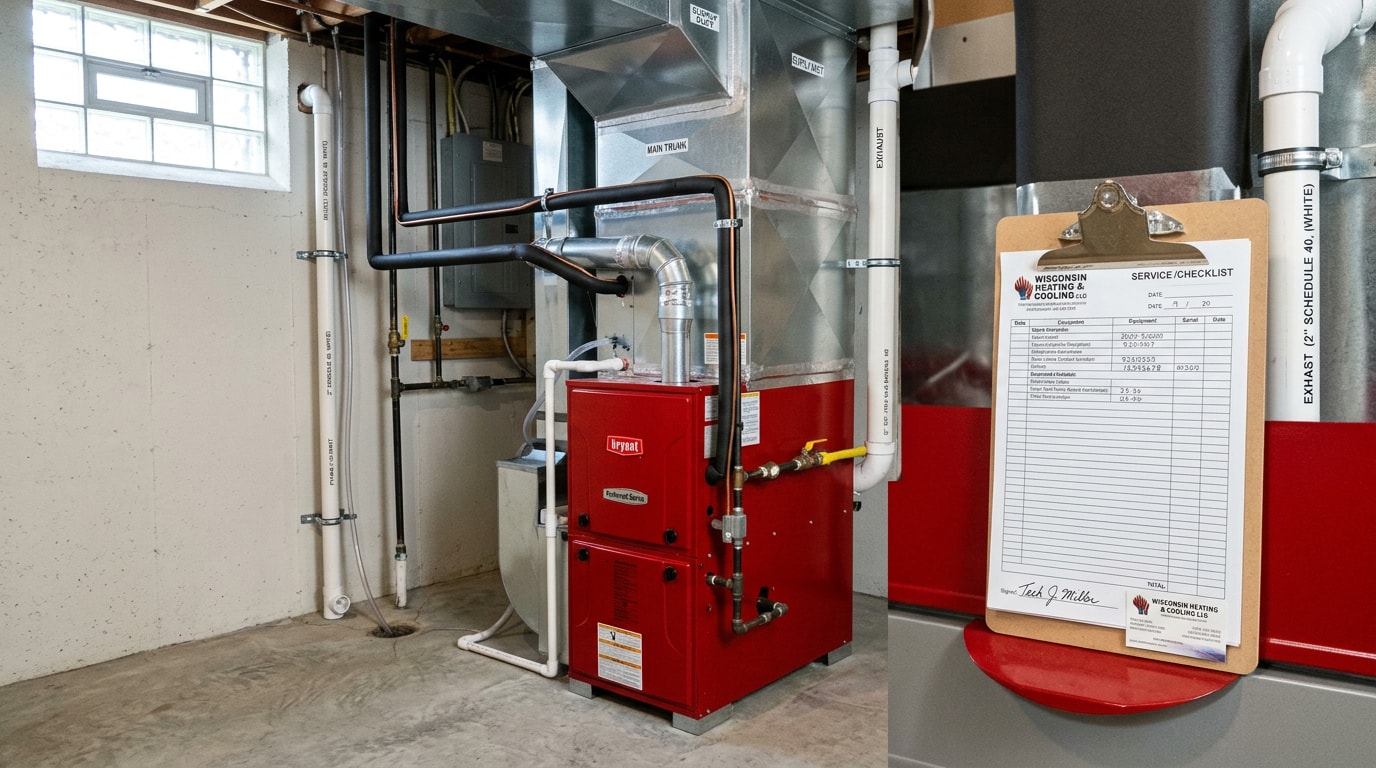
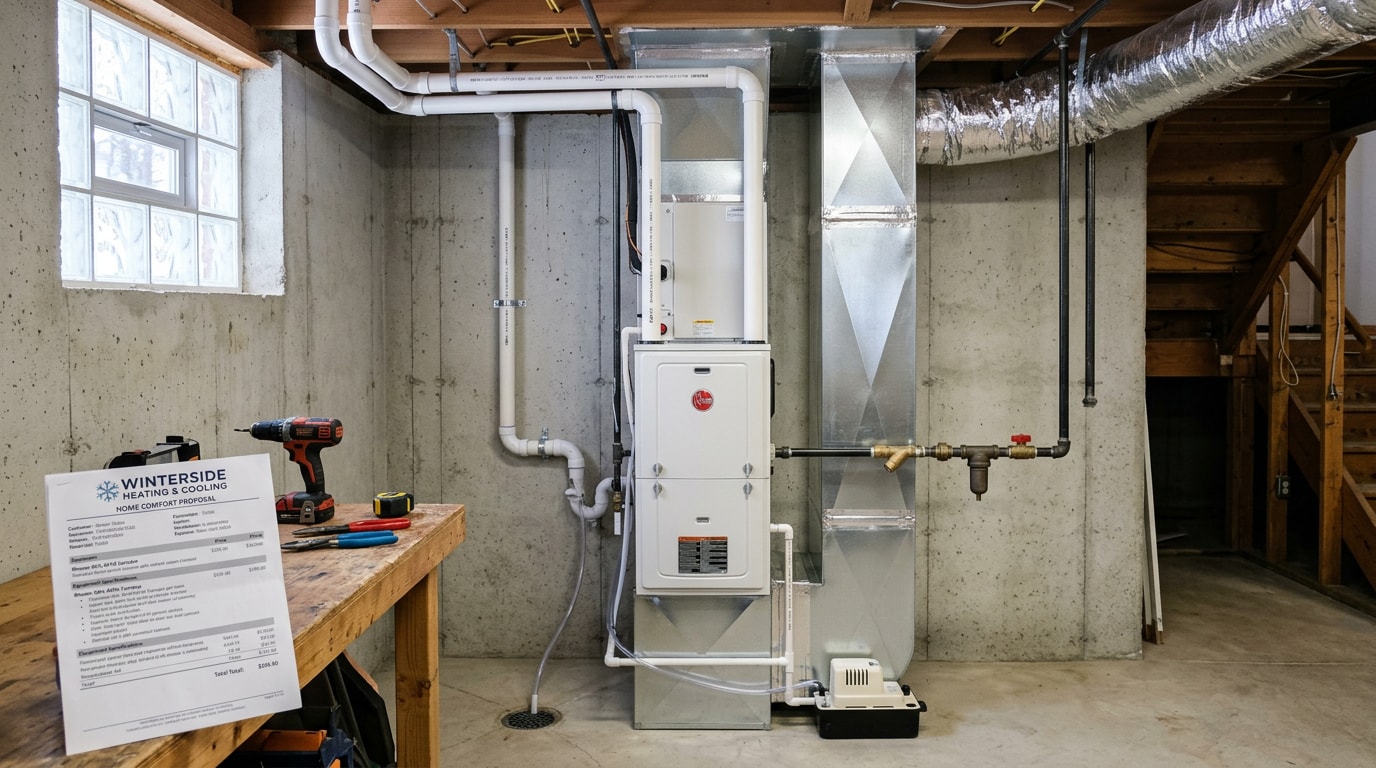
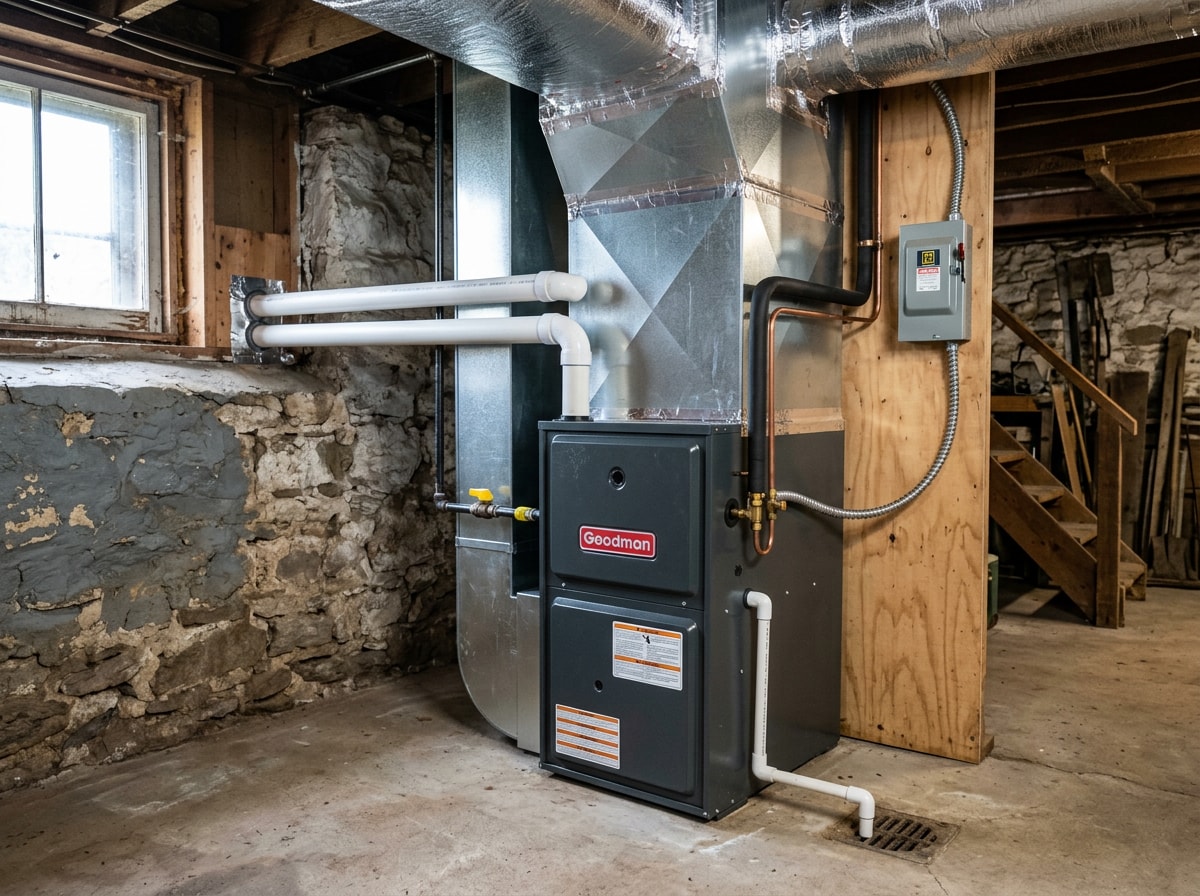
A complete quote names the exact equipment, the sizing basis, an itemized labor scope, a ductwork note, the permit cost and who pulls it, warranty terms with exclusions, and projected start and finish dates.
Anything less is a price, not a proposal. Prices alone cannot be compared.
Use the line items below as your checklist before you put any two totals side by side.
Equipment and Sizing
A fair quote names exact model numbers, brand, tonnage or BTU output, and efficiency ratings: AFUE for the furnace, SEER2 for the cooling side.
"High-efficiency 2-ton system" is not an equipment spec.
Model numbers let you verify the tier, the warranty registration, and rebate eligibility yourself.
Sizing should come from a Manual J load calculation, not from reading the nameplate on the old unit. Manual J is ACCA's ANSI standard for residential load calculation , and the ACCA Manual J standard page shows what the procedure covers.
That old unit may have been oversized the day it went in. A home with newer windows, added insulation, or a finished basement has a different load than it did in 1998. Oversized equipment short-cycles, which hurts both comfort and humidity control.
Labor Scope
Itemized labor should spell out the work, not just the hours. Look for:
- Removal and disposal of the old equipment
- Line-set handling or replacement
- Electrical connections
- Gas piping, combustion air, and venting
- Startup testing with documented commissioning readings
One more scope question worth asking directly: does the company's own crew perform the installation?
A low bidder may plan to subcontract it out. That is not automatically disqualifying, but you deserve to know who is in your basement and who honors the labor warranty.
Ductwork
Every quote should include a ductwork evaluation note. Silence on ducts in a home with cold back bedrooms, a roaring return, or rooms that never cool is a gap, not an oversight.
This is also where false price gaps come from.
If one bid includes duct sealing, return air corrections, and electrical work while another discovers those needs mid-job, the cheaper bid was never cheaper. Ask each contractor what they measured, and what they would do about airflow or duct leakage, before you compare totals.
Permits
The quote must show the permit cost and state who pulls it. A price that excludes permits without explaining local responsibility is a red flag.
Wisconsin works in two layers. The Uniform Dwelling Code is a statewide code setting minimum standards for fire safety, structural strength, energy conservation, and heating, plumbing, and electrical systems , while municipalities and UDC inspection agencies handle issuance and inspections. You can review that framework on the Wisconsin DSPS Uniform Dwelling Code page.
State rules are explicit about sequence, too: for any HVAC equipment installation that requires a uniform building permit, a certified HVAC qualifier may not begin installation until the permit is issued . Fees are set locally and change, so confirm the authority having jurisdiction for your specific Clark County town or village.
Warranty and Exclusions
Separate parts coverage from labor coverage.
Manufacturer warranties commonly cover parts for 10 years but rarely cover labor, and most require product registration within a set window after installation. An extended labor warranty costing a few hundred dollars can offset more than a thousand in labor when a blower motor or compressor fails mid-life.
The labor term is where bids genuinely differ, so read it closely. Read the exclusions as carefully as the inclusions, because maintenance requirements, refrigerant, and diagnostic fees are frequent carve-outs. Many labor warranties also assume documented annual service, which is why HVAC maintenance records matter later.
Projected Start and Finish Dates
Dates belong on the document.
Projected start and completion dates show transparency and let you plan around a day or two without heat. If a contractor leaves them off, ask about the timeline and get the answer in writing.
Lead times stretch fast in a thin rural contractor market once heating season arrives. A firm scheduling window in October is worth more than a vague one in July.
The 2026 Efficiency Shift Your Quote Should Address
Here is a detail most cost guides have not updated yet, and it changes which model number belongs on your proposal.
ENERGY STAR's Version 5.0 furnace criteria set a 97 AFUE level for the North region , which is a higher bar than the 95% AFUE many Wisconsin quotes still list as "ENERGY STAR high efficiency." If a rebate, program, or lender requires ENERGY STAR certification, a 95% furnace may no longer satisfy it, even though it is still a strong unit.
Two practical takeaways for a Clark County homeowner reading a 2026 bid:
- Ask the contractor to confirm, in writing, whether the exact model listed is currently ENERGY STAR certified, not merely "high efficiency."
- Ask what the efficiency step actually buys you here.
Certified gas furnaces in the northern half of the country carry the standard ENERGY STAR logo and are up to 18 percent more efficient than baseline models, with roughly $160 a year in energy savings , per the ENERGY STAR furnace product page.
On a long north-central heating season, that math can favor the upgrade. On a small, tight ranch it may not. Either way, the quote should let you run the numbers instead of guessing, and our furnace replacement page covers how we present those options side by side.
How to Compare Three Quotes Line by Line
Normalize before you compare.
Add the missing line items to the cheaper bid first, then look at the totals again. Here is what that looks like on a straightforward furnace and coil job.
| Line item | Bid A (headline low) | Bid B |
|---|---|---|
| Equipment and labor as quoted | $7,200 | $7,900 |
| Permit (not included in Bid A) | $175 | included |
| Old equipment disposal | $150 | included |
| Duct sealing and return correction | $400 | included |
| Adjusted total | $7,925 | $7,900 |
The dollar figures above are an illustration, not a price list, but the pattern is exactly what we see when homeowners bring us competing proposals to review. The "$700 cheaper" bid was not cheaper at all.
Three quotes is the number for a reason.
Two quotes give you a price but not a pattern. Three or more reveal whether one contractor is well off market. Ask each to itemize equipment, labor, permit fees, and applicable rebates, and to run a Manual J rather than sizing by rule of thumb.
Then value the differences over time, not at signing. A 3-year labor warranty versus 1-year is a meaningful quality signal, and on a lifetime-cost basis the higher bid often competes closely with the adjusted lower one. When you are ready for a comparable written bid, get a free estimate and ask for it itemized.
Why Two Bids on the Same House Differ
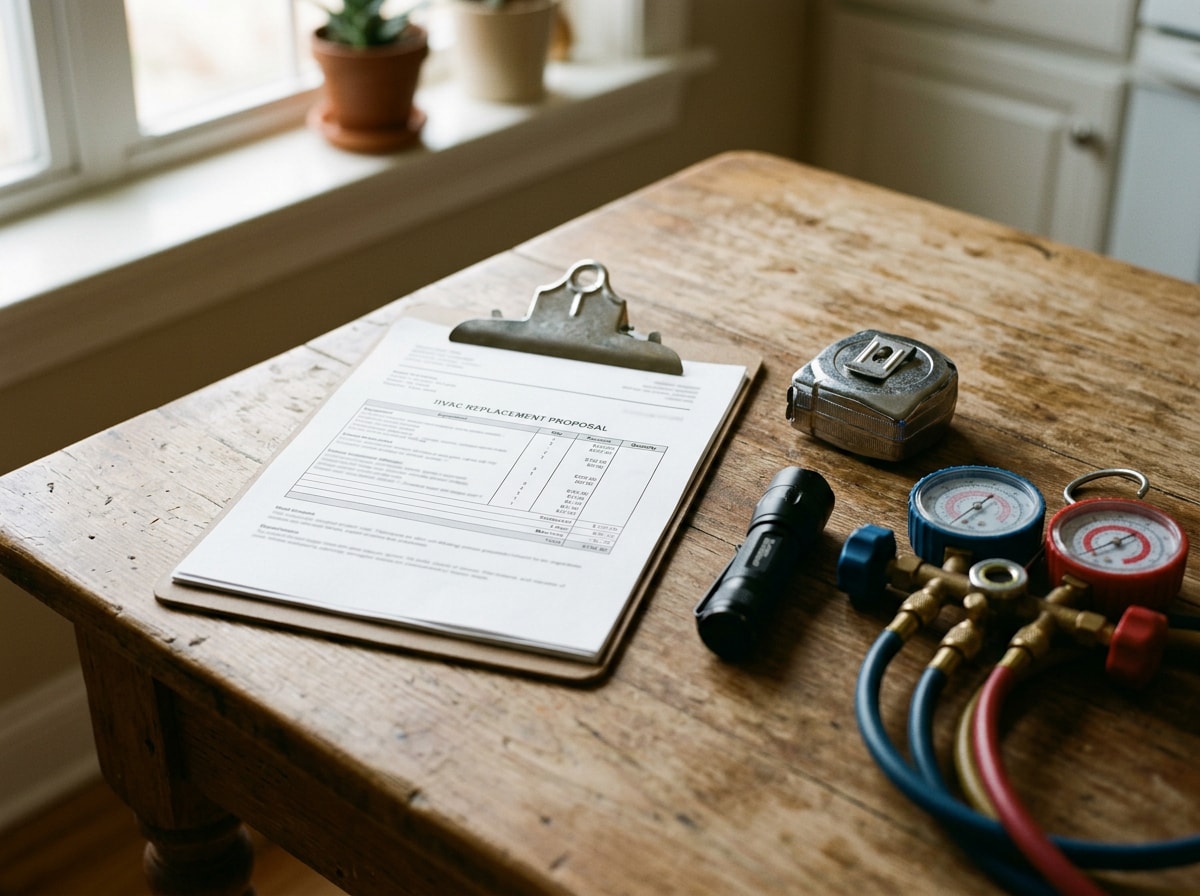
Three drivers explain almost every gap.
- Equipment tier. Single-stage versus two-stage or modulating, base efficiency versus premium.
- Scope gaps. One bid includes duct corrections, permit fees, and electrical work; the other finds them later.
- Contractor overhead. Trained crews, stocked trucks, and real warranty support cost money, and that is legitimate.
The stakes are not small. We have reviewed competing proposals on the same 2,000 square foot house that came in near $8,900 and $17,400 in the same week, and the low bid had skipped duct corrections, reused an aging line set, downgraded filtration, and left out permit costs.
A cheaper-looking bid can be the expensive one. The reverse is just as true.
Quotes also reflect housing stock. A 1910 farmhouse with gravity-era ducts and a 2015 ranch will never produce an apples-to-apples comparison, even from the same contractor. If your home runs on hot water heat instead of forced air, the scope shifts again toward boiler replacement and hydronic heating work, which prices on a different basis entirely.
HVAC Quote Red Flags in Clark County, WI
Some signals should stop the conversation:
- No written quote at all. A verbal estimate is unenforceable and is the single most important warning sign.
- A contractor who discourages competing bids, or shows a rebate as guaranteed before equipment and utility eligibility are confirmed.
- Deposits over 30%, or cash-only terms with no written contract.
- A quote that expires the moment you ask for time to think.
- A bid with no site visit. Anyone quoting without inspecting your system and ducts is guessing.
Treat a suspiciously low bid as a question, not a verdict.
If a quote comes in 30% or more below the others, ask what brand and model is included, whether the permit cost is in the number, and what labor warranty applies. Sometimes the answer is a genuinely lean operation. Often it is a missing line item.
Two local vetting steps close the loop: confirm credential and inspection responsibility for your jurisdiction, and ask whether the contractor is a registered Focus on Energy Trade Ally so rebate paperwork does not fall to you.
Wisconsin Rebates and Incentives That Change the Math
Program details shift, so verify current amounts before you sign.
Rebates change how bids compare, so every quote should state its rebate assumptions the same way.
Focus on Energy offers rebates and instant discounts on energy-efficient heating and cooling equipment including furnaces, boilers, smart thermostats, and water heaters . Confirm what applies to your equipment on the Focus on Energy heating and cooling page.
Two mechanics are worth knowing, because they affect your out-of-pocket number:
- Instant discounts.
These are paid to the participating distributor and passed through your contractor to you, with no forms and no waiting for a check, coming off your invoice at the time of purchase .
- Rebates.
These require filling out an application , so ask in writing who submits it and when.
One rural caveat that catches Clark County homeowners off guard: fuel type can disqualify you. For the smart thermostat rebate, for example, the home must be heated by a natural gas furnace, natural gas boiler, electric baseboard, or air source heat pump, and homes heated by LP, oil, or wood are not eligible . In a county with plenty of propane-heated farmhouses, that single line can erase an incentive a contractor already subtracted from the bid.
Confirm which utility serves your address, then ask whether your contractor works with a participating distributor. Our team at Del Mar Air LLC can walk through which incentives apply to the equipment you are considering, and you can see the kind of work those quotes turn into on our recent projects.
FAQ
How many HVAC quotes should I get?
Compare at least three itemized quotes. Three bids separate true market pricing from missing scope, premium equipment, or pressure sales. One caveat for Clark County: with a thinner contractor pool, collecting three may take a couple of weeks, so start before your system fails.
Are HVAC quotes free?
Most replacement quotes are free, because the contractor is bidding a sale. Diagnostic visits on a broken system are different and usually carry a service fee, which some companies credit toward the repair. Ask which one you are scheduling, and see our furnace repair page if the system is already down.
How long is an HVAC quote valid?
Commonly 30 days, sometimes less when equipment pricing is moving. The expiration date should be printed on the proposal. A quote that expires the same day you receive it is a sales tactic, not a pricing reality.
Are HVAC estimates negotiable?
Yes, but negotiate the right things. Target scope, warranty, and payment structure before raw price: ask for a longer labor warranty, included duct sealing, or a better payment schedule. Pushing only on price usually gets you the same job with cheaper parts.
How much does furnace installation cost in Wisconsin?
Furnace-only replacement runs well below full-system replacement, with widely cited Wisconsin ranges of roughly $2,500 to $10,000 depending on equipment tier, venting changes, and access. The $5,400 to $14,000 range covers full system replacement, where a new air conditioner, coil, and line set are included.
Do I need a permit to replace HVAC equipment in Wisconsin?
Usually yes. Equipment replacement typically requires a permit, and your local building department or UDC inspection agency is the final authority. Expect the application to list equipment make, model, and BTU/AFUE ratings, plus heat loss or Manual J sizing data. Confirm with your specific Clark County town, village, or city office.
When is the cheapest time to replace a furnace or AC?
The shoulder seasons, roughly April to May and September to October. Crews have open schedule, no overtime is involved, and you are not paying emergency rates. Summer is generally the cheapest window for furnace work, and winter is the cheapest for air conditioning replacement.
How long does a full system installation take?
Most residential changeouts are a one-day job, with two days when ductwork corrections, venting reroutes, or electrical upgrades are involved. Boiler and hydronic system work typically takes longer. The quote should state projected start and finish dates either way.
Get a Written, Itemized Quote You Can Actually Compare
Bring us the other bids. We will walk the same house, run the load calculation, and put every line item on paper so you can see exactly where the differences live.
Get a free estimate from Del Mar Air LLC, serving Clark County and the surrounding Chippewa Valley from Stanley to Cadott. If cooling is your immediate concern, our write-up on AC services in Boyd, WI covers how we price repair versus replacement.
Written and reviewed by the installation and service team at Del Mar Air LLC, a Wisconsin heating and cooling contractor working in Clark and Chippewa counties. Questions about a quote you already have? Send it to us through our contact page and we will tell you what is missing.