Hiring an HVAC rental company in Chippewa County, WI usually starts on the worst possible day: a rooftop unit quits during a July production run, or a boiler drops offline at 3 a.m. in January. Temporary equipment buys you conditioned air now, while the permanent repair or replacement moves forward on its own schedule. Here is what you can rent, how it gets sized, what shows up on the invoice, and when renting beats buying.
What You Can Rent: Four Equipment Families
Nearly every temporary job in the county draws from four categories. Mixing them up is how projects lose days.
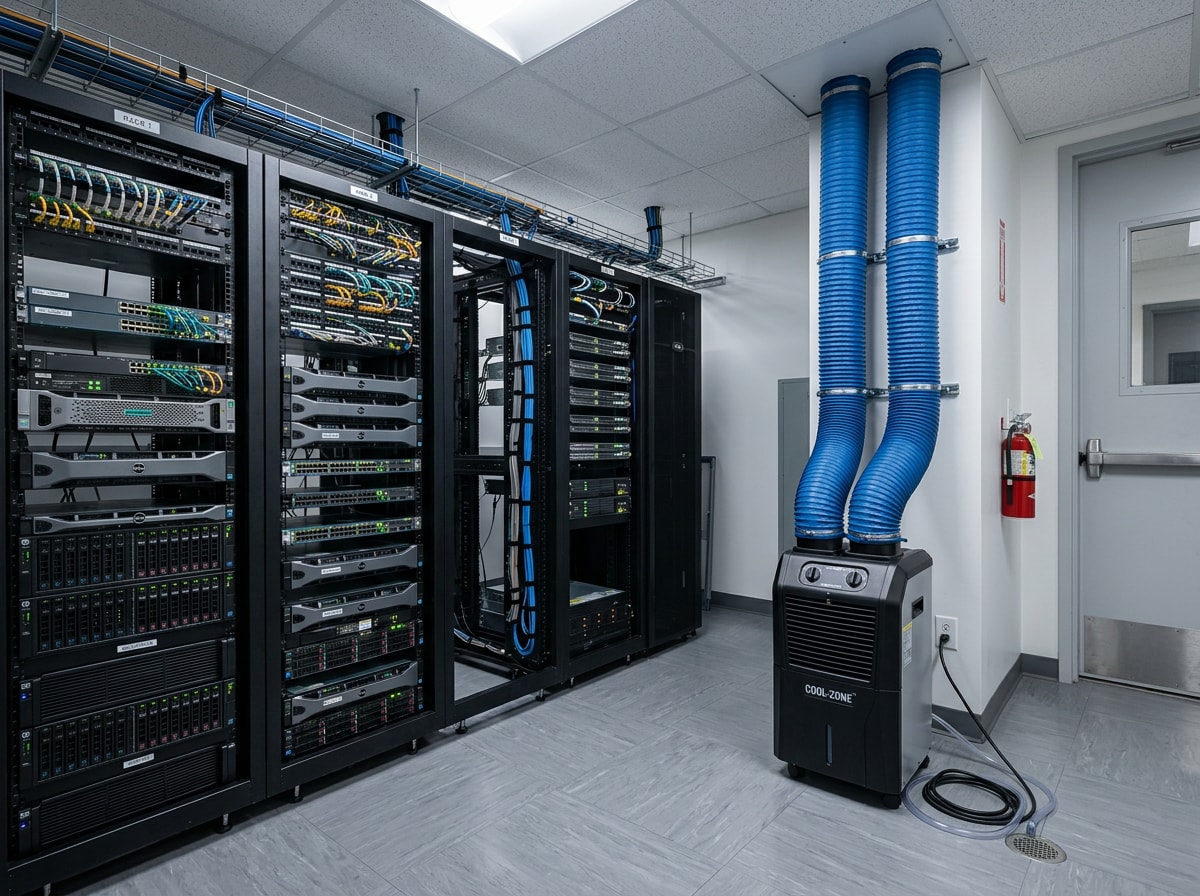
Portable Air Conditioners and Spot Coolers
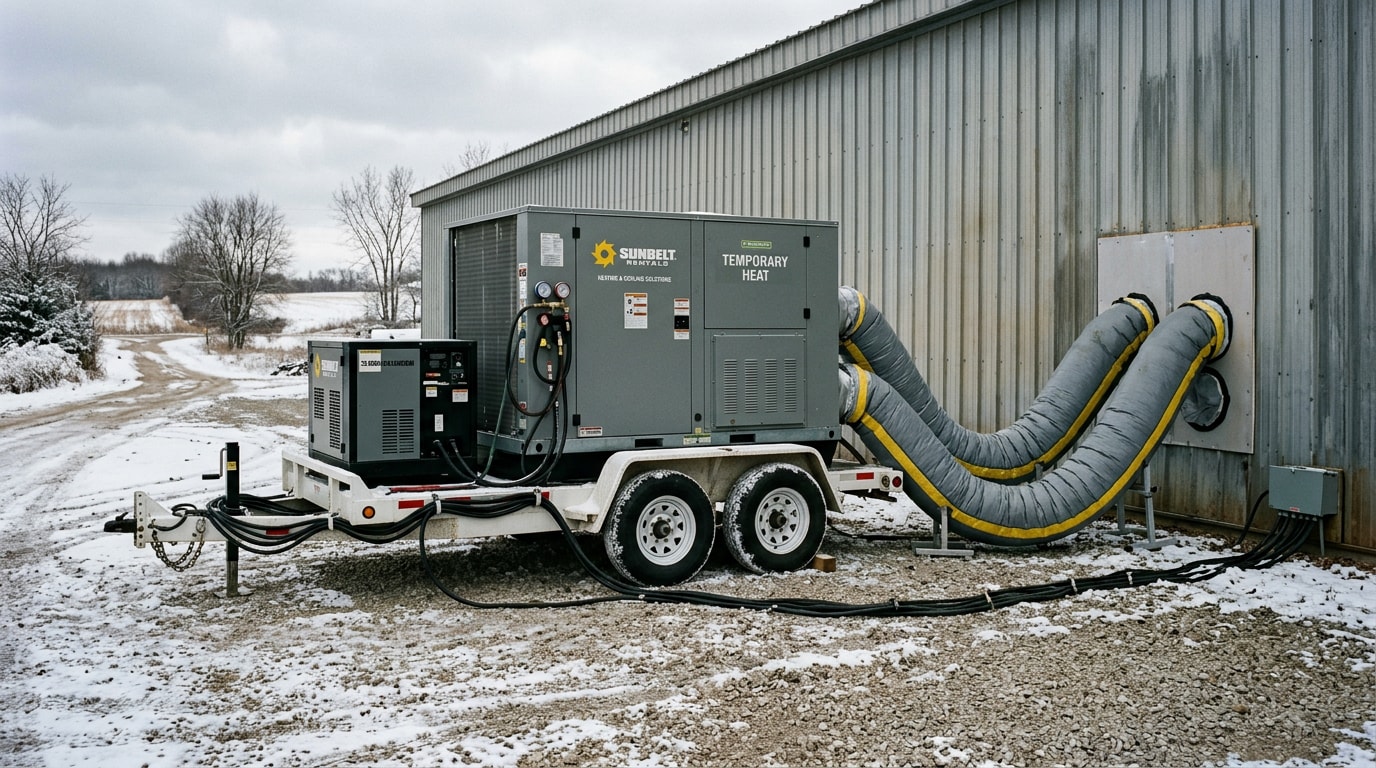
Spot coolers in the 1 to 5 ton range cover server rooms, control rooms, small offices and precision equipment cooling. Larger packaged and trailer-mounted units scale past 80 tons for open floor space, tents and jobsite cooling.
One local caveat that national rental pages skip: evaporative coolers shine in dry climates and underperform in a humid Wisconsin August. Tonnage matters, but so does whether the unit removes moisture or just moves air. If the failure turns out to be repairable, compare the rental path against air conditioning system repair before you commit to a long rental term.
Chillers, Cooling Towers and Air Handlers
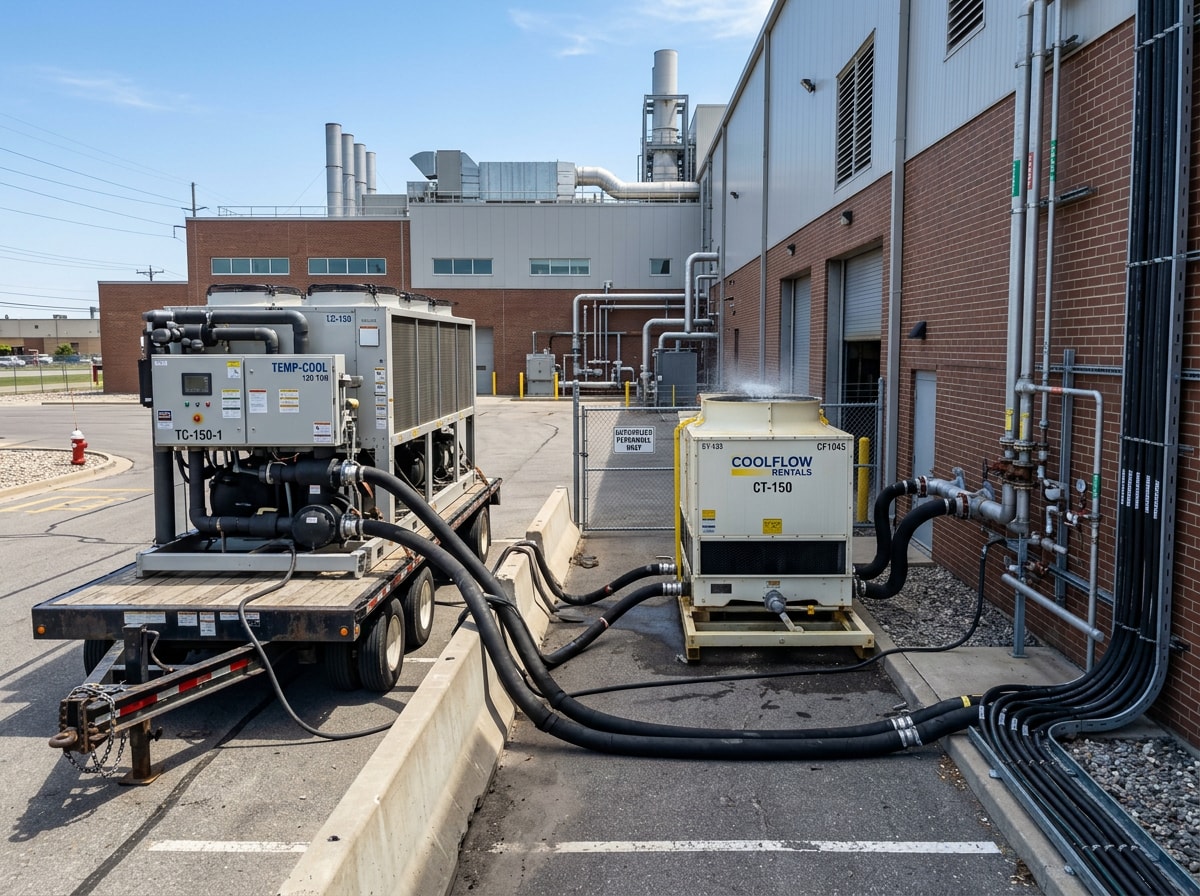
Larger facilities rent a system, not a box. A chiller makes chilled water, a cooling tower rejects the heat, and an air handler turns that chilled water into conditioned air for a warehouse, tent or plant floor.
Small process chillers start around 3 to 40 tons. Screw chillers reach several hundred tons. Air-cooled units set up faster; water-cooled units need tower support. Plan hose runs, water supply, electrical service and crane access before the truck rolls.
Temporary Heaters
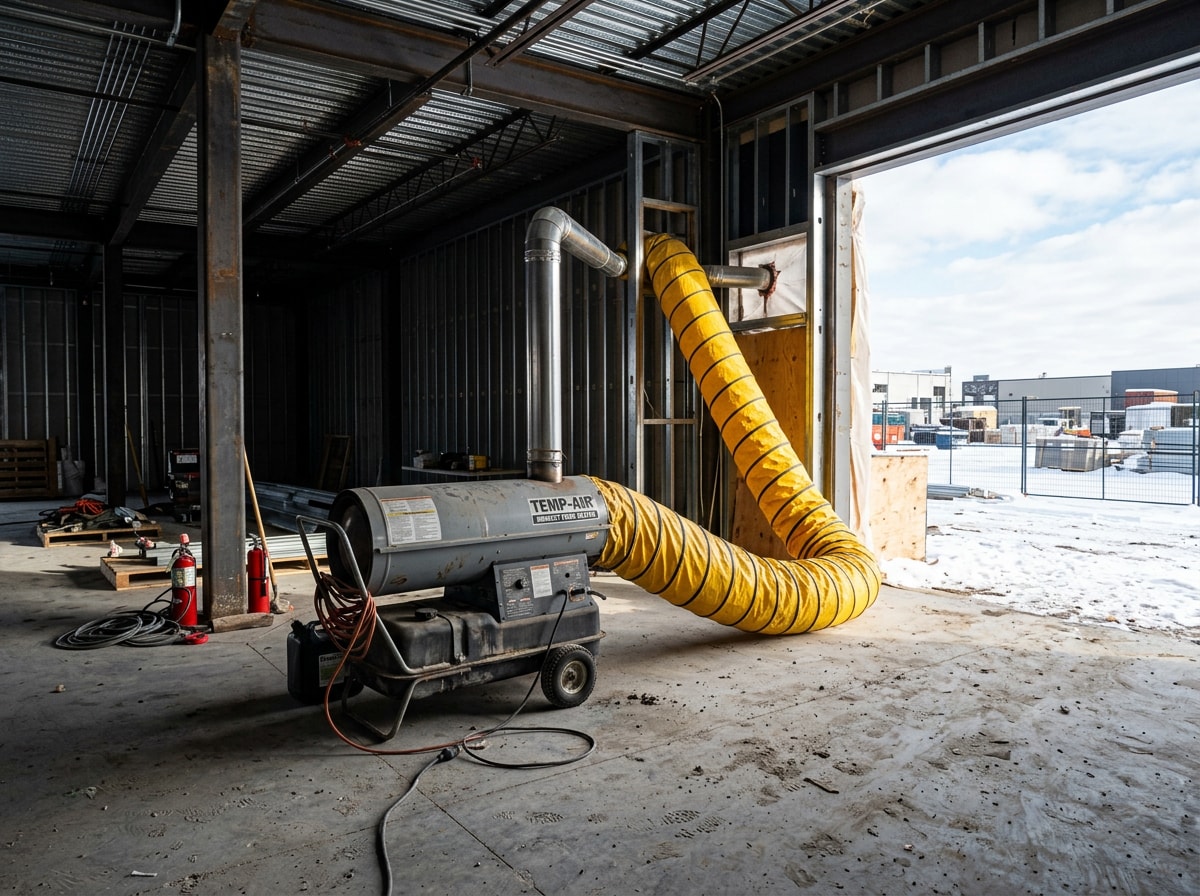
Heater rentals split by fuel type and by how combustion is handled:
- Electric and flameless units. Best for occupied or enclosed spaces with no combustion products indoors.
- Indirect fired heaters. Exhaust stays outside the work area, which is why they dominate concrete cure and boiler swap work.
- Direct fired and propane heaters. Efficient and cheap to run, but they vent combustion products into the space.
- Hydronic and ground heaters. Ground thaw and frost removal ahead of excavation.
Construction heat carries real safety rules. Review OSHA's standard on temporary heating devices, 29 CFR 1926.154, which covers fresh air supply, clearance to combustibles and mounting on non-combustible bases. If the permanent system is the problem, a boiler repair visit often runs in parallel with the heater rental.
Dehumidifiers and Air Movers
Refrigerant dehumidifiers pull moisture efficiently in warm conditions. Desiccant units keep working in cold spaces where refrigerant coils frost, which is why they win in unheated winter enclosures. Air movers finish the drying.
Three situations generate most dehumidifier calls here:
- Drying concrete or drywall against a build schedule.
- Water damage drying after a burst pipe or a flood.
- Condensation control inside a cold-weather enclosure where warm air meets cold steel.
Emergency and Same-Day Temporary HVAC
Emergency rental follows a predictable path. You call, a technician runs a quick load assessment over the phone, equipment dispatches from the nearest yard, and a crew handles delivery, rigging and startup.
The local triggers repeat every year: a failed rooftop unit at a manufacturer, a boiler-down event at a school or clinic in January, a storm outage, a flood cleanup. Many after-hours calls also need temporary power, because a downed grid means the rental AC needs a generator behind it.
Have this ready before you dial. It cuts hours off dispatch:
- Space dimensions, ceiling height and target temperature.
- Available voltage and phase at the drop point, plus breaker size.
- Door width, dock height and whether a crane or forklift is on site.
- Duct or hose run distance from the equipment to the space.
- Whether the space is occupied, and by how many people.
For the permanent side of the same emergency, see emergency air conditioning service and emergency furnace service. If you are still deciding who to call, our breakdown of air conditioning repair companies near you in Chippewa County) walks through how to vet a contractor before the emergency hits.
What HVAC Rental Actually Costs
Rental pricing is never one number, which is why quotes look so different from each other. Compare line items, not totals.
| Line item | What it covers | What moves the number |
|---|---|---|
| Equipment rate | Daily, weekly or monthly rate by unit and tonnage | Capacity, unit type, season, fleet availability |
| Delivery and pickup | Freight both directions | Distance from the yard, access, after-hours timing |
| Rigging and setup | Crane, forklift, placement, startup | Roof placement, tight access, high-lift work |
| Accessories | Ducting, hoses, spider boxes, cable, filters | Run length and duct diameter |
| Power or fuel | Generator, cable, propane, diesel, natural gas hookup | Runtime hours and fuel type |
| Damage waiver | Optional coverage on the unit | Site conditions and term length |
Four things you control directly:
- Right-size instead of over-sizing. An extra 10 tons you never use is billed every month.
- Book longer blocks. Weekly and monthly rates beat stacked daily rates.
- Schedule off-peak. Regional fleet availability tightens fast during heat waves and cold snaps.
- Clear site access. A blocked dock or a locked gate turns into a second trip charge.
Treat any national rental price list as a reference point rather than a quote. Capacity, duration, season and access drive the local number more than the sticker rate does. Get a free estimate and you will get line items instead of a lump sum.
How to Size Temporary Equipment
Sizing starts with volume, which is square footage times ceiling height. Then you adjust for insulation, how tightly the space is sealed, target setpoint, occupancy, heat load from equipment and lighting, outside air requirements, and whether dust or fumes are present.
The common shortcut is roughly 20 BTU per square foot for cooling. That rule collapses the moment a space has unusual internal load or a leaky envelope. Compare two Chippewa County jobs:
| Input | 5,000 sq ft warehouse bay | 400 sq ft server room |
|---|---|---|
| Ceiling height | 24 ft | 9 ft |
| Envelope | Uninsulated metal, doors opening all shift | Sealed interior room |
| Internal heat load | Low | About 15 kW of equipment |
| Rule-of-thumb result | ~8 tons | ~0.7 tons |
| Realistic need | 15 to 20 tons, driven by volume and infiltration | 4 to 5 tons, driven by equipment heat |
Neither lands anywhere near the shortcut. Oversizing is not a safe hedge either: the U.S. Department of Energy notes that oversized cooling equipment raises cost and removes humidity poorly because it short cycles, per its guidance on selecting properly sized air conditioners. Run a real load calculation whenever internal gains dominate.
Why Chippewa Valley Weather Drives Rental Demand
Two seasons create almost all the calls, and the local record explains why.
Long-term data from the Chippewa Valley Regional Airport station shows an annual average temperature of about 44.7 degrees, with a record low of 45 below zero set on January 30, 1951, according to the University of Wisconsin State Climatology Office's historical temperature record. That swing is the whole story. A heating failure here is a freeze-damage event within hours, not an inconvenience, and summer humidity peaks are high enough that cooling loss shuts down production floors and food service.
Practically, that means two things for facilities in Chippewa Falls, Lake Hallie, Bloomer, Cornell and Stanley:
- Winter rentals need freeze protection for hydronic loops, condensate lines and any water-cooled equipment.
- Summer rentals need genuine dehumidification, not evaporative cooling.
Delmar Air LLC works this corridor daily. On a January boiler-down call, the sequence we run is temporary heat first to protect the piping, then diagnosis, then the permanent fix. Reversing that order is how buildings end up with split pipes on top of a dead boiler. See our full Chippewa County service area for coverage, or browse recent work on the projects page.
Planned Projects: Replacements, Renovations and Shutdowns
Rental is not only a panic purchase. Planned temporary equipment bridges a chiller or boiler swap, holds temperature through a renovation, adds supplemental cooling during peak season load, or conditions a tent for a summer event.
Book early. Fleet availability in the Chippewa Valley tightens during heat waves and cold snaps, so schedule-driven work should reserve months out. Facilities with critical loads often sign a contingency agreement ahead of time so the call is dispatch, not negotiation.
If the rental is bridging a permanent project, line it up with the install date for HVAC system installation, boiler replacement or air conditioning replacement. Every extra week of overlap is a week of rental you pay for twice.
Rent or Buy: The Honest Comparison
| Factor | Renting | Buying |
|---|---|---|
| Up-front cost | None beyond the first invoice | Full capital outlay |
| Best for | Outages, projects, seasonal peaks, unknown duration | Permanent, year-round load |
| Maintenance | Included with the rental fleet | Yours, including off-season storage |
| Sizing flexibility | Swap capacity as the job changes | Locked in at purchase |
| Cost over 12+ months | Adds up fast | Usually wins |
| Setup | Delivered, rigged and started by the crew | Contractor install and commissioning |
The break-even usually lands somewhere in the multi-month range, depending on tonnage. If the need is permanent, stop renting and price the replacement.
FAQ
Is renting HVAC equipment a good idea?
Often, yes. Renting avoids capital outlay, off-season storage and maintenance, and you get right-sized equipment with professional startup each time. If the need is permanent and year-round, buying usually wins on total cost.
How fast can a rental unit be delivered in Chippewa County?
Same-day delivery is realistic for common sizes when the yard has stock and site access is clear. Large chillers, crane-set rooftop units and generator packages usually take longer because of rigging and permitting.
How do I size HVAC equipment for my space?
Start with square footage times ceiling height, then adjust for insulation, air leakage, occupancy, equipment heat and your target setpoint. Use a load calculation instead of a per-square-foot rule whenever internal gains or infiltration are high.
What are the venting requirements for portable HVAC equipment?
Portable AC units have to exhaust hot air somewhere real, such as a drop ceiling plenum, a window kit or a duct run, not back into the same room. Combustion heaters add separate combustion air and flue requirements that vary by fuel and unit type.
Can I rent a temporary boiler or furnace in winter?
Yes. Trailer-mounted boilers and indirect fired heaters both cover heating outages, and the right choice depends on whether the building distributes heat by water or by air. Temporary heat is normally paired with furnace repair or boiler system maintenance so the permanent system comes back fast.
What equipment is most common in disaster response and recovery?
Towable generators for temporary power, portable ACs and spot coolers, propane or natural gas heaters, dehumidifiers paired with air movers for drying, and air scrubbers for particulate and odor control during cleanup.
Do I need an electrician to connect rental equipment?
Usually yes for anything three-phase or hard-wired. Small single-phase spot coolers plug into an appropriate dedicated circuit, but larger units need a qualified electrician for the disconnect, cable and breaker sizing.
Talk to a Local Team Before the Next Outage
Temporary equipment is only useful if it arrives sized correctly, wired safely and vented properly. That takes a contractor who knows the buildings, the weather and the access problems in this county.
Delmar Air LLC handles temporary heating, cooling, dehumidification and the permanent repairs behind them across Chippewa County, Stanley, Cadott and Holcombe. Start at our homepage to see the full service list, review our HVAC contractor services, or get a free estimate and we will walk the load numbers with you before anything ships.