When you need ac air repair in Gilman, WI, the first question is almost always the same: what is this going to cost? This guide gives you 2026 price ranges by part, the symptoms that point to each failure, and the one piece of local math that most national cost calculators get wrong for Taylor County homes.
What AC Air Repair Costs in Gilman, WI (2026)
Most Gilman repairs land in a few predictable bands. Parts prices move with brand and system size, so treat these as planning numbers, not quotes.
| Repair | Typical 2026 installed cost | How common |
|---|---|---|
| Run capacitor replacement | $150 to $400 | Very common, often same visit |
| Contactor replacement | $150 to $350 | Very common |
| Condenser fan motor | $400 to $900 | Common on 8+ year systems |
| Blower motor (indoor) | $450 to $1,100 | Moderate |
| Condensate drain clearing | $125 to $300 | Common in humid weeks |
| Refrigerant leak repair and recharge | $400 to $1,500+ | Varies by leak location |
| Evaporator coil replacement | $1,200 to $2,800 | Less common, high cost |
| Compressor replacement | $1,800 to $3,500+ | Rare, usually triggers replace talk |
A firm number needs an on-site diagnosis. Phone quotes on a system nobody has looked at are guesses, and they are almost always low.
Diagnostic fees in rural Taylor County usually run $89 to $160, and many shops, including ours, credit that fee toward the repair when you approve the work the same visit. Ask about that before you book.
Get a Free Estimate if you want pricing on a specific failure instead of a range.
Signs You Need AC Repair
Each symptom points somewhere specific. Matching the symptom to the likely cause tells you whether this is a tonight problem or a this-week problem.
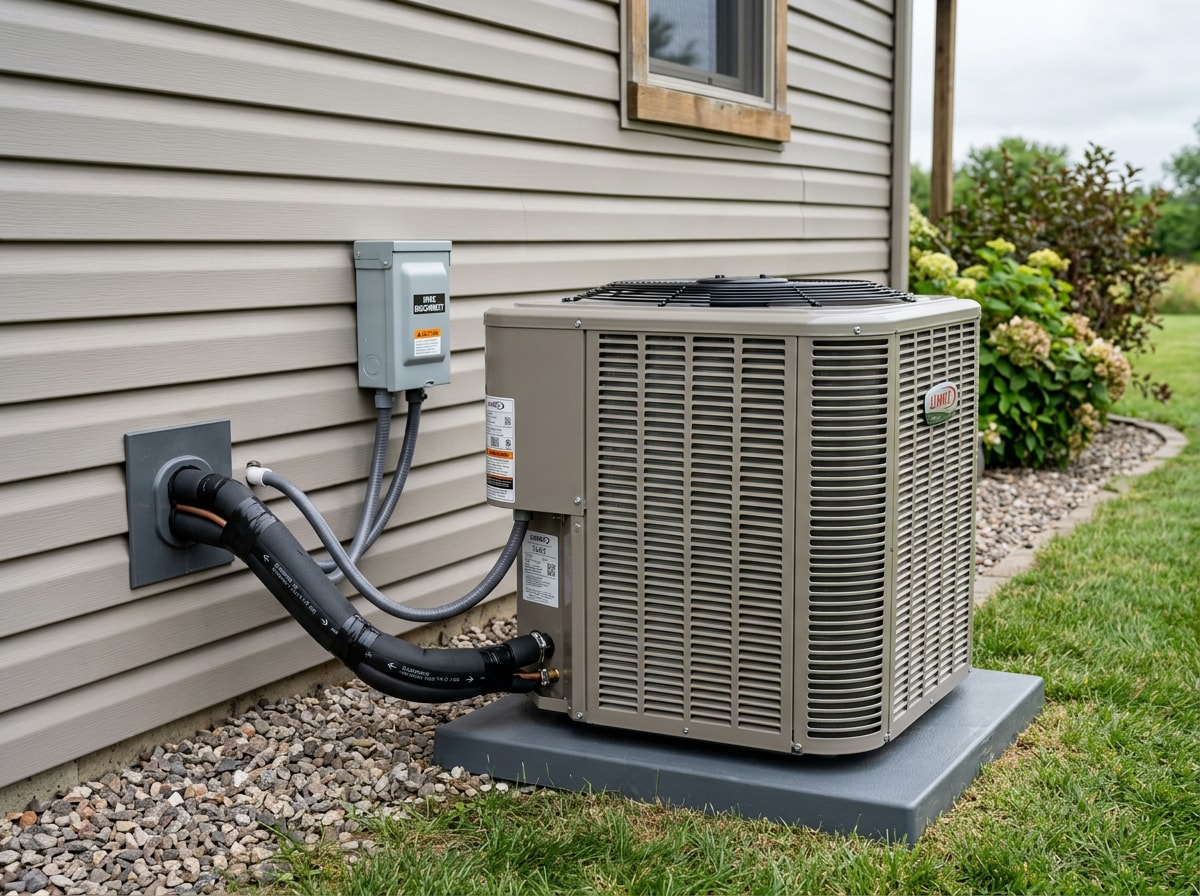
- Runs but will not cool. Low refrigerant charge, a failed capacitor, or a compressor that is not starting.
- Weak airflow at the vents. Plugged filter, slipping blower motor, or a collapsed duct run.
- Short cycling on and off. Dirty coil, oversized equipment, or a thermostat reading the wrong temperature.
- Grinding or loud humming. Motor bearings or a capacitor on its way out.
- Rattling. Usually loose hardware or debris in the condenser cabinet.
- Musty smell. Standing water at the drain pan or a dirty evaporator coil.
- Ice on the refrigerant lines. Airflow restriction or a refrigerant leak.
- Electric bill jumped with no change in habits. Efficiency loss from a dirty coil, low charge, or a failing motor.
Two symptoms are not DIY territory. A frozen evaporator coil and any burning smell both mean you shut the system off at the thermostat and call a technician. Running it longer turns a $300 part failure into a compressor failure.
Neglect costs money every month, too. The Department of Energy reports that simply replacing a dirty filter can cut an air conditioner's energy use by 5 to 15 percent.
Full details on what we repair are on our air conditioning repair page, and deeper component work lives under air conditioning system repair.
Four Checks Before You Call
These four checks close out a surprising share of service calls. They take about ten minutes.
- Thermostat. Set to Cool, fan set to Auto. Fan on "On" blows room-temperature air between cycles and looks exactly like a breakdown.
- Breaker panel. Look for a breaker sitting halfway between on and off. Reset it once. If it trips again, stop and tell your technician, because repeat trips point to a short or a seized motor.
- Air filter. A gray, matted filter chokes return airflow and freezes the coil. Check it monthly during cooling season, which is also what ENERGY STAR's maintenance checklist recommends.
- Vents and outdoor unit. Open closed registers, move furniture off supply vents, and clear grass clippings, cottonwood fluff, and brush from the condenser.
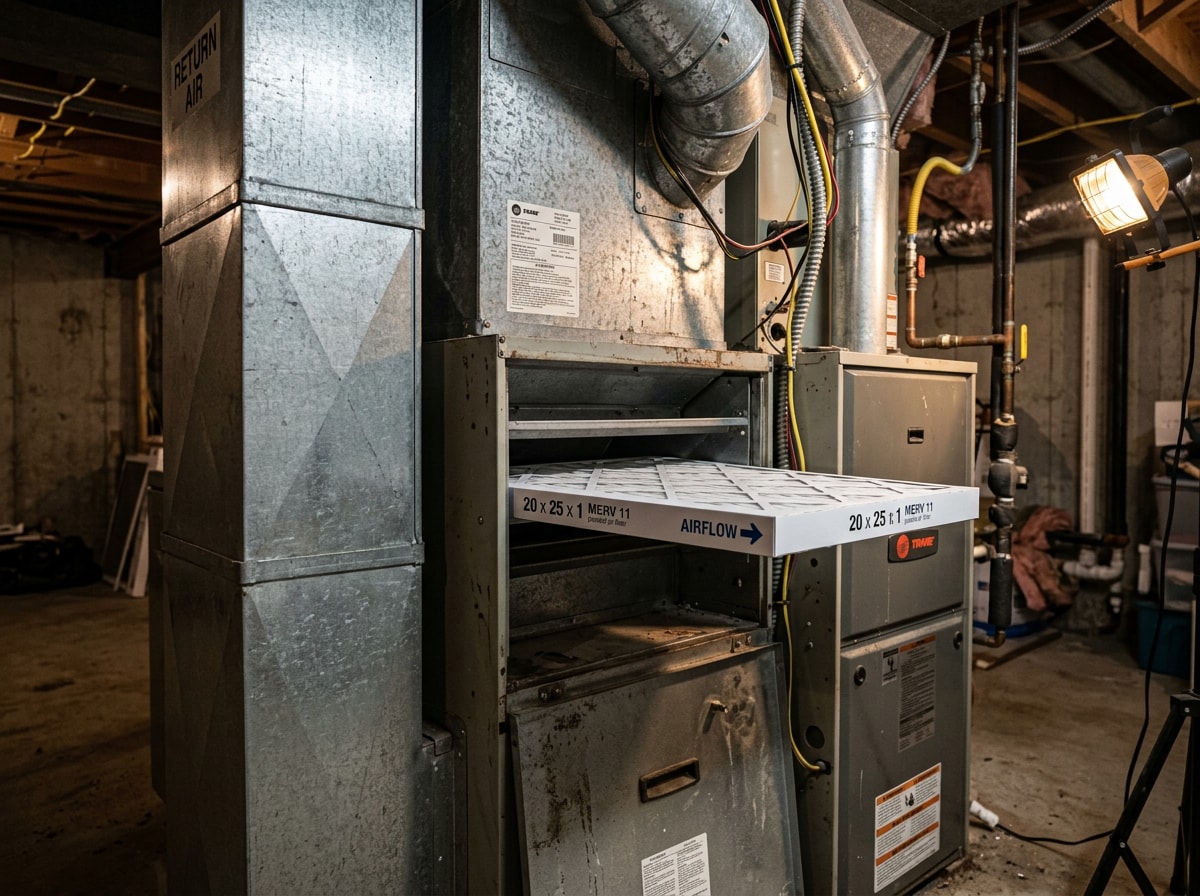
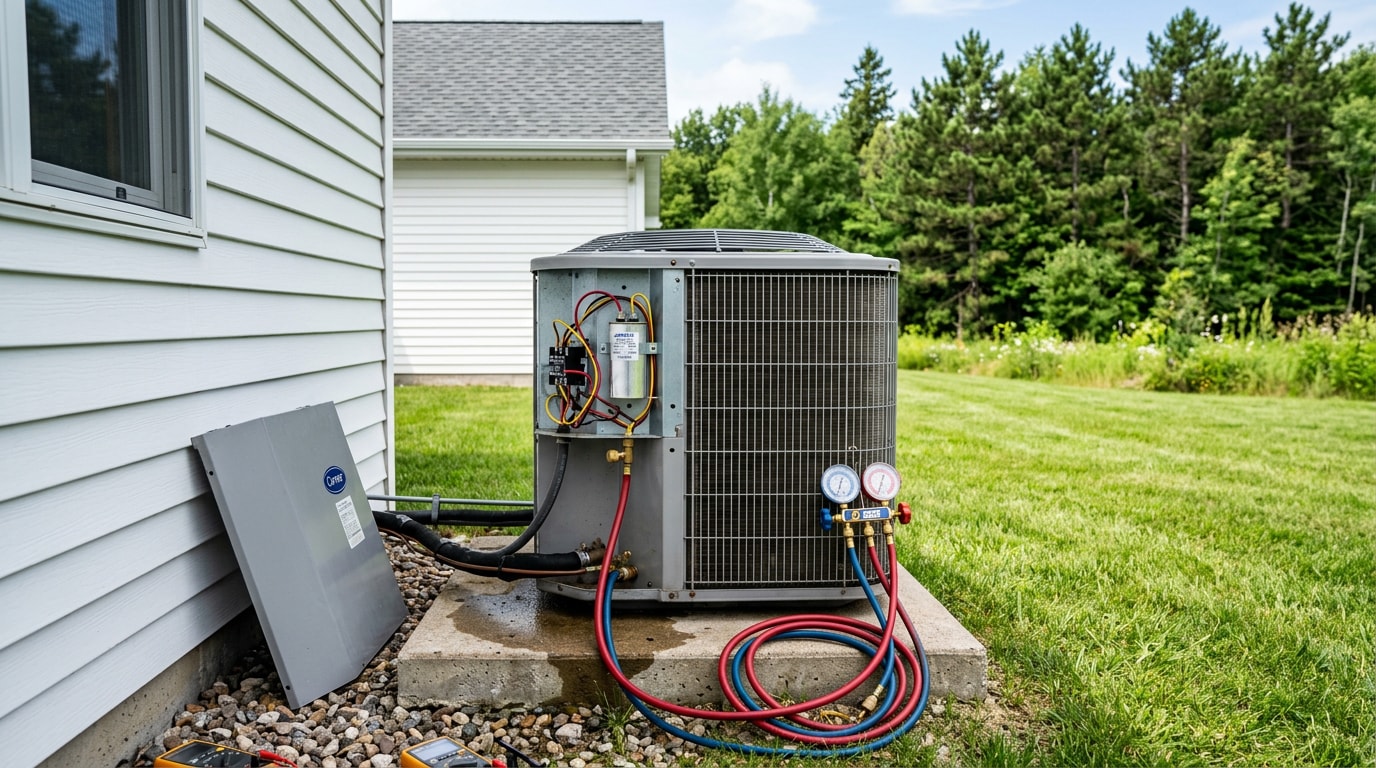
Stop there. Opening the electrical panel, discharging a capacitor, or touching refrigerant lines carries shock and burn risk, and refrigerant handling legally requires EPA Section 608 certification.
If the system is clean and the breaker holds, book service. Ongoing A/C system maintenance is what keeps these checks from turning into repairs.
Emergency AC Repair in Gilman
A real emergency in a Wisconsin summer looks like this:
- No cooling during a heat advisory, especially with infants, elderly residents, or someone recovering from illness in the house
- A burning electrical smell from the air handler or condenser
- Water damage from a backed-up condensate drain
- A breaker that trips every time the unit tries to start
A noisy fan or one room running two degrees warm can wait for a scheduled slot. Calling those in as emergencies just costs you an after-hours rate.
While you wait: shut the system off, close blinds on south and west windows, and run ceiling fans so the air feels cooler than it is. After-hours calls are dispatched by severity and distance through our emergency air conditioning service, and you can confirm coverage on our Gilman, WI service area page.
Mini Split and Ductless Repair in Gilman
Plenty of homes around Gilman never had ductwork. Additions, garages, shops, and cabins get cooled by ductless heads, so "AC repair" here often means mini split work rather than central air work.
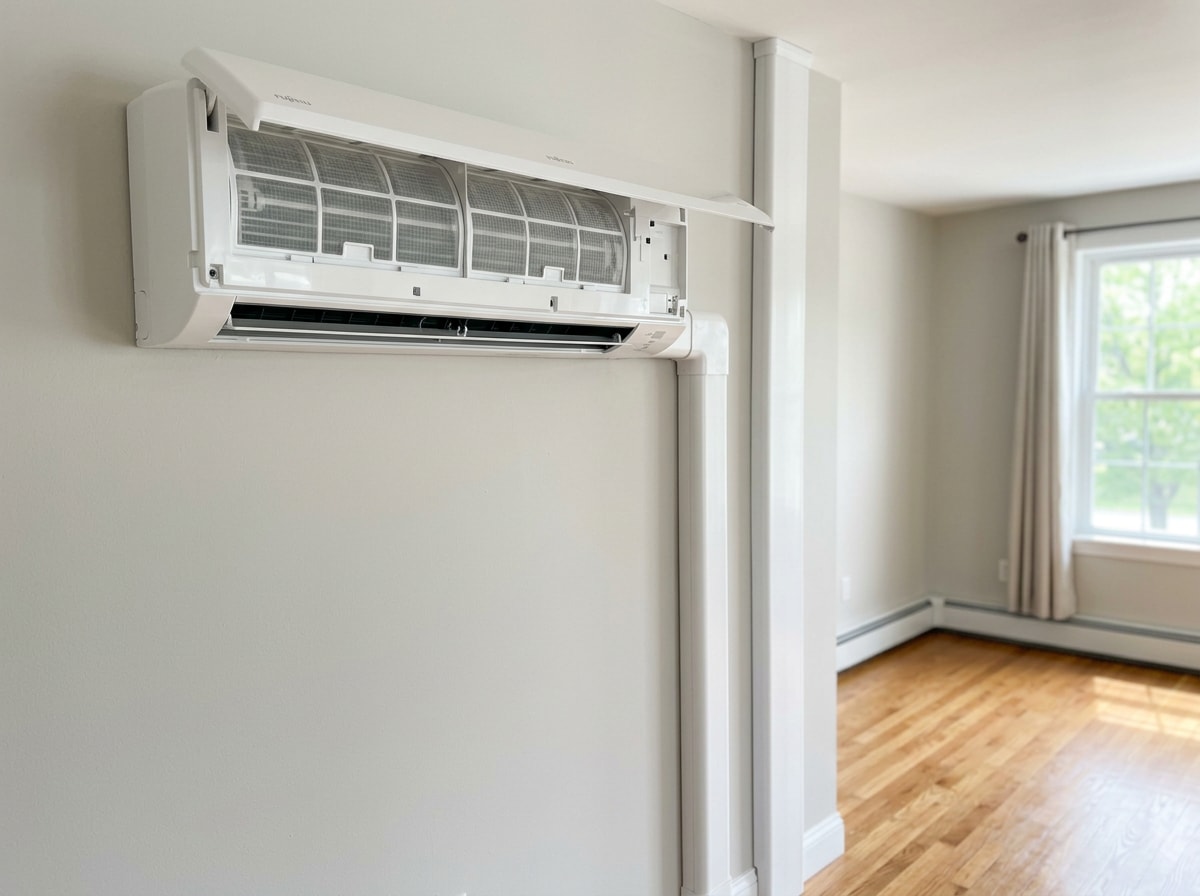
A ductless system that will not cool usually traces to one of five things:
- A refrigerant leak, most often at a flare connection
- A frozen indoor coil from a filthy washable filter
- A failing compressor or inverter board at the outdoor unit
- A thermistor reading several degrees off
- A blocked or kinked condensate line backing water into the head
Noise is its own clue. Rattling at the indoor head is usually a loose panel or a dirty fan wheel. Buzzing at the outdoor unit points to electrical components.
One principle worth repeating: refrigerant is not consumed. If a system is low, it has a leak. Topping it off without finding the leak just schedules the next failure. That is why a proper visit includes leak detection before any refrigerant recharge.
If repair stops making sense, our guide to AC installation costs and sizing in Gilman walks through what a new system actually runs here.
Repair or Replace: the Taylor County Math
Four things drive the decision: system age, repair frequency over the last three years, current efficiency, and which refrigerant it uses.
| Factor | Repair wins | Replace wins |
|---|---|---|
| Typical 2026 cost | $150 to $1,200 | $5,500 to $11,000 installed |
| System age | Under about 10 years | 12 to 15+ years |
| Repair history | First failure in 3 years | Third call in two seasons |
| Refrigerant | R-410A or current low-GWP blends | R-22, where recharges get expensive fast |
| Efficiency gain | Restores original performance | Higher SEER2 cuts seasonal run cost |
Here is the part national calculators miss. Most repair-vs-replace payback math assumes a long southern cooling season. Gilman runs roughly three to four months of real cooling demand per year, and plenty of that is mild. A higher SEER2 unit saves a smaller absolute dollar amount here than the same upgrade saves in Missouri or Texas, because there are fewer hours to save over.
The practical effect: in northern Wisconsin, efficiency alone rarely justifies replacing a working system. Age, repair frequency, and refrigerant availability do. A 12-year-old R-410A unit with one bad capacitor is worth fixing here longer than a national calculator would tell you. A 16-year-old R-22 unit with a leaking coil is not.
The backstop rule still holds: if a repair costs more than about half of replacement, replace. Refrigerant tilts it further, since production and import of R-22 ended and only recycled or previously produced supply remains available for servicing older equipment, per EPA guidance on repairing home air conditioners.
When the math lands on new equipment, see air conditioning replacement.
What a Legitimate Repair Invoice Should Show
This is the single best fraud filter available to a homeowner, and almost nobody asks for it. Before you pay, your invoice or service ticket should list:
- The measured readings, not just the verdict: supply and return air temperature split, suction and liquid line pressures, and superheat or subcooling values
- Amp draw on any motor or compressor the tech diagnosed as failing
- The part number replaced, plus the microfarad rating if it was a capacitor
- Refrigerant added by weight, in pounds and ounces, with the type named
- Whether a leak search was performed and where the leak was found
A tech who replaced a capacitor should be able to show you the measured microfarad reading against the rated value printed on the old part. If a shop cannot produce numbers, you have no way to know whether the part was failing or just old. We put these readings on every ticket, and homeowners comparing two quotes find out quickly which contractor actually tested anything.
Why Gilman Homeowners Call Del Mar Air
Our technicians are licensed, insured, and EPA Section 608 certified, and our trucks stock the capacitors, contactors, and motors behind most summer breakdowns, so a large share of calls get fixed on the first visit.
We work Gilman and the 54433 area year-round, so we know the local pattern: cottonwood season plugs condenser coils here in June, and we clean more coils in that four-week stretch than in the rest of the summer combined. Last July a Gilman homeowner called at 7 a.m. with a dead condenser fan motor and had cooling back before noon.
We answer the phone after hours, quote guaranteed pricing after the diagnosis, and service all makes and models. See completed work on our projects page, browse the full HVAC contractor services lineup, or start at our home page.
Ready to book? Get a Free Estimate and we will give you a window, not a vague "sometime today."
FAQ
How much does it cost to fix an AC that is not blowing cold air?
Most no-cooling calls in Gilman resolve for $150 to $900. A capacitor or contactor sits at the low end, a condenser fan motor in the middle, and a refrigerant leak repair at the top. Compressor failure is the outlier and usually pushes the conversation toward replacement.
Why is my AC running but not cooling?
The three usual causes are a failed run capacitor stopping the compressor, low refrigerant from a leak, or a severely restricted filter freezing the evaporator coil. Check the filter first. If it is clean and the outdoor fan is spinning but the air is still warm, it is an electrical or refrigerant issue and needs a technician.
How long does an AC repair take?
Stocked-part repairs like capacitors, contactors, and drain clearing typically take 45 to 90 minutes including diagnosis. Motor swaps run one to three hours. Leak repairs take longer because the system must be recovered, repaired, evacuated, and weighed back in, and a special-order coil can add days.
Is it worth repairing a 15 year old air conditioner?
Usually not, if the repair is major. At 15 years you are past typical service life, parts availability gets thin, and any refrigerant-side repair risks a second failure soon after. A cheap fix like a capacitor can buy you a season. A coil or compressor at that age is money spent on equipment that is nearly done.
Can you repair my R-22 air conditioner?
Yes, with conditions. Non-refrigerant failures like a capacitor, contactor, or fan motor are straightforward. But a refrigerant leak on an R-22 system often costs more to recharge than the unit is worth, since only reclaimed supply remains. That usually points toward replacement.
My AC cools, but not like it used to. Does it need repair?
A gradual loss of cooling commonly signals a slow refrigerant leak. The tell is a system running long cycles and never quite holding setpoint, with frost appearing on the lines as the leak grows. Check the filter first, because a dirty one produces the same symptom for a lot less money.
How long does an AC unit last?
Most central air conditioners last 10 to 15 years. Northern Wisconsin's shorter cooling season means less annual run-time, so a well-maintained system here often reaches the upper end of that range or beyond. Skipped maintenance pulls it down fast.
What is the most expensive part to replace on an air conditioner?
The compressor. Replacing one means recovering refrigerant, cutting and brazing lines, pulling a vacuum, and recharging, so labor stacks on top of an already costly part. Evaporator coil replacement is a close second. On an aging system, full replacement frequently beats a compressor swap. If you want the coil cleaned before it becomes a coil replacement, that is covered under air conditioning coil cleaning.
Do you serve areas outside Gilman?
Yes. We cover Taylor County plus neighboring communities including Thorp, Stanley, and Holcombe.