Hiring an airconditioner installer in Gilman, WI should mean one licensed crew, a correctly sized system, and a cool house before the first humid stretch of July. This guide covers 2026 installed cost ranges for Taylor and Clark County homes, how sizing is actually calculated, what the permit process looks like, and the federal incentive that quietly disappeared on January 1.
That last point changes the math on a lot of 2026 quotes, so read the incentive section before you sign anything.
2026 AC Installation Costs in the Gilman Area
These are the installed ranges we quote across Gilman and the surrounding townships. They are planning numbers, not quotes. Tonnage, duct condition, electrical work and attic or crawlspace access all move the final figure.
| Project | Typical 2026 installed range | Notes |
|---|---|---|
| Like-for-like central AC changeout | $4,500 to $8,500 | Matched coil and condenser, existing ductwork reused |
| New central AC in a home with no cooling | $9,000 to $15,000 | Includes duct modifications and a new line set |
| Single-zone ductless mini split | $4,000 to $6,500 | Additions, upstairs bedrooms, shops |
| Multi-zone ductless system | $9,000 to $18,000 | Two to four heads, one or two outdoor units |
| Major repair (compressor or evaporator coil) | $1,200 to $2,800 | Often the better call under 8 years old |
| Annual AC maintenance visit | $150 to $300 | Usually discounted inside a plan |
Three things drive the spread more than brand choice:
- Electrical. Older rural panels frequently need a new breaker, disconnect or whip. Budget a few hundred dollars if your panel is from the 1980s.
- Duct condition. Undersized return ducts choke a new high-efficiency unit and have to be corrected, not ignored.
- Line set. A 1990s line set that carried R-22 is not always reusable with modern refrigerant. Replacement adds labor.
If you want a written number for your own house, request a free estimate and we will measure before we price.
How a Proper AC Installation Works, Step by Step
A professional AC installation follows the same six steps every time:
- Manual J load calculation. Measured, not guessed.
- Equipment selection. Capacity first, then efficiency tier and budget.
- Removal and recovery. Old condenser and indoor coil out, refrigerant recovered to EPA rules.
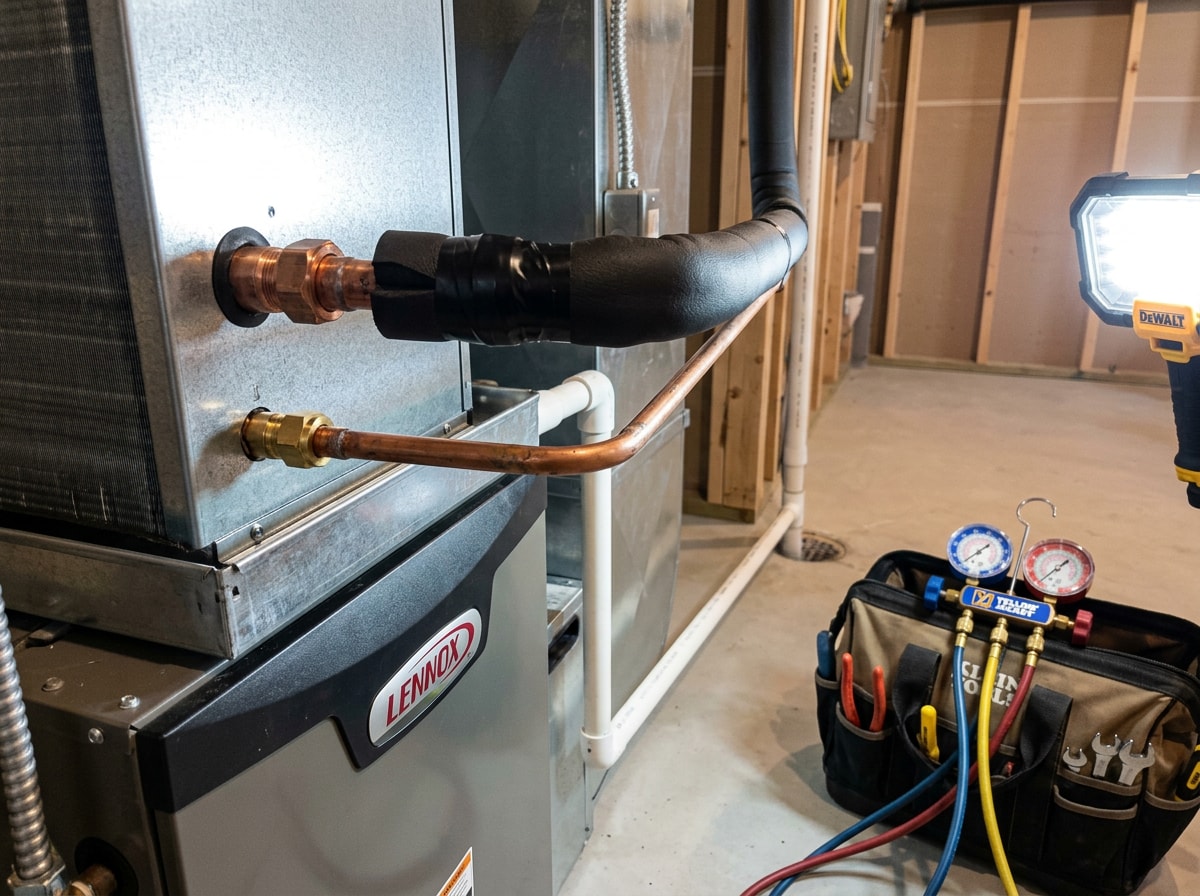
- Line set and refrigerant work. Brazed under nitrogen, pulled into a deep vacuum, weighed-in charge.
- Electrical and condensate. Wired to code, with a properly pitched drain and a safety switch.
- Commissioning. Airflow, static pressure, superheat and subcooling verified, thermostat calibrated, then a walkthrough.
Step six is the one most homeowners never see on a quote, and it is the one that separates a system that lasts 18 years from one that limps to 11.
Why Sizing Matters More Here Than People Expect
Northern Wisconsin has a short, humid cooling season wedged between hard winters. The temptation is always to go a little bigger. That is the single most common mistake we correct on service calls in this area.
An oversized unit cools the air fast, satisfies the thermostat, and shuts off before it has pulled any moisture out. You end up with a clammy 72-degree living room. ENERGY STAR's right-sizing research notes that air conditioner efficiency is low at startup and climbs for roughly ten minutes, and that short run times do not let the system remove humidity effectively . Short cycling also increases wear and masks problems like dirty filters and improper charge . You can read the ENERGY STAR right-sized air conditioner fact sheet if you want the underlying data.
Correct sizing comes from measured inputs:
- Insulation values in walls and attic
- Window area, glazing type and orientation
- Ceiling heights and volume
- Duct leakage and return sizing
- Infiltration, which is often the wild card in a 100-year-old farmhouse
Square footage alone is not a load calculation. Anyone who quotes you a tonnage from the driveway is guessing.
Repair or Replace? Five Signals
Deciding between air conditioning repair and full replacement usually comes down to five things:
- Age. Past 12 to 15 years, parts availability starts working against you.
- Repair frequency. Two service calls in two summers is a pattern, not bad luck.
- Rising electric bills with no change in habits.
- R-22 refrigerant. Production and import of R-22 ended in 2020, and remaining supply is reclaimed stock at a premium.
- Compressor failure. On an older system this is almost always the end.
The rough break-even we use: if a repair costs more than about a third of replacement and the system is past ten years old, replacement wins.
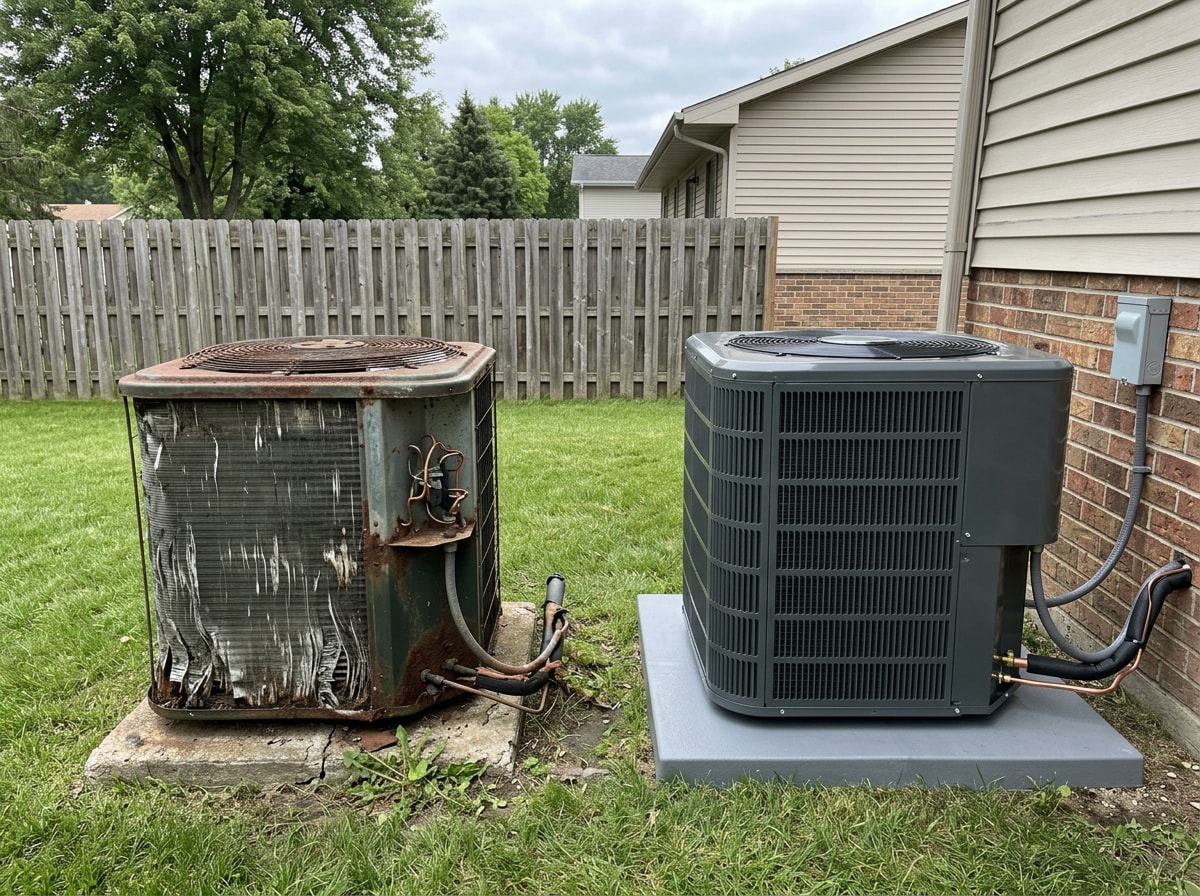
Two examples from our own routes. A farmhouse north of Gilman had a seven-year-old condenser with a failed fan motor, so we repaired it and left the system in place. A ranch closer to the Clark County line had a 1998 R-22 condenser with a leaking indoor coil, and replacement was the only honest answer. Same week, two opposite recommendations.
On replacement day we lay yard protection, set the new equipment, and commission before sign-off. We also insist on a matched coil and condenser. Mismatched pairs quietly lose the efficiency you paid for and complicate warranty claims later. You can see examples of completed work on our projects page.
The 2026 Incentive Change Most Quotes Still Get Wrong
If a contractor's 2026 proposal shows a federal tax credit line item, ask questions.
The Energy Efficient Home Improvement Credit under Section 25C is not allowed for any property placed in service after December 31, 2025 , and the Residential Clean Energy Credit under Section 25D is not allowed for expenditures made after that same date . That change came through the 2025 reconciliation law, and the IRS FAQ on the modified energy credits lists the termination dates in a single table.
Practical translation for a Gilman homeowner in 2026:
- The old $600 federal credit on a qualifying central AC is gone.
- The $2,000 heat pump credit is gone.
- State and utility incentives are what is left.
Focus on Energy offers rebates and services for Wisconsin residents, administered through its network of program specialists , and amounts update on program cycles. Check current offers on the Focus on Energy residential page before you compare bids, and ask your installer whether they handle the paperwork. We do.
This is also why we no longer recommend stretching a budget to the top efficiency tier purely for incentive reasons. Without the federal credit, the payback math on premium equipment got longer in 2026, and for a short cooling season like ours, a mid-tier two-stage system often makes more financial sense than a top-tier variable-speed unit.
Licensing and Permits: What to Verify Before You Book
Permits are our job, not yours. A mechanical permit generally applies to air conditioning work in Wisconsin, including like-for-like changeouts, and your contractor pulls it and schedules the inspection.
Verify three things on any bid:
- State credentialing.
HVAC Contractor is a credentialed trade profession in Wisconsin, governed under Administrative Code Chapter SPS 305 . You can look up the profession and its rules on the Wisconsin DSPS professions list.
- EPA Section 608 certification for anyone handling refrigerant.
- Liability insurance and workers' compensation, in writing, naming the crew that will actually be on your property.
Also ask whether the company doing the load calculation is the same company doing the install. Split responsibility is where sizing errors hide. Our technicians size, install and then service the same system, so nothing gets lost between a salesperson and a crew.
How to Prepare for Install Day
Prep takes about 30 minutes:
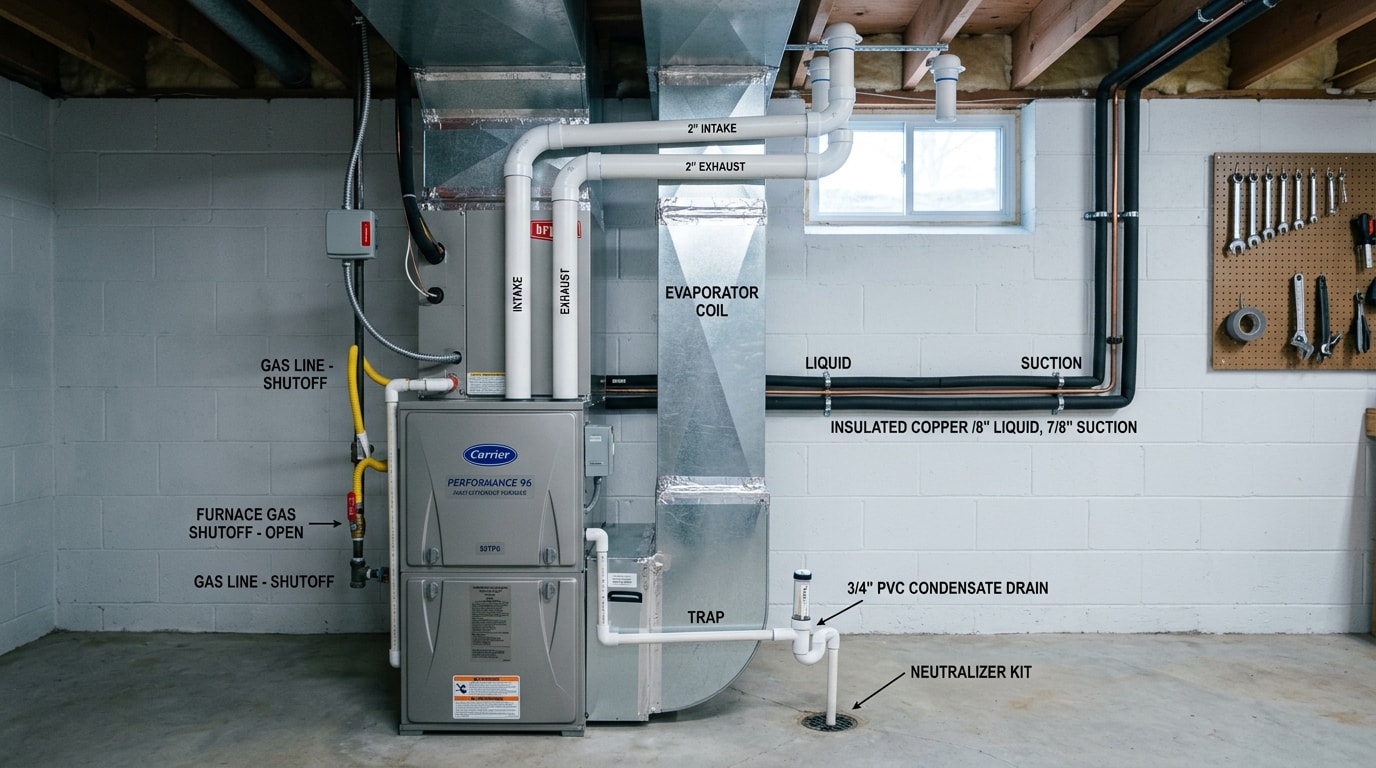
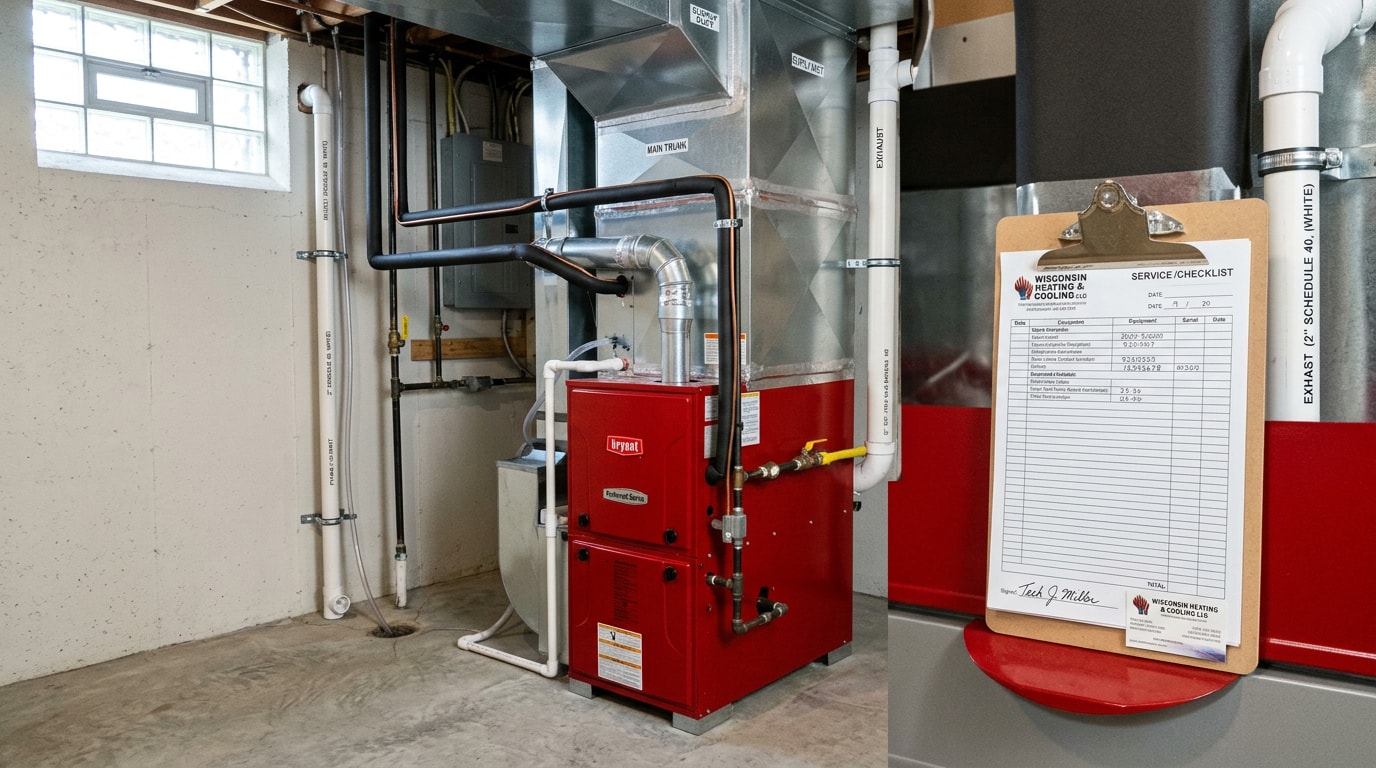
- Clear a path to the furnace or air handler.
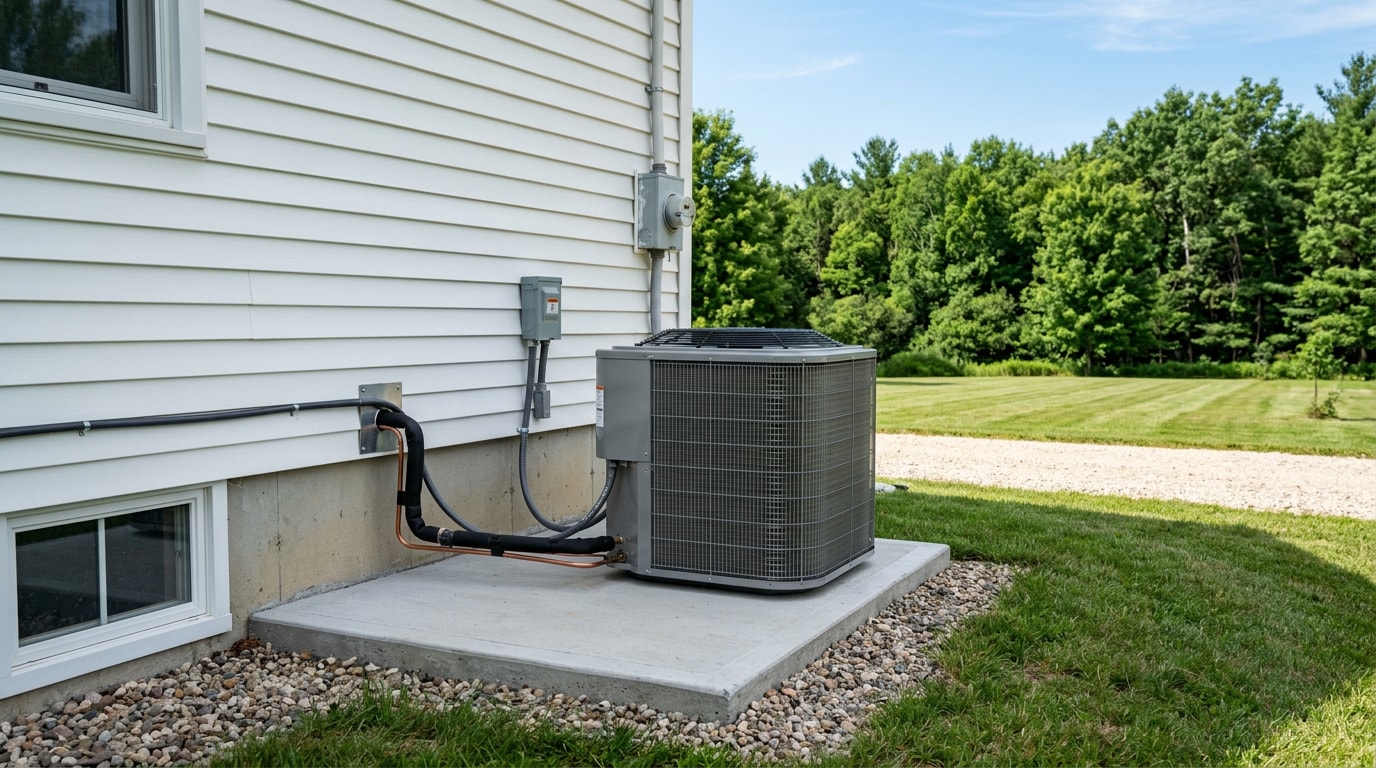
- Clear brush, firewood and debris from the condenser pad area, with about two feet of clearance on all sides.
- Move stored boxes at least three feet off the indoor unit.
- Unlock any gate the crew needs for equipment.
- Secure pets away from doors that will be propped open.
- Plan for power to be off for part of the day.
Rural addresses are normal for us. Long driveways, gravel, well pumps on the same panel, propane tanks near the pad: tell us in advance and we plan the route and the electrical accordingly.
Keep the Warranty Alive: Maintenance from Year One
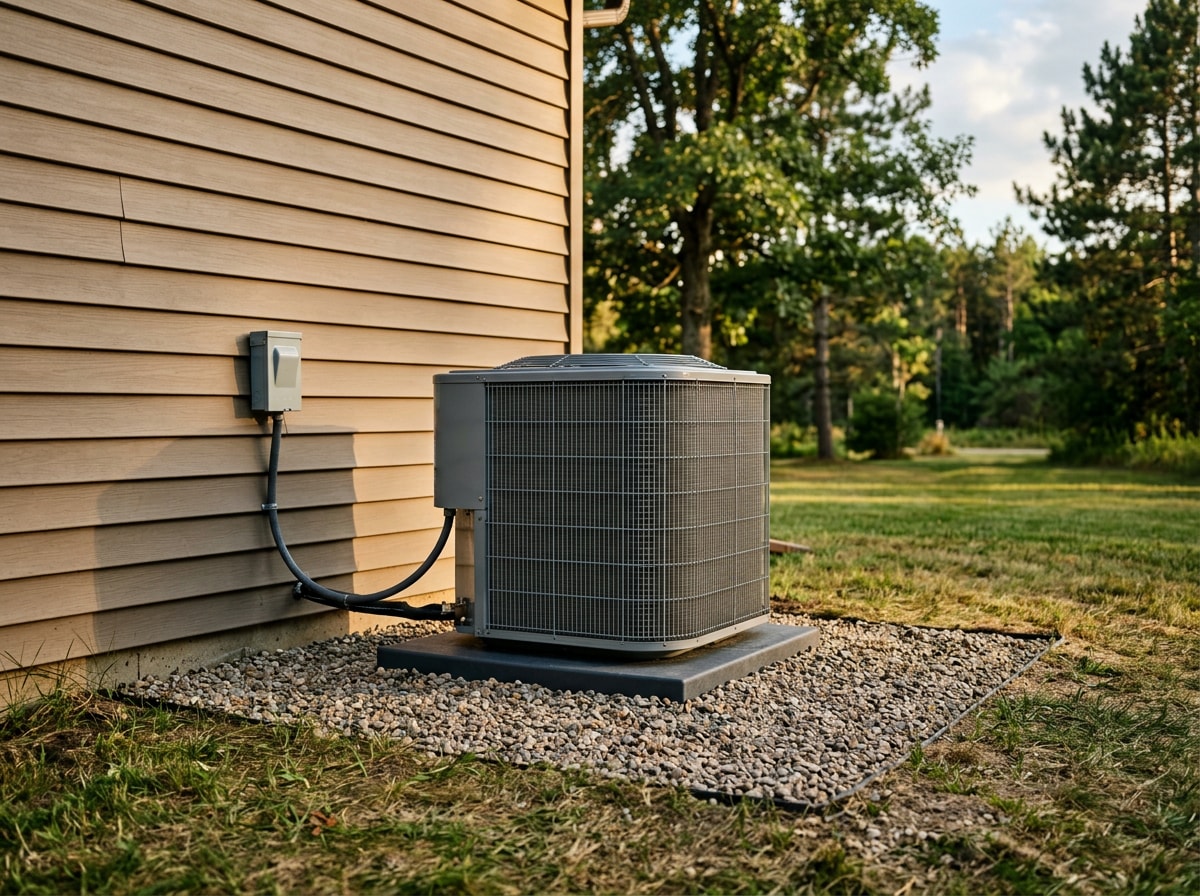
A new system should go on an annual tune-up schedule immediately. Spring A/C maintenance includes:
- Outdoor coil cleaning
- Refrigerant charge verified against manufacturer spec
- Static pressure and airflow checks
- Filter inspection or replacement
- Electrical connections torqued and contactors inspected
Two reasons this pays. Most manufacturer warranties expect documented annual service, so skipping it can complicate a compressor claim years later. And a weak capacitor is a 20-minute catch in May or a sweltering emergency call in July. If it is already July and the house is hot, our emergency air conditioning service covers that too.
Ductless Options When There Is No Ductwork
Not every Gilman home has usable ducts. Additions, second-floor bedrooms, converted porches and shops are usually better served by a ductless mini split than by extending an undersized duct trunk. Modern cold-climate units also provide shoulder-season heat, which matters in April and October here.
We walk through head placement, line-set routing and winter performance in our guide to mini split installation costs and install day.
Service Area Around Gilman
Gilman sits in Taylor County, right at the top of our regular route, and we cover the surrounding communities on the same schedule:
- Gilman, WI
- Thorp, WI and Stanley, WI
- Cadott, WI and Boyd, WI
- Holcombe, WI
- Clark County and Chippewa County
Most estimates happen within a couple of business days, and straightforward changeouts are typically scheduled inside the same week outside of peak July demand. See everything we handle on the HVAC contractor services page, or start at the Del Mar Air homepage if you are bundling a furnace and AC project. Full system changeouts run through our HVAC system installation team.
Ready for a number? Get a free estimate and we will put a measured load calculation behind it.
FAQ
How much does it cost to install central AC in Gilman, WI?
A like-for-like changeout typically runs $4,500 to $8,500 installed in 2026. Adding central air to a home with no existing cooling usually lands between $9,000 and $15,000 because of duct work and electrical.
What size air conditioner does my home need?
It depends on insulation, window area and orientation, ceiling height, infiltration and duct condition. We run a Manual J load calculation to set tonnage. The Department of Energy warns that contractors sometimes oversize systems by using rules of thumb instead of performing load calculations, and recommends ACCA Manual J for load and Manual S for equipment selection .
How long does central AC installation take?
A straightforward changeout is one day. Jobs with duct modifications, a panel upgrade or very old equipment removal can run into a second day.
Do you need a permit to install an air conditioner in Wisconsin?
Generally yes, a mechanical permit applies, including on like-for-like replacements. Your licensed contractor pulls it and schedules the inspection. Requirements vary slightly by village and county, so confirm with your local authority having jurisdiction.
Is there still a federal tax credit for a new AC in 2026?
No. The 25C Energy Efficient Home Improvement Credit is not allowed for property placed in service after December 31, 2025 . State and utility rebate programs are the remaining incentives.
Can I add air conditioning to a house with no ductwork?
Yes. A single-zone ductless mini split typically runs $4,000 to $6,500 installed, and multi-zone systems scale from there. No ducts, no soffit chases, and each zone has its own thermostat.
Do I have to replace the furnace when I replace the AC?
Not always, but the indoor evaporator coil must be matched to the new condenser. If your furnace is also near end of life, doing both at once saves a second round of labor and avoids a mismatched blower.
When is the best time of year to install an air conditioner here?
Late April through early June. Lead times are shorter, scheduling is flexible, and you are not waiting in line during a July heat wave.
How long should a new air conditioner last in northern Wisconsin?
Fifteen to twenty years is realistic with annual maintenance. Our short cooling season means fewer annual run hours than in southern states, which helps, as long as the unit is sized correctly and not short cycling.
Will a new AC actually lower my energy bills?
Usually. A modern unit meeting current SEER2 standards uses noticeably less electricity than a 15-year-old system, and correct sizing improves humidity control so the house feels comfortable at a higher thermostat setting.