Searching "heat and ac service near me" in Clark County, WI usually happens at the worst moment: a silent furnace at 11 p.m. in Neillsville, or an AC blowing warm air the week Loyal hits 92 degrees. The answers you actually need are what the visit costs, how fast someone can reach your road, and whether the company touching your gas appliance is credentialed to do it. This guide covers all three, with the local details most national HVAC pages leave out.
What Heat and AC Service Costs in Clark County in 2026
Price is the first question almost everyone asks, so here it is up front. The ranges below reflect typical central and north-central Wisconsin residential pricing in 2026. They are planning numbers, not quotes. Equipment age, part availability, and after-hours timing all move the figure.
| Service | Typical 2026 range | What moves the price |
|---|---|---|
| Diagnostic / service call | $85 to $175 | After-hours and holiday rates run higher |
| Common repair (parts + labor) | $150 to $650 | Part cost and access difficulty |
| Furnace or AC tune-up | $90 to $200 per system | Multi-system and plan pricing is lower |
| Capacitor or contactor replacement | $150 to $350 | Part size, brand-specific components |
| Igniter or flame sensor | $150 to $400 | OEM vs. universal part |
| ECM blower motor | $600 to $1,400 | Motor module programming |
| Refrigerant leak repair and recharge | $300 to $900+ | Refrigerant type and leak location |
| Furnace replacement installed | $4,500 to $9,500 | Efficiency, venting changes, LP vs. natural gas |
| Central AC replacement installed | $4,000 to $8,500 | Tonnage, coil and line-set condition |
| Boiler replacement installed | $6,000 to $14,000 | Near-boiler piping and zone count |
Two 2026 cost drivers worth knowing before you approve anything.
First, refrigerant. New residential cooling equipment now ships with lower-GWP A2L refrigerants such as R-454B, while R-410A supply is being phased down under federal rules. That has pushed R-410A prices up, and it is why a large leak on an older system can quietly outgrow the value of the unit. If your tech recommends a refrigerant recharge, ask them to find and price the leak too.
Second, LP. Large parts of rural Clark County heat with propane rather than piped natural gas. LP furnaces use different orifices and pressures, and an LP conversion done wrong shows up as sooting and nuisance lockouts. Always tell the dispatcher which fuel you burn. It changes which parts the truck needs to carry.
Want the line-by-line version? Our breakdown of what belongs in an HVAC quote in Clark County shows exactly which numbers a written estimate should spell out.
Call Now or Schedule Later? A Clear Triage List
Not every symptom is an emergency. Mixing the two up either wastes money on an after-hours rate or leaves a real hazard running.
Stop and call for emergency service immediately:
- You smell gas, or a CO alarm sounds. Leave first, call from outside.
- Soot, scorching, or a yellow rolling flame at the burners.
- A breaker that trips repeatedly after being reset.
- Burning or electrical smell from the furnace cabinet.
- No heat with outdoor temps below 20 degrees, especially with infants, seniors, or livestock water lines in the picture.
- No cooling during a heat advisory in a home with medically vulnerable occupants.
Book the next available appointment:
- Weak airflow from registers.
- AC running constantly but not holding setpoint.
- Short cycling on and off every few minutes.
- Climbing utility bills with no change in habits.
- Uneven room temperatures upstairs vs. down.
- Musty odor when the blower kicks on.
- Water around the indoor unit from a plugged condensate drain.
Anything involving gas, combustion venting, or refrigerant is off the DIY list. Those are licensed, certified tasks. Filters, thermostat batteries, breakers, and clearing leaves off the condenser are fair game for a homeowner.
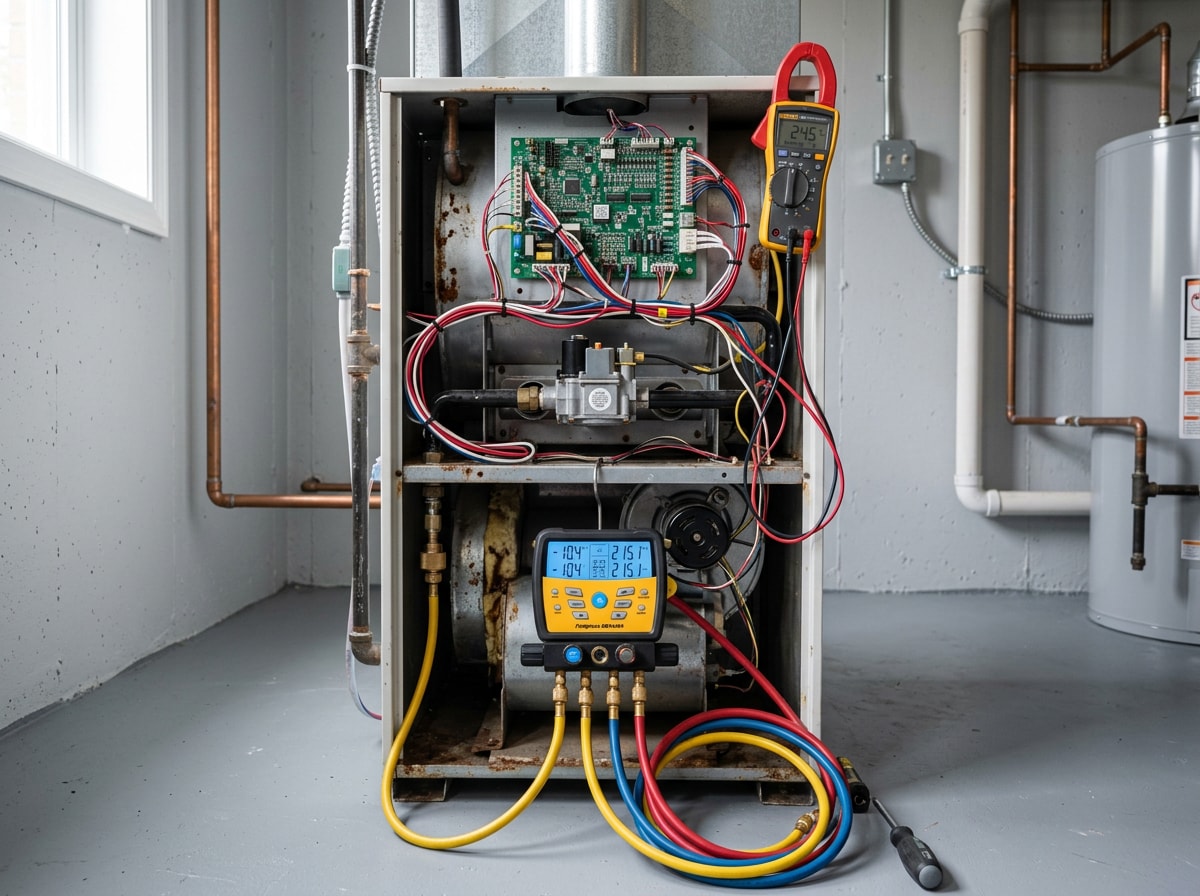
When it genuinely cannot wait, start with emergency furnace service in winter or emergency air conditioning service in summer, or request service through our contact page and tell us the symptom in plain language.
Response Times: What "Near Me" Actually Means Out Here
This is the part urban HVAC content gets wrong. Clark County covers roughly 1,200 square miles with no interstate running through it. A dispatch is a drive, not a hop.
Rough drive times from the Neillsville area on clear roads:
- Granton and Chili: about 15 to 20 minutes
- Greenwood and Loyal: about 20 minutes
- Willard and Withee: about 25 to 35 minutes
- Owen and Thorp: about 35 to 45 minutes
- Colby and Abbotsford: about 40 to 50 minutes
Add snow, add a gravel town road that has not been plowed, and those numbers stretch. Two practical takeaways.
Book seasonal work early. The first 90-degree stretch and the first hard freeze both generate a week of back-to-back no-cooling and no-heat calls, and travel distance limits how many stops fit in a day.
Give good information on the call. Brand, approximate age, fuel type, and the exact symptom let us load the likely part before leaving the shop. On a county this spread out, a part on the truck is often the difference between one visit and two.
The Services Behind a Heat and AC Call
AC Repair and Service
A proper visit is a diagnosis, a quoted repair, and a performance verification before the tech leaves. Most no-cooling calls trace to a short list: a failed run capacitor, a burned contactor, a clogged condensate switch, a refrigerant leak with a frozen evaporator coil, or a thermostat sending the wrong signal.
A frozen coil needs thaw time before accurate readings are possible. If a tech quotes a refrigerant charge on an iced-up system without thawing and leak-checking it, that is a red flag. See our air conditioning repair and A/C system repair pages for scope details.
Furnace Repair and Service
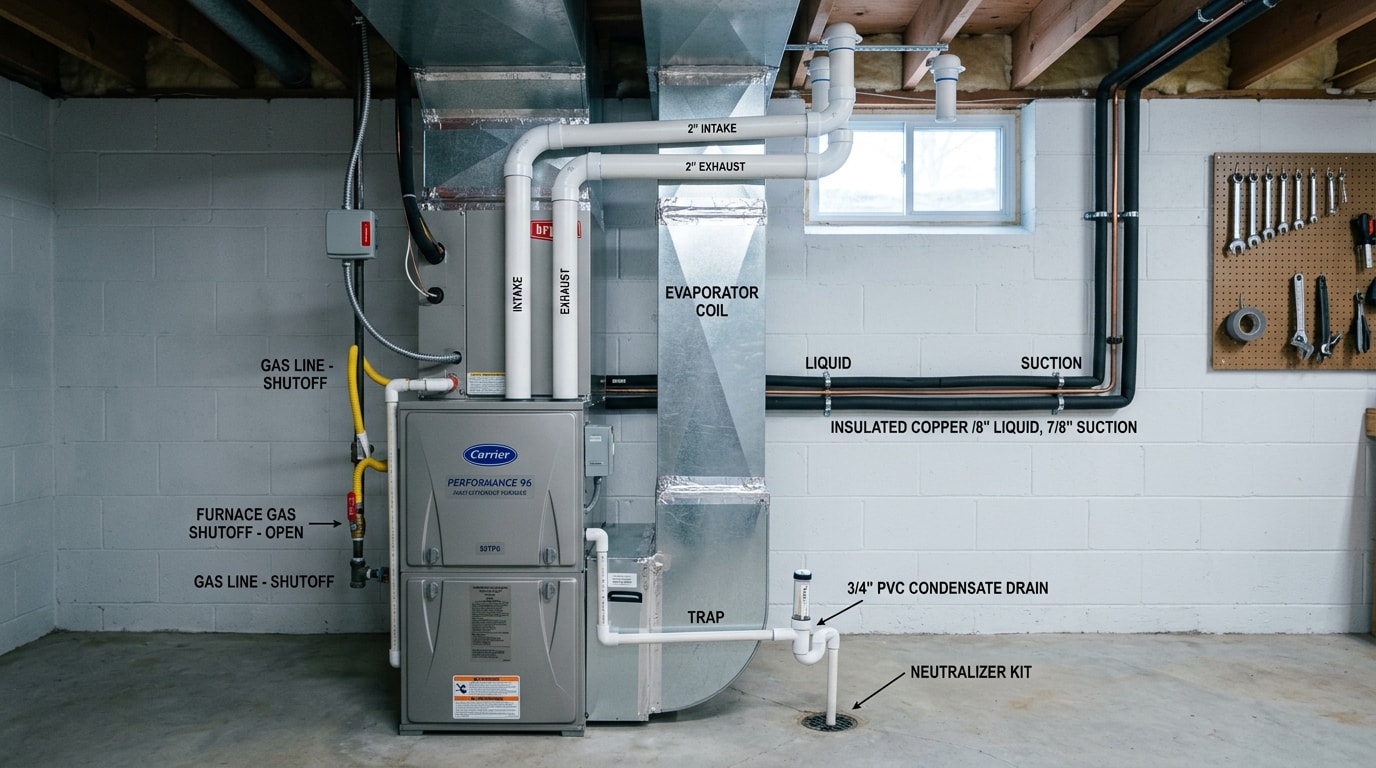
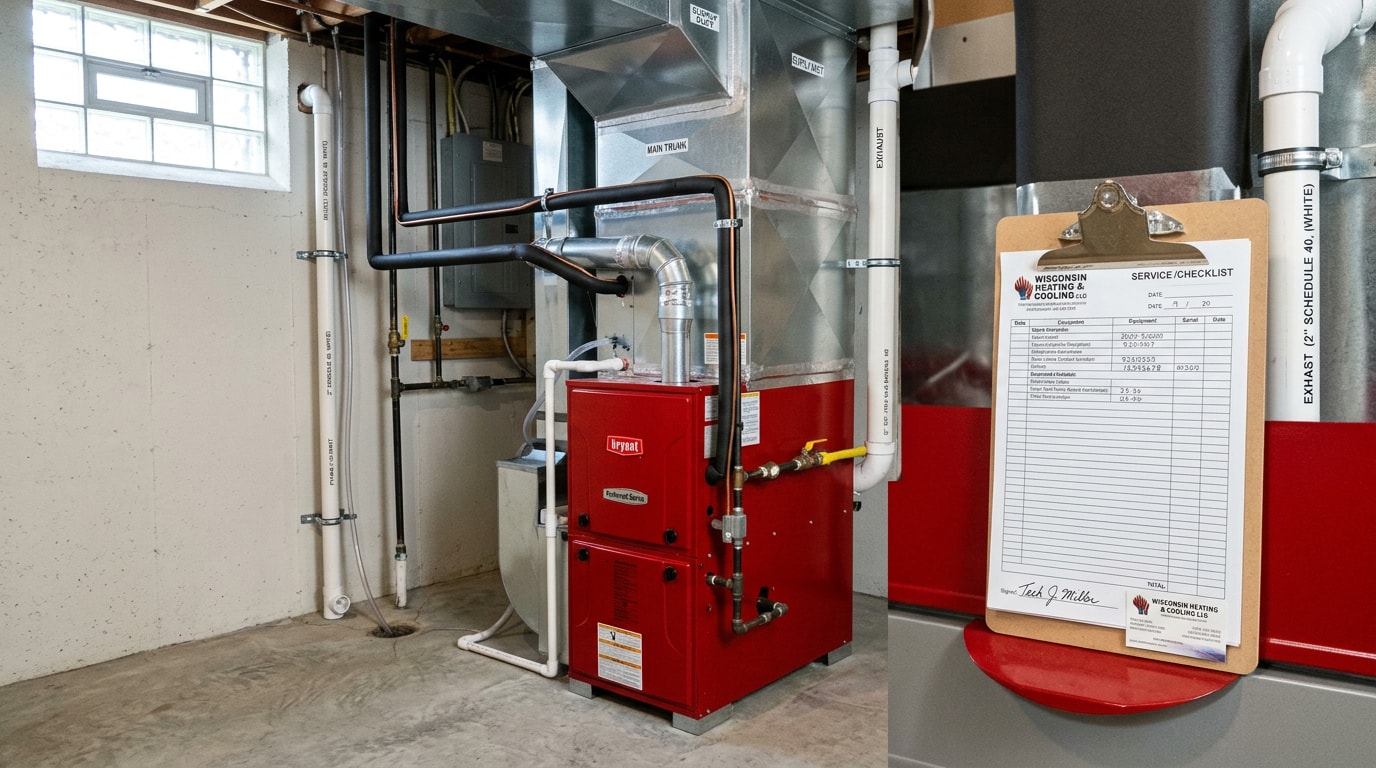
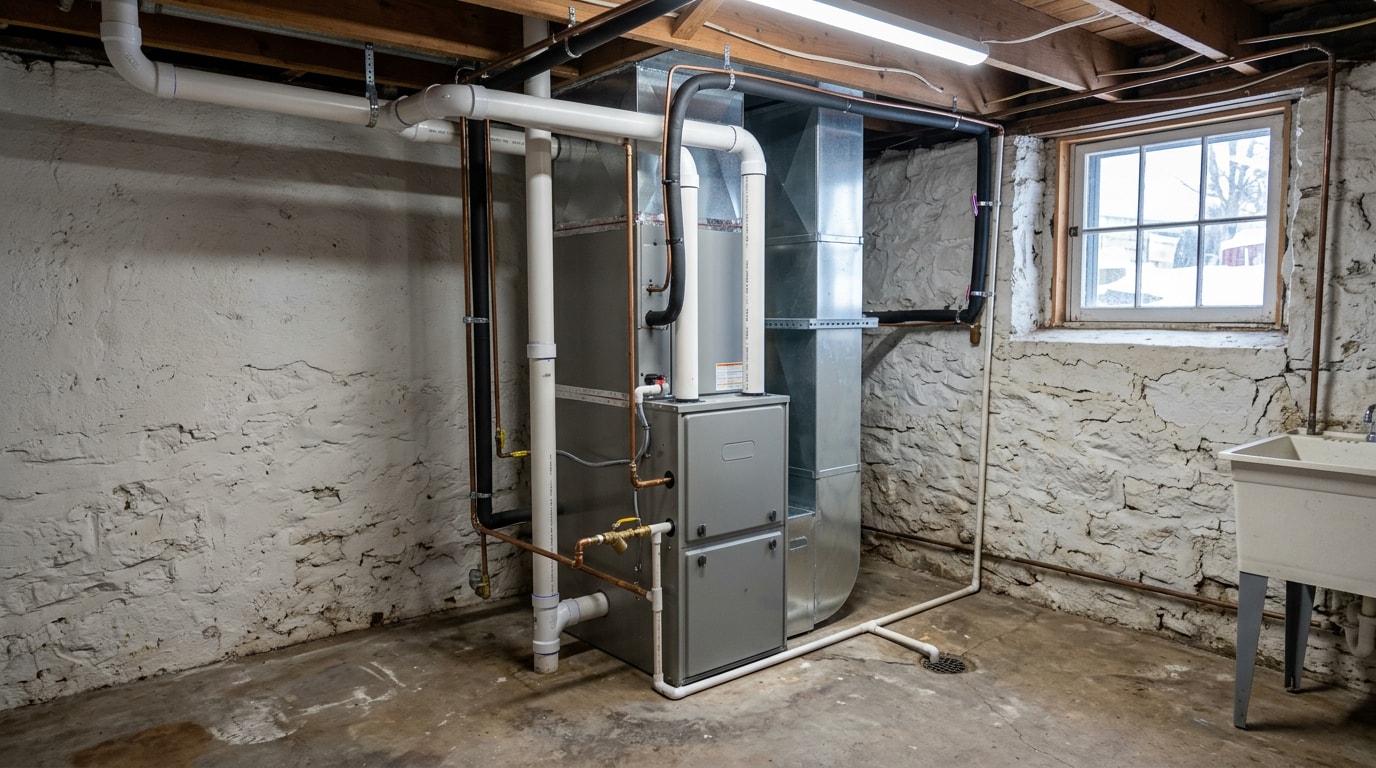
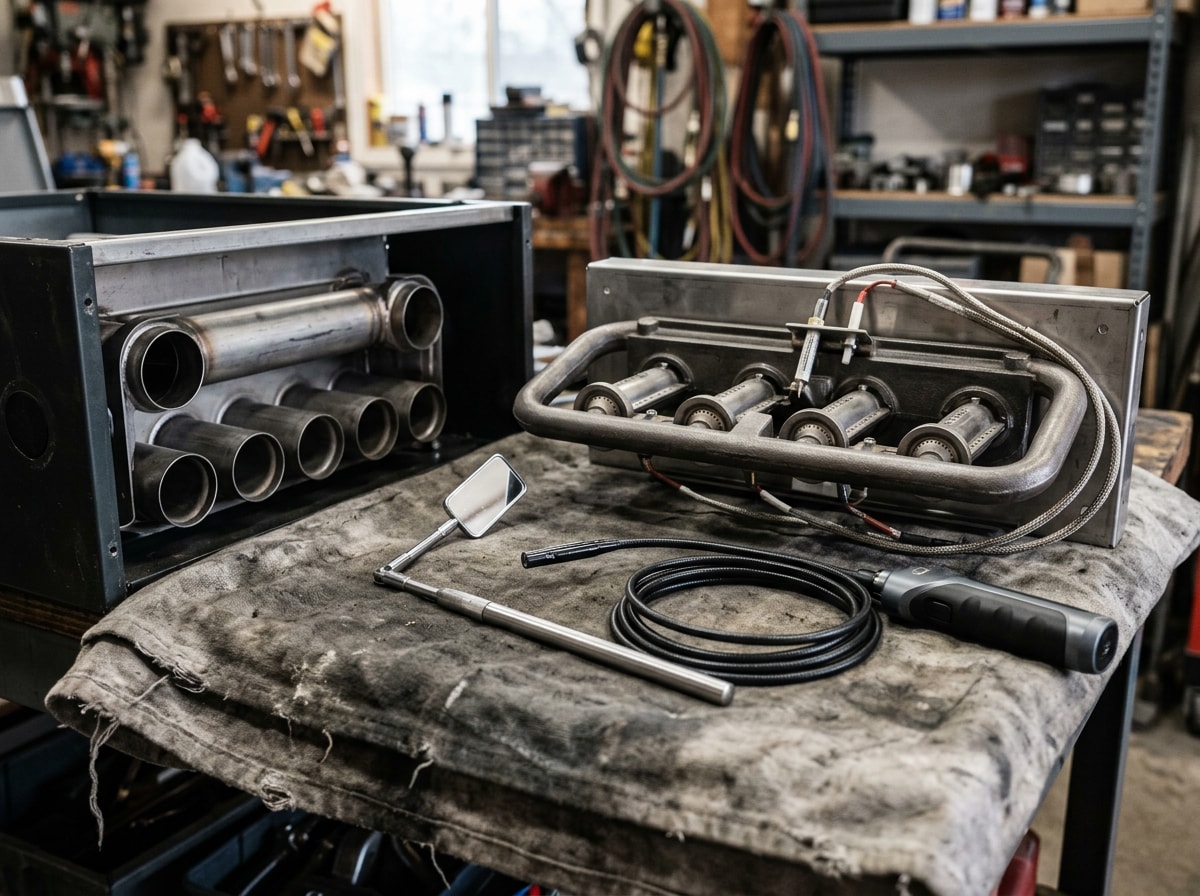
Natural gas and LP furnaces get diagnosed the same way: ignition sequence, flame sensor, pressure switch, inducer, limits, and blower. In this county, the three parts that fail most often in a no-heat call are the hot surface igniter, the flame sensor (usually just dirty), and the pressure switch reading a blocked or iced intake.
One finding is not negotiable. A cracked heat exchanger means the furnace is shut down and tagged, because a compromised combustion chamber can spill carbon monoxide into living space. The U.S. Consumer Product Safety Commission urges a professional inspection of fuel-burning heating equipment each season for exactly this reason. Our furnace repair and heating system repair work follows that standard.
Heat Pump Repair
Heat pumps run year-round, so they fail differently. We see defrost board faults, reversing valve issues, low charge, and outdoor coils icing solid during a January cold snap. Auxiliary or emergency heat running constantly is usually the first clue.
Do not accept "it is just too cold out" as a diagnosis. Cold-climate models hold meaningful capacity well below freezing, as the Department of Energy's heat pump guidance explains. If your system is a cold-climate unit and it is handing everything to backup heat at 20 degrees, something is wrong with the charge, the defrost control, or the staging.
Boiler and Hydronic Service
A lot of Clark County farmhouses still run radiators or baseboard off a boiler. These systems age well but need a different skill set: circulators, expansion tanks, air elimination, zone valves, and aquastat controls. Low-pressure trips, cold zones, and banging pipes each point somewhere specific. We handle boiler repair and hydronic heating repair, plus full replacements when a sectional cast-iron unit finally gives up.
Annual Maintenance
A real tune-up is not a filter swap. It includes safety control testing, combustion and burner inspection, coil cleaning, electrical connection tightening, lubrication where applicable, refrigerant verification, condensate clearing, and thermostat calibration. ENERGY STAR publishes a maintenance checklist homeowners can use to compare against what a contractor actually performed.
Here is the arithmetic that justifies it. One tune-up runs $90 to $200. An after-hours no-heat call that ends in a replacement inducer motor or control board commonly lands between $500 and $1,200. Clark County runs roughly a seven-month heating season with winter design temperatures near 15 below zero, which means equipment here logs far more run hours than the same unit in Madison.
A fall visit last season on a farmhouse outside Granton caught a hairline split in a pressure-switch hose. The part cost about $14. Left alone, it would have locked the furnace out on the next 20-below night. That is the entire case for maintenance in one sentence. Schedule through our HVAC system maintenance or heating system maintenance pages.
Repair or Replace? Use This Instead of a Gut Feeling
| Factor | Lean repair | Lean replace |
|---|---|---|
| Age | Under 10 years | Furnace 18+, AC 15+, boiler 30+ |
| Repair cost vs. new system | Under 30% of replacement | Over 40%, or a second major repair in 2 years |
| Failed component | Igniter, capacitor, sensor, board | Compressor, heat exchanger, leaking evaporator coil |
| Refrigerant | System holds charge | Repeat leaks on R-410A equipment |
| Comfort | Even temperatures | Chronic cold rooms, constant short cycling |
| Bills | Stable season over season | Rising with no usage change |
If replacement wins, the install matters more than the brand on the box. Insist on a Manual J load calculation rather than swapping size-for-size. Oversized equipment short cycles, dehumidifies poorly, and wears out early. We cover that process on our HVAC system installation, furnace replacement, and air conditioning replacement pages, and you can see finished work on our projects page.
What to Verify Before You Book Anyone
Five checks, each of which takes under five minutes.
- State credential. Wisconsin regulates HVAC contractors through the Department of Safety and Professional Services. You can review the requirements on the DSPS HVAC Contractor page and look up a company's credential status in the state's public license search.
- EPA Section 608 certification. Anyone opening a refrigerant circuit must hold it. Ask for the card.
- Insurance. General liability and workers' compensation, current, with a certificate you can request directly from the insurer.
- Written, itemized quote before work begins. Parts, labor, trip charge, after-hours premium, and warranty terms should all appear in writing.
- Permits where required. Equipment replacements in some Clark County municipalities require permits and inspection. Your contractor should know which, and should pull them.
A company that hesitates on any of these five is telling you something useful.
Towns We Cover in Clark County
We service Neillsville, Greenwood, Loyal, Owen, Thorp, Withee, Granton, Chili, Willard, Colby, and Abbotsford, along with the townships and farms in between.
Our full coverage details live on the Clark County, WI service area page and the Thorp, WI page. Neighboring Chippewa County communities including Boyd, Cadott, Holcombe, and Stanley are also on our route. Start at the Del Mar Air homepage for the full service list, or browse the HVAC contractor services category.
Ready to book? Get a free estimate and tell us your system type, fuel, and symptom. We will tell you honestly whether it is a same-day issue or something that can wait for a scheduled slot.
FAQ
How much does an HVAC service call cost in Clark County, WI?
A standard diagnostic visit commonly runs $85 to $175 in 2026. After-hours, weekend, and holiday calls carry a premium. Most repairs land between $150 and $650 including parts. Ask for the diagnostic fee and whether it applies toward the repair before you book.
Who do I call when the furnace quits at night?
Call a contractor offering 24/7 emergency service and describe the symptom exactly. If you smell gas or a CO alarm is sounding, leave the house and call from outside, then contact your gas or LP supplier. Do not wait until morning when outdoor temperatures are below 20 degrees.
How often should I service my furnace and AC?
Once per year per system. Heating in fall, cooling in spring. Go twice yearly on equipment past about 10 years, in homes with pets, or in heavy-dust farm settings. Change filters every one to three months depending on filter depth and dust load.
Can I get my AC serviced in the spring?
Yes, and spring is the right time to book. One caveat: a full cooling performance test needs outdoor temperatures around 65 to 70 degrees for valid pressure and temperature-split readings. In Clark County that is often later in spring than homeowners expect. Schedule early regardless, because slots fill before the first hot week.
My furnace or AC is acting up. What can I check first?
Three safe checks. Confirm the thermostat is set correctly and swap the batteries. Pull the air filter and replace it if it looks gray or loaded. Verify the breaker is on and the furnace service switch has not been flipped off. If it still will not run, stop there and call a technician.
Is it worth repairing a 15-year-old air conditioner?
Usually only if the repair is minor. A capacitor or contactor on a 15-year-old condenser is worth doing. A compressor or a leaking evaporator coil generally is not, because you would be investing heavily in equipment running a refrigerant that is being phased down. Get a replacement quote alongside the repair quote and compare.
Do HVAC contractors in Wisconsin need to be licensed?
Wisconsin regulates HVAC contractors through DSPS, and technicians who handle refrigerant must hold EPA Section 608 certification. Residential work on one and two family dwellings also involves dwelling contractor credentialing. Verify any contractor's status in the state's public credential lookup before signing.
How long does a typical no-heat repair take?
Most no-heat calls resolve in 60 to 120 minutes on site when the failed part is on the truck. Igniters, flame sensors, capacitors, and pressure switches are common stock items. Control boards, inducer assemblies, and brand-specific parts may require ordering, which can add a day or more during peak season.
Do you work on LP furnaces and older boilers?
Yes. LP equipment is common across rural Clark County, and plenty of farmhouses here still run cast-iron boilers with radiators or baseboard. Both are routine for us. Mention the fuel and system type when you call so the right parts and gauges come along.