The hvac hourly rate in Stanley, WI typically runs $90 to $140 for the first hour and $75 to $130 for each additional hour, once you account for the trip and diagnostic fee most contractors fold into that first-hour price. That's close to national benchmarks, but small-town overhead and a thinner pool of licensed techs nudge local numbers in specific directions. Here's exactly what shapes your bill and how to spot a fair quote before you sign anything.
Stanley, WI HVAC Hourly Rates at a Glance
| Service type | Typical rate |
|---|---|
| Standard weekday service call (first hour + trip fee) | $90 – $140 |
| Additional labor, per hour | $75 – $130 |
| Maintenance tune-up (flat visit) | $75 – $150 |
| Installation labor, per hour (multi-tech crew) | $100 – $160 |
| After-hours / emergency, per hour | $150 – $225 |
HVAC contractors charge an hourly rate of $75 to $150 with a minimum service call fee of $75 to $200, which applies towards the first hour.
In practice, most successful HVAC businesses charge between $70 and $150 per hour, with residential service calls often running $100 to $250. Stanley sits right at the line between Chippewa and Clark counties, and the city's population was 3,804 at the 2020 census — small enough that fewer contractors compete for your business, but also small enough that overhead stays lower than a metro shop pays.
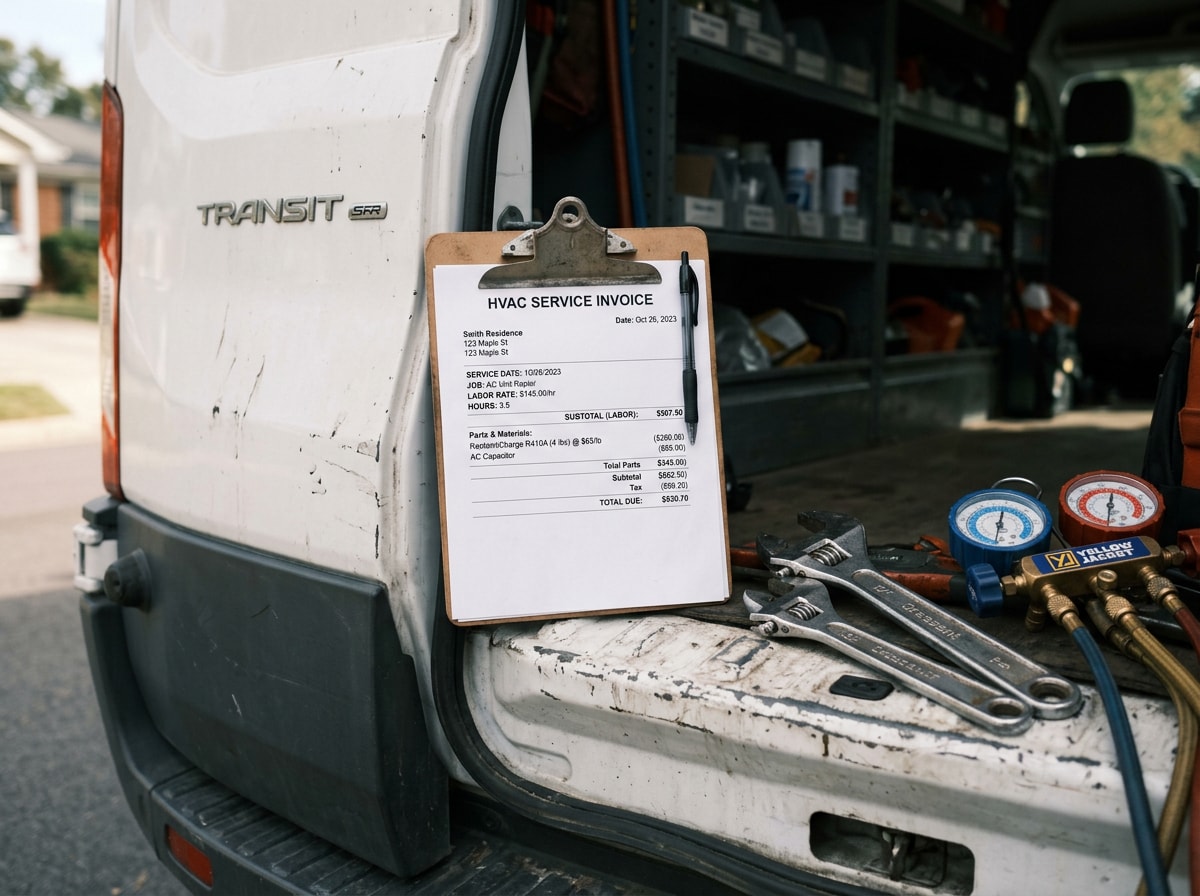
For a plain-language breakdown of what a written estimate should include before you book anything, see our HVAC quote guide for Clark County.
What Drives Your HVAC Hourly Rate in Stanley
Two contractors can quote very different numbers for the same furnace repair. These are the variables doing the work behind the scenes.
- Technician experience. A newly licensed tech bills less than a 15-year veteran with advanced certifications, and in a small town the most experienced techs are often booked out weeks in advance.
- Overhead. A one-truck operation carries lower fixed costs than a large regional company, which usually (not always) means a lower hourly rate.
- EPA refrigerant certification.
EPA regulations under Section 608 of the Clean Air Act require that technicians who maintain, service, repair, or dispose of equipment that could release ozone depleting refrigerants into the atmosphere must be certified. That training requirement adds cost that gets passed through on any job touching refrigerant.
- Season. Rates and wait times both climb during the first deep freeze of winter and the first real heat wave of summer, simply because demand outpaces supply.
- Drive time. Rural service areas mean longer distances between jobs than a city-based tech ever deals with, and that travel time gets built into pricing somewhere.
- Job complexity. A filter swap bills nothing like diagnosing an intermittent electrical fault.
Want to confirm a contractor's licensing and experience level before they show up? Our HVAC contractor page outlines what Delmar Air's technicians carry for credentials and coverage in the Stanley area.
Service Call Fees vs. Hourly Billing
Most companies quote a flat service call fee, usually $70 to $200, that covers the trip and an initial inspection. Many apply that fee toward the first hour of labor rather than charging it on top of the hourly rate.
Ask two questions before anyone drives out:
- Is the service call fee separate from labor, or credited toward it?
- What's the hourly rate after that first hour, and is it billed in full-hour or quarter-hour increments?
That second question matters more than people expect — rounding up to the next full hour on a 20-minute fix can add real money to a simple call.
Cost by Job Type
Not every HVAC call bills the same way, and the type of work moves the price more than the clock does.
| Job type | How it's typically priced | What's included |
|---|---|---|
| Routine maintenance / tune-up | Flat visit, $75–$150 | Inspection, cleaning, minor adjustments |
| Diagnostic & repair | Hourly, $75–$130/hr after service fee | Troubleshooting, parts, labor |
| Installation (furnace, AC, full system) | Hourly or flat project rate, $100–$160/hr equivalent | Removal, install, commissioning, often 2 techs |
| Emergency / after-hours | 1.5x–2x standard rate | Same-day or overnight dispatch |
Routine maintenance and seasonal tune-ups are the most predictable because they're sold as a flat visit rather than a pure hourly charge. Repairs and diagnostics are where the hourly rate kicks in fully, and installation jobs carry higher labor cost because they demand more hands and often refrigerant handling under that EPA 608 requirement mentioned above.
If a tune-up is overdue, routine HVAC system maintenance is usually the cheapest way to avoid an expensive emergency call later. Maintaining your equipment keeps your system operating at peak performance and prevents future problems and unwanted costs.
Emergency & After-Hours HVAC Rates
No-heat and no-cool calls are one of the top reasons people search hourly rates in the first place, and the after-hours premium is real. A standard afternoon repair billed at $110 per hour can become $165 to $220 per hour for the same call placed on a Sunday evening.
One widely used industry price book illustrates this with an after-hours emergency diagnostic priced at one hour at $95 per hour times 1.75, plus $15 overhead and $60 margin, for a final price of $241.25 — a concrete example of how the multiplier actually lands on an invoice rather than just a vague "it costs more at night."
If your system fails outside business hours, ask the dispatcher to quote the full emergency rate before a technician is sent, not after. For urgent no-heat situations, emergency furnace service and emergency air conditioning service both list current response expectations for the area.
How Contractors Actually Calculate Their Billing Rate
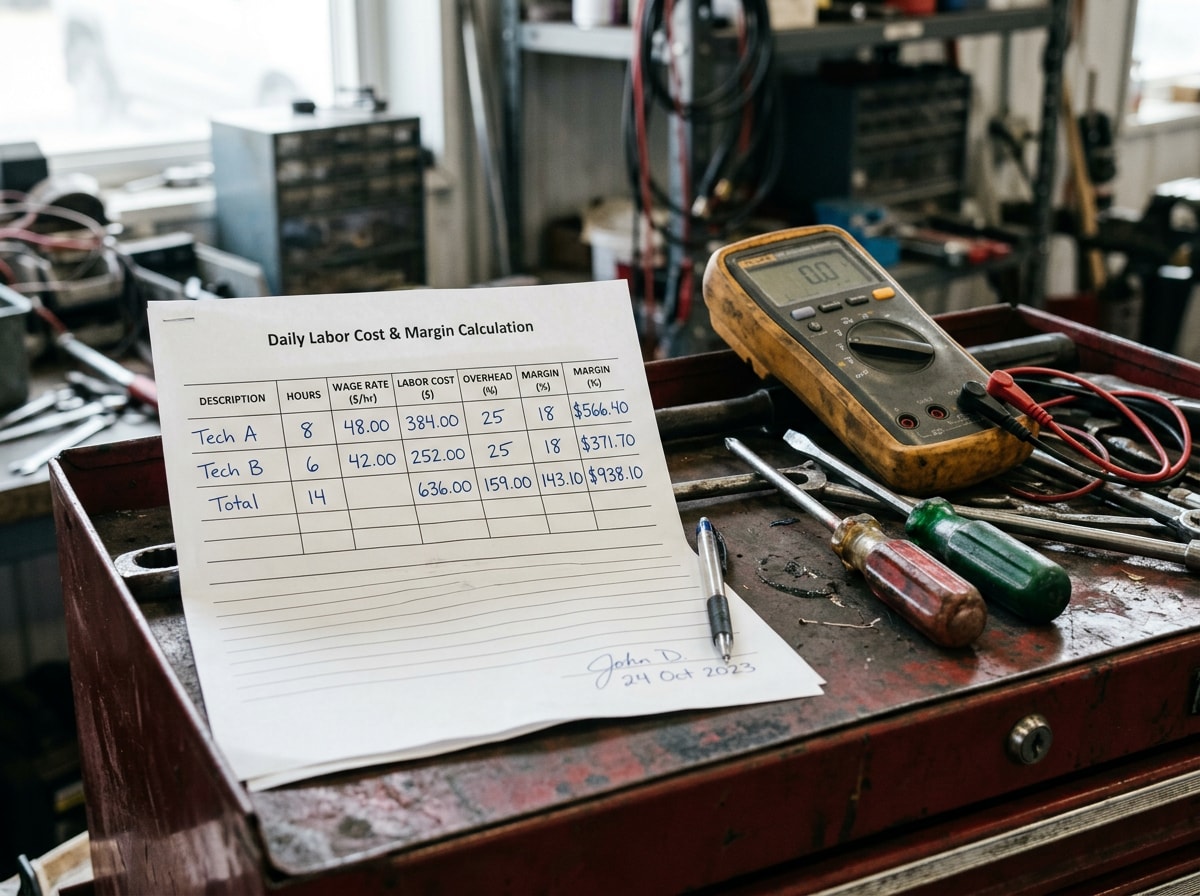
The number on your invoice isn't just a technician's wage. It's built from labor, burden, overhead, and a margin — and seeing the math explains why a $110-per-hour quote isn't automatically a rip-off.
| Cost component | Example build-up |
|---|---|
| Direct hourly wage | $25.00 |
| Labor burden (taxes, insurance, benefits, ~35%) | +$8.75 |
| Total labor cost | $33.75 |
| Overhead allocation (truck, tools, dispatch, admin) | +$40.50 |
| Cost before profit | $74.25 |
| Profit margin (~20%) | +$18.56 |
| Minimum viable hourly billing rate | $92.81 |
That breakdown, direct wage, labor burden, overhead allocation, and profit margin, is how most HVAC businesses build their published hourly rate rather than just picking a number out of the air. It's also why the "minimum viable" rate across the industry tends to land right around $90 to $110 per hour, close to what most companies in Stanley actually quote.
For wage context: heating, air conditioning, and refrigeration mechanics and installers nationally had a 2025 median pay of $61,010 , according to the U.S. Bureau of Labor Statistics. That works out to roughly $29 an hour in take-home wages — nowhere close to the $90-plus billed rate, because the wage is only one line in the table above.
Rural Stanley vs. Nearby Metro Pricing
A town the size of Stanley doesn't see the same cost structure as Eau Claire or Wausau. Applying typical rural-overhead discounts to the national benchmarks above, local rates generally land like this:
| Area | Typical hourly rate |
|---|---|
| Stanley / Chippewa & Clark counties (rural) | $85 – $135 |
| Eau Claire or Wausau metro | $100 – $160 |
The gap, usually 10–20%, comes from lower commercial rent, less marketing spend, and fewer competing crews bidding jobs down. It's partially offset by rural techs covering a wider territory, which means more unbilled drive time baked into the schedule. If you're comparing quotes across the region, our coverage pages for Chippewa County and Clark County list what's typical township by township.
How to Get a Fair Quote in Stanley, WI
Before you accept any number, confirm these five things:
- Whether the service call fee is separate from or credited toward labor.
- The exact hourly rate after the first hour, and whether billing is by the quarter-hour.
- Whether the technician carries current EPA Section 608 certification for refrigerant work.
- Whether the quote changes for after-hours or weekend dispatch, and by how much.
- Whether parts, permits, and disposal are itemized or bundled into "labor."
A contractor who answers all five without hesitation is usually pricing honestly. One who gets vague on any of them is worth a second call. If you want a written, itemized number for your specific repair or install, get a free estimate from our Stanley, WI service team before you commit.
For general repair HVAC work, most Stanley-area homeowners can expect a diagnostic visit to confirm pricing within the ranges above before any repair work starts. You can also browse our full service lineup to see current specials on maintenance and replacement.
FAQ
How much do HVAC contractors charge per hour in Stanley, WI?
Expect $85 to $135 per hour for standard weekday work, including the service call fee applied to the first hour. Nationally, HVAC contractors charge an hourly rate of $75 to $150 with a minimum service call fee of $75 to $200. Stanley's rural overhead typically lands closer to the lower-middle of that range.
Is the service call fee separate from the hourly rate?
It depends on the company. Most apply the fee toward the first hour of labor rather than charging it on top. Always ask which method a contractor uses before scheduling, since it changes your total more than people expect.
How much more does emergency or after-hours HVAC service cost?
Expect 1.5 to 2 times the standard rate. One common industry pricing model applies a 1.75x multiplier to the standard hourly rate for after-hours emergency diagnostics , plus overhead and margin, which is how a $95/hour daytime rate turns into a $240-plus after-hours call.
Should a contractor charge hourly or a flat rate?
Flat-rate pricing fits predictable, well-defined jobs like a known part replacement or a standard tune-up. Hourly, time-and-materials billing makes more sense when the scope is uncertain, such as chasing an intermittent electrical fault where diagnosis time can't be predicted upfront.
Why does HVAC labor cost more per hour than what the technician actually earns?
Because the billed rate covers more than wages. The median pay for HVAC and refrigeration mechanics nationally is $61,010 a year , roughly $29 an hour, but payroll taxes, insurance, vehicle costs, training, and overhead push the minimum sustainable billing rate to $90 or more before any profit is added.
Does a technician need special certification to work on my AC or heat pump?
Yes, if the job involves refrigerant. EPA regulations under Section 608 of the Clean Air Act require certification for anyone who maintains, services, repairs, or disposes of equipment that could release refrigerants into the atmosphere. Ask to see current certification before refrigerant work begins.