Searching for a heating and cooling technician near me in Thorp, WI almost always starts with a dead furnace on a January morning or an air conditioner blowing warm in July. This guide gives you the local numbers: what a service call costs here, how to verify a contractor in about ten minutes, and when repair stops making financial sense. Read the verification section before you let anyone quote you equipment.
What a Local HVAC Technician Actually Handles
A technician working Thorp and the surrounding Clark County townships covers both sides of the system, because the same homes run gas furnaces in winter and central air in summer.
Typical calls in this service area:
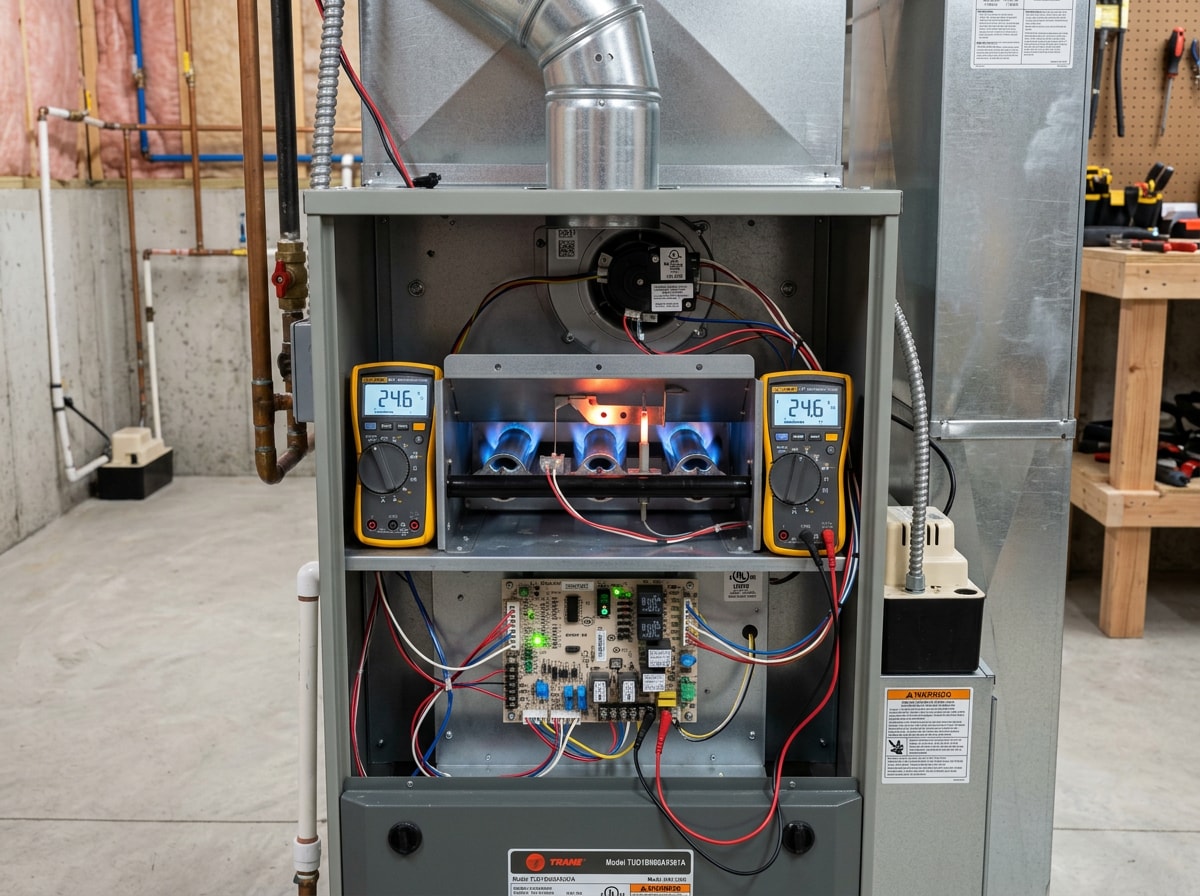
- No heat. Failed igniter, flame sensor, pressure switch, control board or thermostat wiring.
- No cooling. Capacitor failure, contactor failure, low refrigerant charge, frozen evaporator coil.
- Boiler and hydronic issues. Circulator pumps, zone valves, expansion tanks, low pressure, air-locked loops.
- Airflow complaints. Hot and cold rooms, weak registers, duct leakage, dirty blower wheels.
- Safety calls. Gas odor, cracked heat exchanger, a sounding carbon monoxide alarm, water pouring off a boiler.
- Planned work. Tune-ups, filter and humidifier service, equipment replacement, new installs.
In our own field experience across Thorp and Stanley, the three parts we replace most often on winter no-heat calls are flame sensors, hot surface igniters and pressure switches. None of the three is an expensive part. All three fail more often on systems that have not been cleaned in several years.
Start with furnace repair or air conditioning repair if you already know which side of the system is down. If you have radiators or in-floor heat instead of ducts, you want boiler repair.
Verify the Technician Before You Book (10 Minutes)
This is the step most homeowners skip, and it is the one that separates a clean install from a code problem you find out about three years later.
Wisconsin regulates the business, not the individual tech. State code requires that a person, entity or business hold a registration issued by the Department as a registered HVAC Contractor before installing or servicing HVAC equipment for others, with narrow exemptions for work on property you own and live in. Check the company's standing on the Wisconsin Department of Safety and Professional Services HVAC contractor page and its credential lookup.
Then check the federal piece. EPA regulations under Section 608 of the Clean Air Act require that technicians who maintain, service, repair or dispose of equipment that could release refrigerants be certified . Ask the tech for the card before any refrigerant work. Details are on the EPA Section 608 technician certification page.
Your ten-minute checklist:
- Search the company name in the DSPS credential lookup.
- Confirm the status reads active with a future expiration date.
- Ask for a certificate of insurance, sent by email, not described over the phone.
- Ask the assigned technician for EPA 608 certification if refrigerant is involved.
- Ask who pulls the permit on a replacement and who schedules the inspection.
A renewal that is "in process" is not verification. A contractor who hesitates on any of the five is telling you something.
What HVAC Service Costs Around Thorp
Pricing varies by equipment, access and time of day. The ranges below are commonly reported national figures for residential work, not a quote on your home. A written estimate is the only real number.
| Job | Typical cost range | What moves the price |
|---|---|---|
| Diagnostic or service call fee | $75 to $200 | After-hours and weekend premiums; fee often credited to the repair |
| Hourly repair labor | $75 to $150 per hour | Travel distance, rural access, parts availability |
| Furnace tune-up | $100 to $200 | Combustion analysis, cleaning depth, plan membership |
| Common furnace repair (igniter, flame sensor, capacitor) | $150 to $600 | Part cost, brand-specific control boards |
| AC repair (capacitor, contactor, leak search) | $150 to $800 | Refrigerant type and volume, coil access |
| Furnace replacement | $4,000 to $9,000 | Efficiency tier, venting changes, duct modifications |
| Full system replacement (furnace plus AC) | $7,000 to $14,000 | Equipment tier, electrical upgrades, line set replacement |
Two local notes. R-410A and older R-22 systems are not priced the same on a leak repair, because refrigerant cost differs sharply. And a rural driveway that a service van cannot reach in February adds time to the call, which adds labor.
Ready for an actual figure on your equipment? Get a free estimate and we will put the scope and the exclusions in writing.
Emergency or Can It Wait Until Monday?
Not every HVAC problem is an emergency, and paying an after-hours premium for a noisy blower wastes money.
Call immediately:
- No heat with outdoor temperatures below freezing
- Any gas odor
- A sounding carbon monoxide alarm
- Water actively leaking from a boiler or around a furnace
- Burning or electrical smell from the air handler
Can wait for a weekday appointment:
- One room warmer than the rest
- A thermostat screen that needs new batteries
- Rattling that started this week but the system still runs
- A clogged condensate drain you can see and clear
Carbon monoxide deserves its own rule. CO is an odorless, colorless gas that can cause sudden illness and death if inhaled, and it kills without warning. If an alarm sounds, get everyone outside first and call from outside. Do not troubleshoot the furnace. The CDC's carbon monoxide poisoning basics page is worth reading before heating season, not during an incident.
Repair or Replace: The Math
Once you are paying for a repair every season, the conversation changes. Use two filters.
The age filter. Gas furnaces commonly run 15 to 20 years, central air 12 to 15. Past those marks, parts availability gets thin and efficiency has already slipped.
The cost filter. Multiply the repair quote by the equipment's age in years. If the result exceeds roughly $5,000, replacement usually wins. A $600 repair on a 6-year-old furnace is $3,600, so fix it. The same repair on an 18-year-old furnace is $10,800, so price a replacement.
Three things override the math entirely:
- A cracked heat exchanger. That is a safety condemnation, not a repair decision.
- A compressor failure out of warranty on an aging condenser.
- A system that was sized wrong from the start and has never held the house evenly.
If the numbers point to new equipment, see furnace replacement or air conditioning replacement. For hot water systems, boiler replacement and hydronic heating installation are the right starting pages.
Sizing Equipment for a Central Wisconsin Winter
Equipment selection here is not the same as it is three states south. Winter design temperatures in this part of Wisconsin sit below zero, and that figure drives furnace sizing and heat pump backup strategy.
Ask any contractor quoting replacement equipment these four questions:
- What outdoor design temperature did you size for?
- Did you run a Manual J load calculation on this house, or use a rule of thumb?
- What is the backup heat strategy at 20 below?
- What static pressure did you measure in the existing duct system?
A contractor who answers all four with numbers has been in your basement doing work. One who answers with square footage alone has not.
On heat pumps: a cold climate model keeps producing heat at low outdoor temperatures, but rated capacity drops as the air gets colder, so backup heat carries the worst nights. A dual fuel setup with a gas furnace as backup tends to win where shoulder-season efficiency matters and the electrical panel has room. A straight high-efficiency gas furnace tends to win where fuel is already piped in, the panel is tight, or you want fewer moving parts.
Maintenance: What a Real Tune-Up Includes
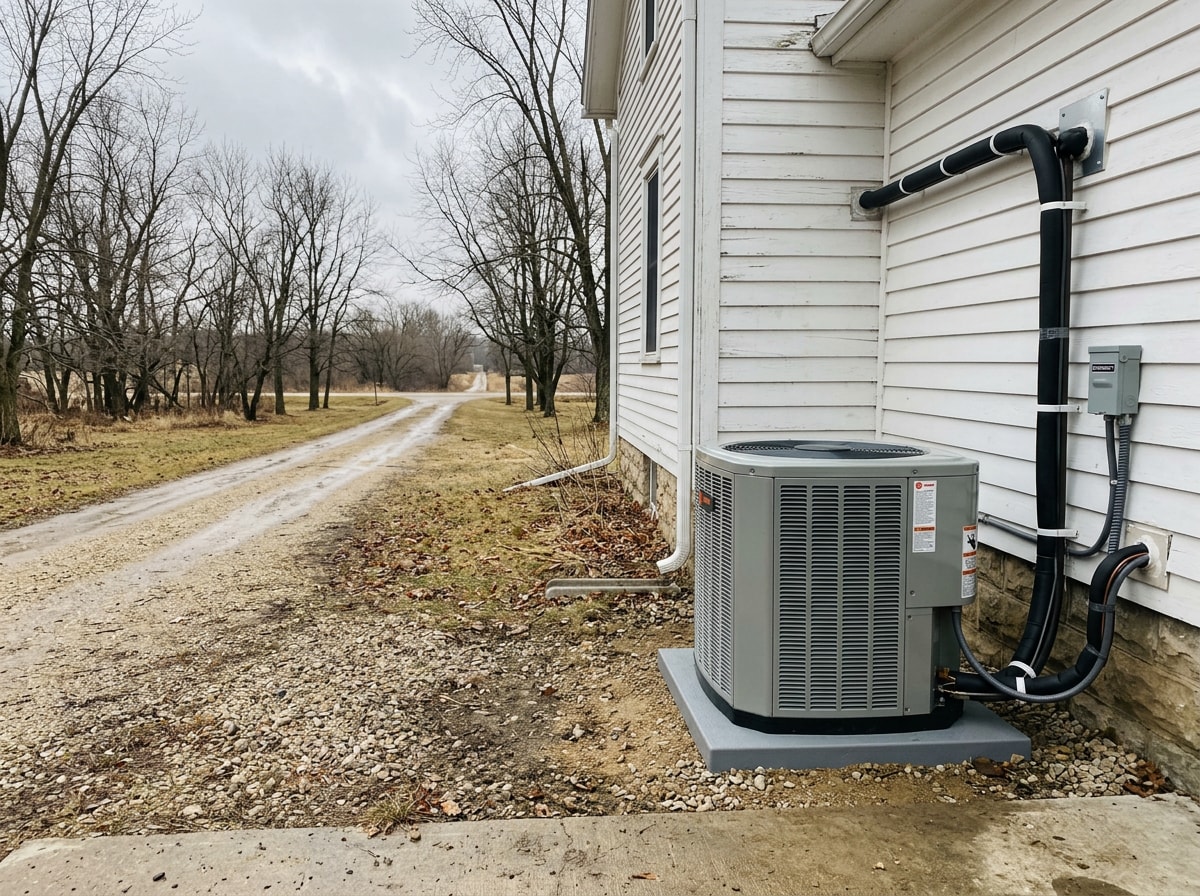
A tune-up that takes twenty minutes and produces a sticker is not a tune-up. Use a published standard as your benchmark. The ENERGY STAR maintenance checklist lists what a visit should actually cover, including tightening electrical connections and measuring voltage and current on motors, and checking the central air conditioner's refrigerant level . It also flags why this matters: airflow problems can reduce your system's efficiency by up to 15 percent .
On the heating side, the same checklist covers gas connections, gas pressure, burner combustion and the heat exchanger, because improperly operating gas connections are a fire hazard and a dirty burner or cracked heat exchanger causes improper burner operation .
Practical schedule for a Thorp home:
- Furnace tune-up in September or October, before the first hard freeze
- AC tune-up in April or May, before the first stretch of 85 degree days
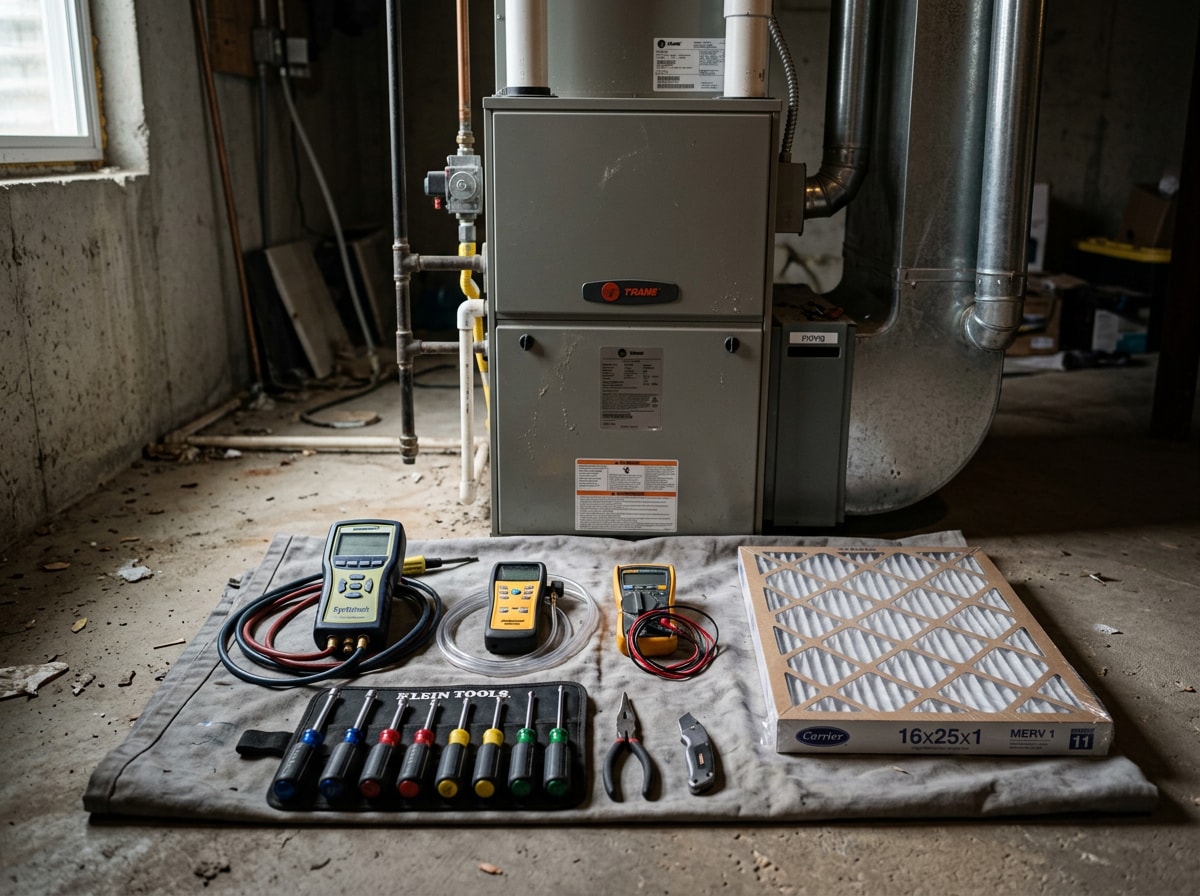
- Filter check monthly, replacement every one to three months depending on pets and dust
See what a visit covers on our HVAC maintenance page. If you are comparing written proposals from more than one company, our breakdown of what an HVAC quote should include shows the line items that separate a real bid from a napkin number.
Judging an Estimate Without Being an HVAC Expert
Most companies estimate non-emergency work at no charge. Whether it is free or fee-based, use the appointment to judge the process, not just the bottom line.
A proposal worth trusting names:
- Exact equipment model numbers, not just brand and tonnage
- The load calculation result the sizing came from
- What is included: permit, disposal, new line set, new thermostat, condensate work
- What is excluded: electrical upgrades, venting changes, duct repairs, asbestos or knob-and-tube surprises
- Labor warranty length separate from the manufacturer parts warranty
- Payment schedule and start window
Compare at least two bids on equivalent equipment. The cheapest quote is frequently the one covering the least work.
Why Thorp Homeowners Call Us
We would rather show credentials than adjectives. Our work is performed under an active DSPS HVAC contractor registration, every tech who touches refrigerant holds EPA 608 certification, and we will send both on request before the truck rolls.
We diagnose before we quote. We explain what failed and why, then write repair and replacement options side by side so you can compare them without pressure. Same-day service is offered when the schedule allows, and after-hours no-heat calls are answered in heating season.
You can see finished installs and service work on our projects page, browse the full HVAC contractor and heating contractor service lists, or start at our home page for an overview.
Service Area Around Thorp
We cover Thorp and the surrounding communities on both sides of the county line:
FAQ
How much do HVAC technicians charge per hour?
Commonly reported national ranges put residential HVAC labor at roughly $75 to $150 per hour, with a minimum service call or diagnostic fee of about $75 to $200. That diagnostic fee is often credited toward the repair. Ask before booking, since after-hours and weekend calls carry a premium.
How much does a full HVAC system replacement cost?
Nationally, a full furnace and air conditioner replacement commonly falls between $7,000 and $14,000, and a furnace alone between $4,000 and $9,000. Those are averages, not quotes. Efficiency tier, duct condition, venting changes and electrical work all move the figure.
Does an HVAC contractor need to be licensed in Wisconsin?
Yes, at the business level. State code requires a registration issued by the Department as a registered HVAC Contractor to install or service HVAC equipment for others. Individual technicians are not separately state-licensed for HVAC, so verify the company registration and ask the tech for EPA 608 certification.
How fast can a technician get to my house in Thorp?
For non-emergency work, most calls in the Thorp and Stanley area are scheduled within a few business days. No-heat calls in winter are triaged ahead of routine work, and same-day service is offered when the route allows.
How often should an HVAC system be serviced?
Once a year per system, which means a furnace tune-up in fall and an AC tune-up in spring. Contractors get busy once summer and winter arrive, so schedule the cooling checkup in spring and the heating checkup in fall. Filters need attention far more often, typically every one to three months.
Is it worth repairing a furnace that is 20 years old?
Usually not, unless the repair is minor. Multiply the repair cost by the unit's age; if the product clears roughly $5,000, put the money toward replacement. A cracked heat exchanger ends the discussion regardless of cost.
What is the difference between an HVAC technician and an HVAC contractor?
The contractor is the registered business that carries insurance, pulls permits and stands behind the warranty. The technician is the person performing the work, who needs EPA 608 certification to handle refrigerant. You verify both, separately.
Do you service boilers and in-floor heat, not just furnaces?
Yes. Hydronic systems are common in older Clark County farmhouses and additions. We handle boiler installation and hydronic heating repair along with forced-air work.
Written by the service team at Del Mar Air LLC, an HVAC contractor serving Thorp and Clark County with EPA 608 certified technicians. Questions about your system or a quote you received? Contact us and we will look at it with you.