Searching for plumbing heating air conditioning Stanley, WI usually means one of three bad mornings: no heat at ten below, no hot water, or an AC blowing warm in July. The useful question is not who answers the phone first, but who is licensed for the work you actually need and how fast they can reach your road. Here are the 2026 numbers, the credential checks and the repair-or-replace line that decides most of these calls.
What "Plumbing, Heating and Air Conditioning" Actually Covers Here
In rural Chippewa and Clark County, that phrase is a search habit more than a job description. Three separate trades sit behind it, and Wisconsin licenses them separately.
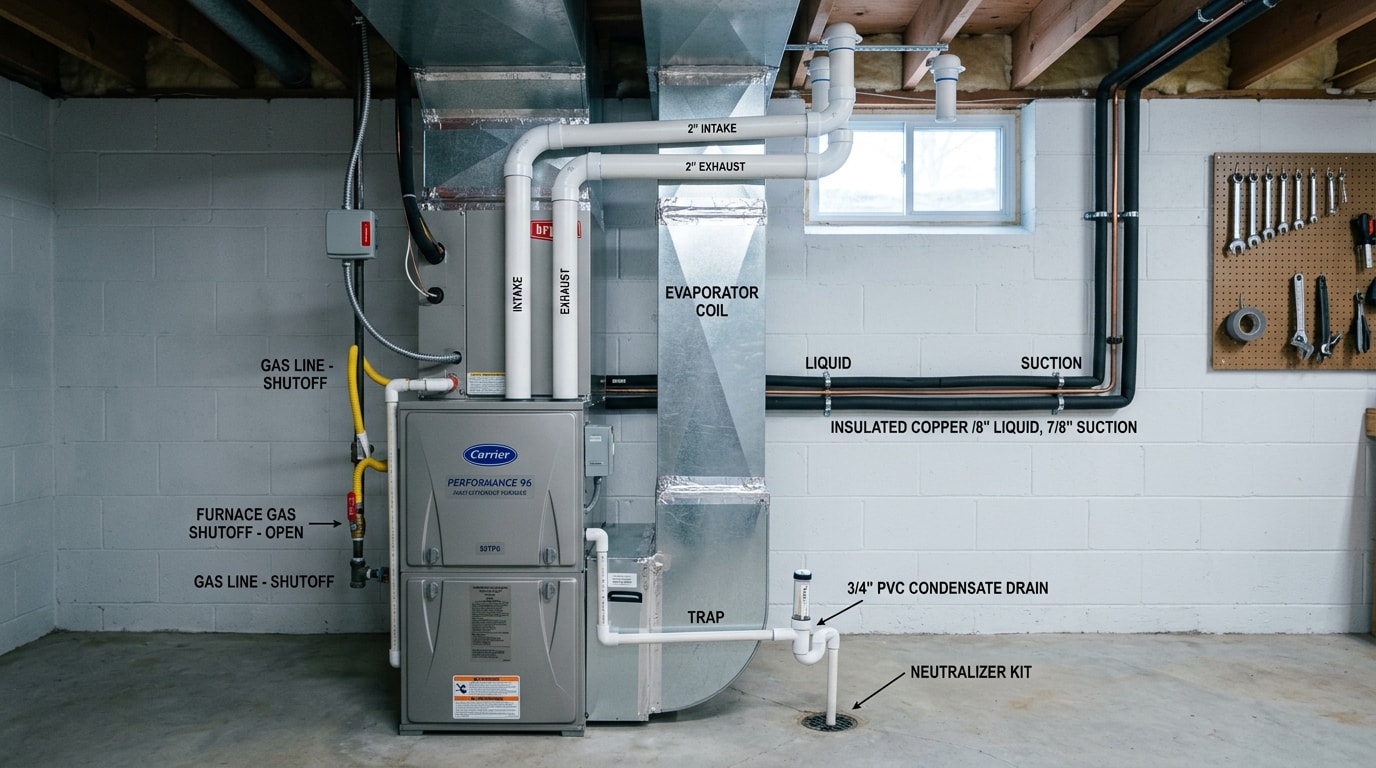
- Heating and cooling: furnaces, boilers, heat pumps, mini splits, ductwork, controls and refrigerant work.
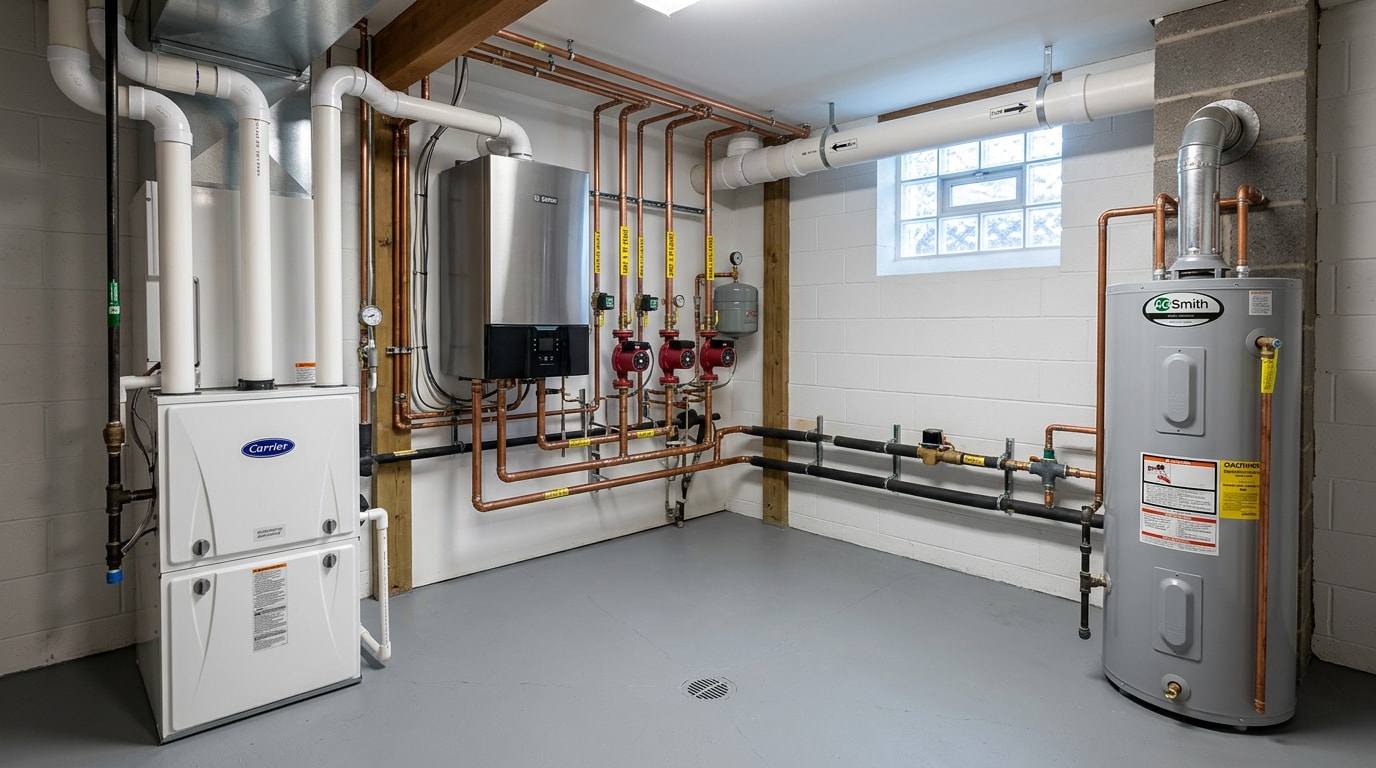
- Hydronic and water-side mechanical: boiler piping, circulators, expansion tanks, in-floor loops and indirect water heaters.
- Plumbing proper: drains, sewer laterals, fixtures, water heaters, well pumps and pressure tanks.
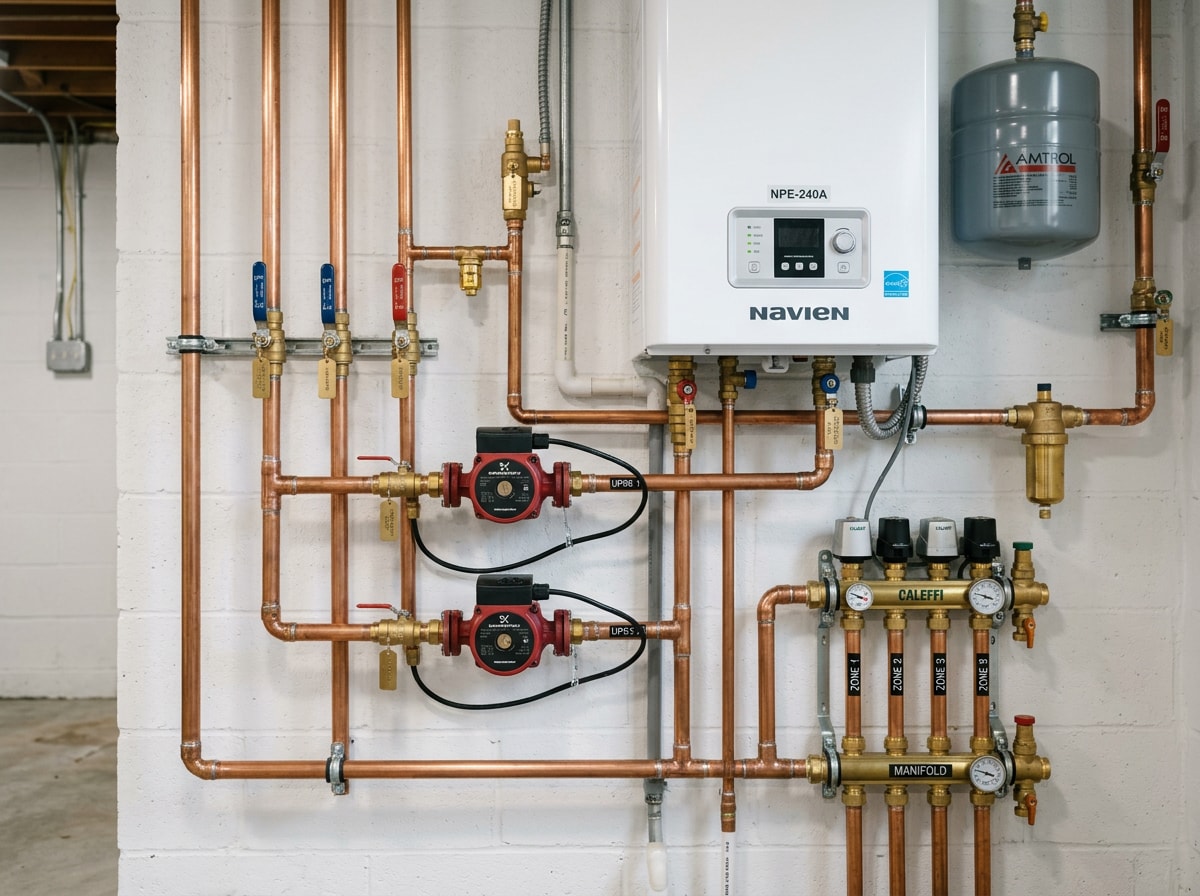
The overlap is the boiler room. A hydronic system is heating equipment connected to water piping, which is why a boiler supplier and an HVAC contractor are often the same call. Drain and sewer work is a different license and a different truck.
Our side of that list is the mechanical side: heating, cooling, boilers and hydronics across Stanley and the surrounding towns. Knowing which trade owns your problem before you dial saves a wasted trip charge.
2026 Price Ranges for Common Stanley Calls
These are typical installed or completed ranges for this market in 2026. Home size, access, fuel type and equipment tier move them. Nobody should quote you a final number over the phone.
| Work | Typical 2026 range | What drives the spread |
|---|---|---|
| Diagnostic or service call | $95 to $190 | Travel distance, after hours |
| Common furnace repair | $200 to $900 | Igniter and flame sensor low, control board or inducer high |
| Furnace replacement, 95%+ AFUE | $5,500 to $9,000 | Venting changes, duct transitions, LP vs. natural gas |
| Central AC repair | $200 to $850 | Capacitor low, compressor contactor and leak repair high |
| Central AC or heat pump replacement | $4,500 to $9,500 | Tonnage, line set reuse, coil match |
| Boiler replacement | $7,500 to $16,000 | Cast iron swap vs. full condensing conversion |
| Annual tune-up, per system | $130 to $250 | Single visit vs. membership pricing |
| Tank water heater replacement | $1,400 to $2,900 | Gas vs. electric, venting, code upgrades |
For a deeper look at how labor is billed in this area, see our Stanley HVAC hourly rate guide.
Ask for the price in writing before parts go in. A legitimate estimate names the part, the labor, the trip fee and the warranty term. Get a free estimate if you want those numbers for your specific system instead of a range.
Repair or Replace: The Line That Decides It
Replace when the equipment is near the end of its service life and the repair quote exceeds roughly half the price of new equipment. Below that line, repair almost always wins.
| Equipment | Typical service life | Start planning replacement |
|---|---|---|
| Gas furnace | 15 to 20 years | 15+ years |
| Boiler | 20 to 30 years | 20+ years |
| Central AC or heat pump | 12 to 15 years | 12+ years |
| Tank water heater | 8 to 12 years | 10+ years |
A worked example. Repairing a 17-year-old 80% AFUE furnace might run $900 to $1,400 and buy perhaps three more seasons. A high efficiency furnace replacement at $5,500 to $9,000 installed changes your fuel burn for the next 15. The ENERGY STAR furnace criteria show where certified northern-climate gas models now sit on AFUE, which is the number to compare against whatever is in your basement.
Two conditions override the math entirely: a cracked heat exchanger, and a failed compressor on an R-22 system. Both mean replacement planning starts the same day.
Heating: Furnaces, Boilers and In-Floor Heat
Heating work splits into three modes. Fix it, maintain it, or replace it.
Around Stanley the installed base is mixed: forced-air gas and LP furnaces, cast iron and condensing boilers, wood and outdoor boilers tied into hydronic loops, plus a growing number of cold climate heat pumps. A contractor who only knows forced air is half useful here.
On a no-heat call, the triage order is indoor temperature first, diagnosis second. Same-day on a January call should mean heat running that day, even if a special-order part finishes the repair later in the week.
One pattern worth knowing: on the coldest mornings, a surprising share of LP no-heat calls are not dead furnaces at all. They are low tank levels, regulator icing or a pressure drop that drops the burner out on safety. Check your tank gauge before you book, because that one look can save a service call.
Common services:
- Furnace repair for ignition faults, short cycling and blower problems
- Boiler repair for circulators, zone valves and low-pressure lockouts
- Hydronic heating installation for basements and shops
- Emergency furnace service when the house is dropping overnight
In-Floor Radiant Heat
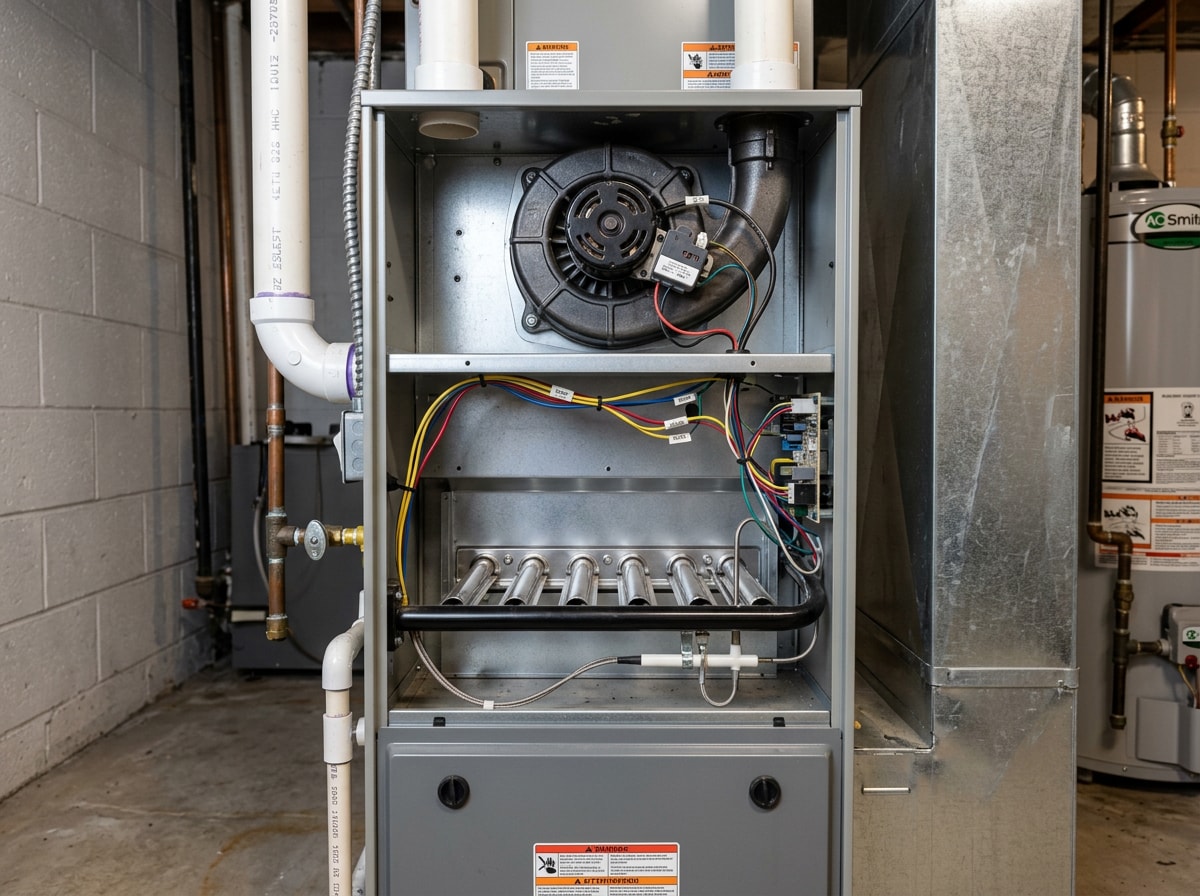
Radiant hydronic floors make sense for two jobs here: finished basements and detached shops or pole barns, where warm concrete beats blowing air around a 14-foot ceiling.
Tubing laid before a slab pour is cheap. The manifold and heat source carry the cost. Retrofitting radiant under an existing floor costs far more, so decide on shop heat before the concrete truck shows up.
Air Conditioning and Mini Splits
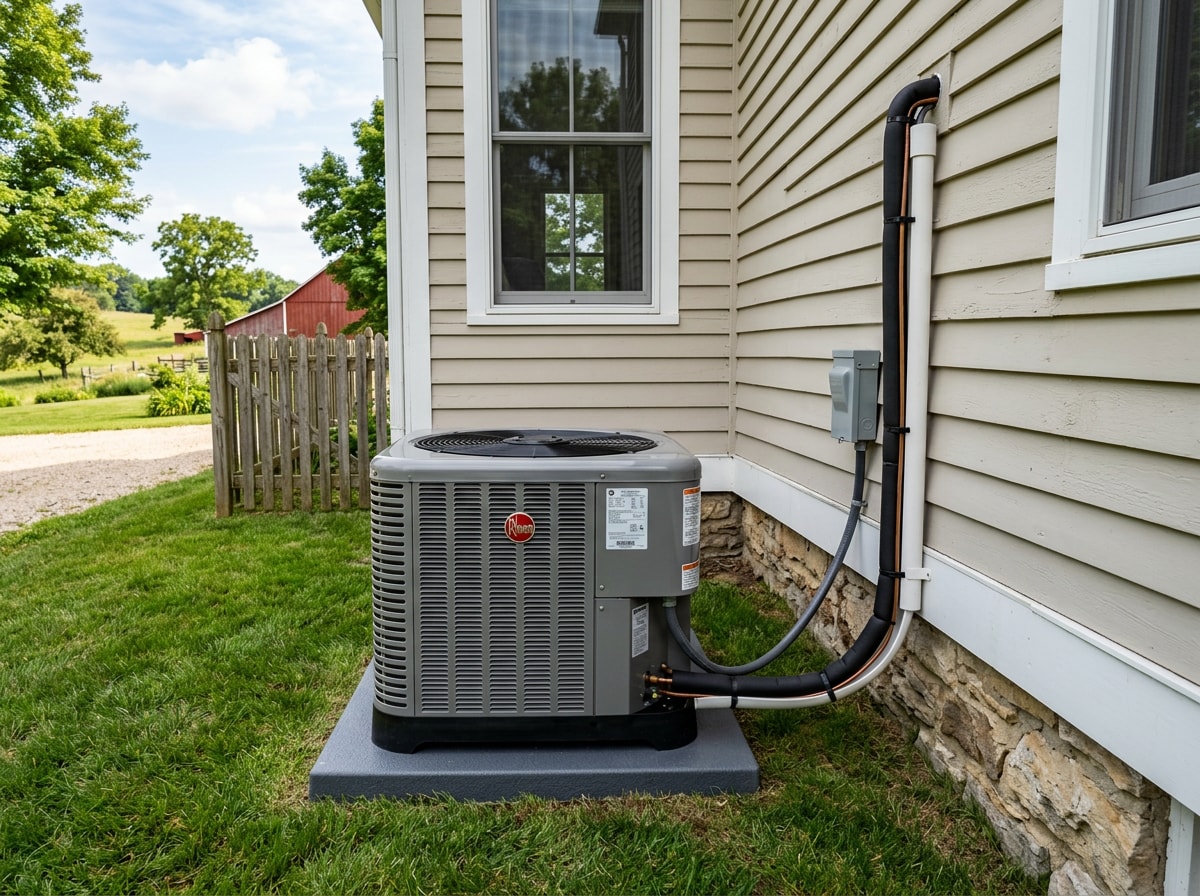
Cooling work covers repair, seasonal tune-ups and installation. Wisconsin's cooling season is short and front-loaded, which compresses the schedule.
The spring tune-up calendar here fills within about two weeks of the first warm stretch. If you want an air conditioning replacement or a new system, booking before Memorial Day is far easier than booking after it.
- Air conditioning system repair for weak cooling, icing and electrical faults
- A/C system maintenance for coil cleaning, charge checks and drain clearing
- HVAC system installation for full changeouts and additions
- Emergency air conditioning service during heat advisories
Ductless mini splits earn their keep on additions, garages, upstairs bedrooms and older farmhouses with no duct path. Cold climate models hold useful heating capacity well below zero, but most installs around here still keep a backup heat source for the worst week of the winter.
Plumbing-Side Issues on Rural Properties
The plumbing calls that pair with heating problems are predictable: no hot water, frozen or burst lines in an unheated crawlspace, failing fixtures, slow drains and main line backups.
Private wells add pump and pressure tank faults. Septic systems raise the stakes on any main line issue. If your water heater and your boiler share a flue or a mechanical room, a change to one affects the other, which is why venting gets inspected during any heating changeout.
Water efficiency is worth a line here. The EPA reports that household leaks waste close to a trillion gallons nationwide each year, and its WaterSense Fix a Leak Week page lays out the two-hour meter test that finds most of them. Fixing a silent toilet leak is cheaper than any service call in the table above.
Maintenance: What It Actually Prevents
An annual inspection pays off four ways.
- Fewer midwinter breakdowns, because wear shows up in October instead of January
- Lower fuel use from clean burners, correct airflow and proper charge
- Warranty compliance, since most manufacturers require documented annual service
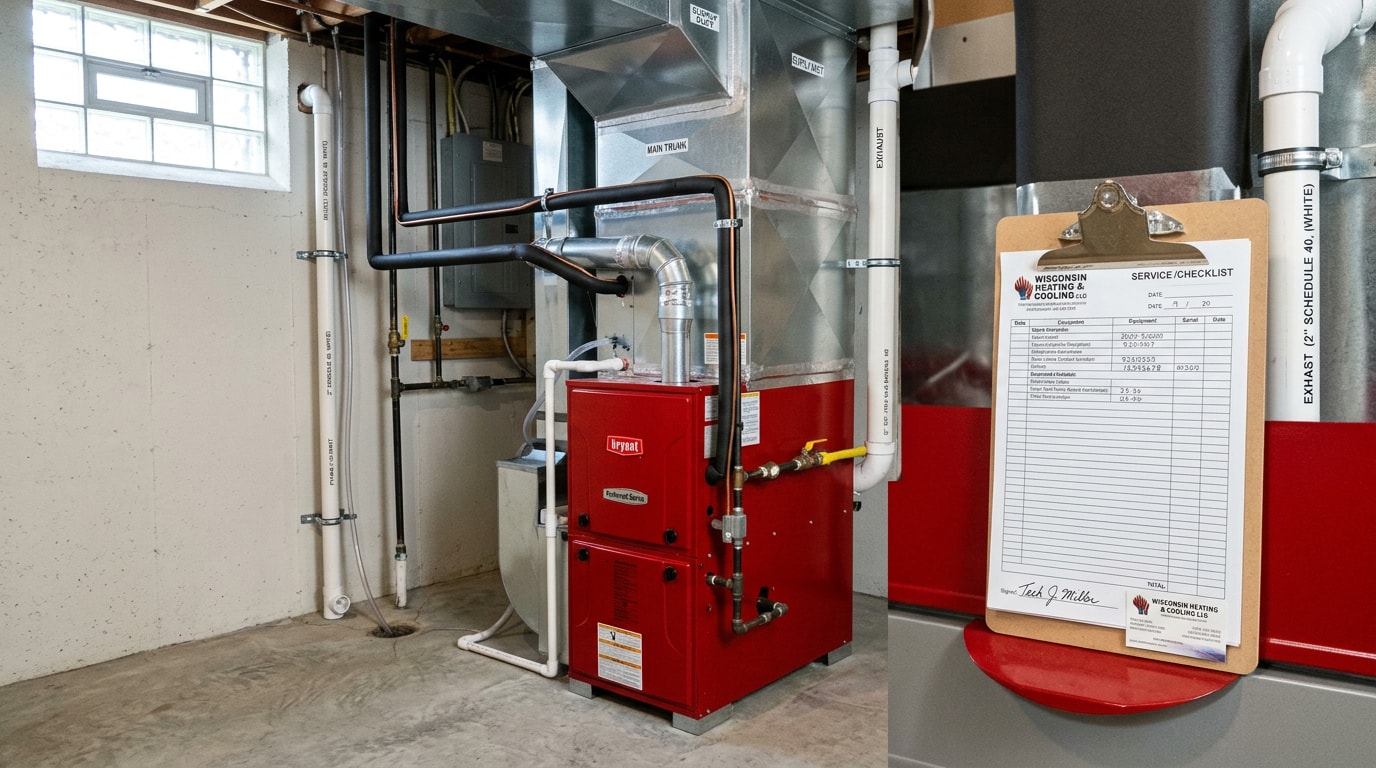
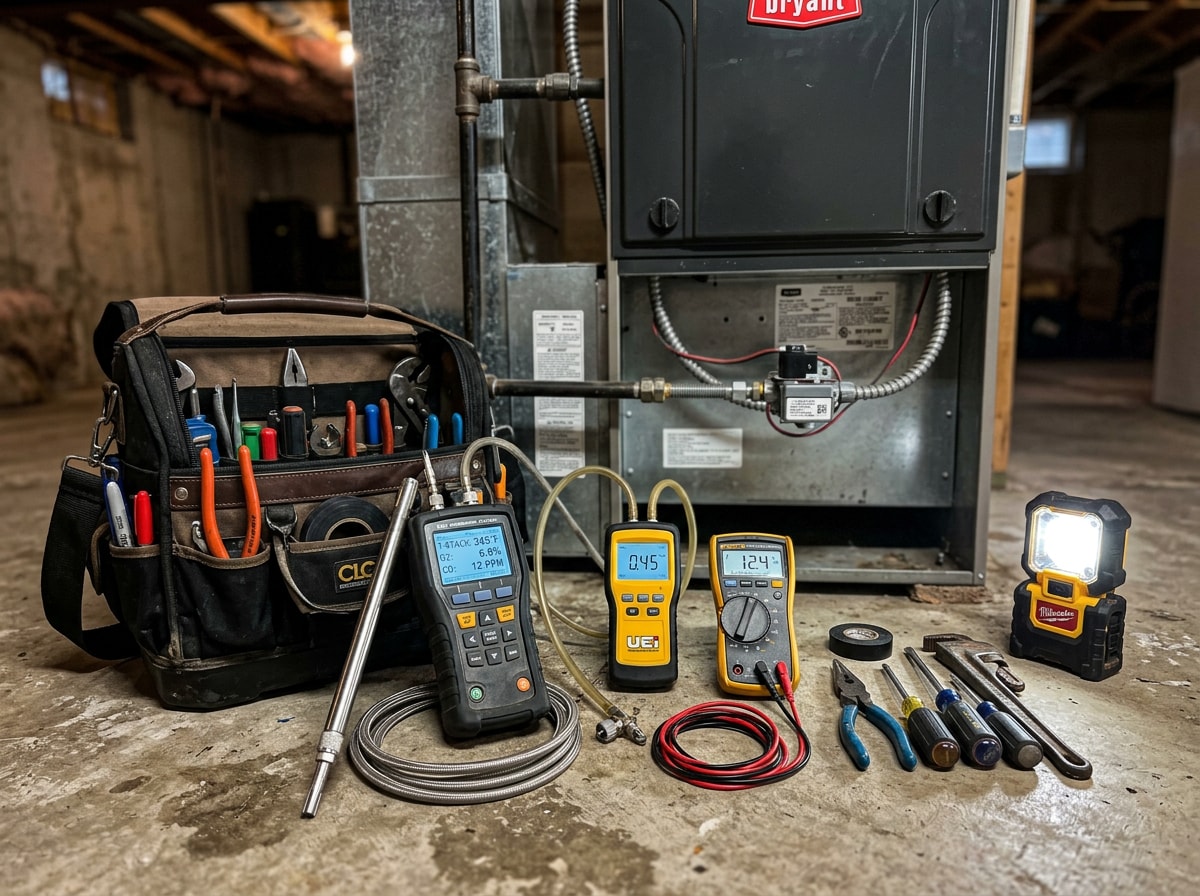
- Combustion safety, including heat exchanger inspection and carbon monoxide testing
That last one is not theoretical in a tight Wisconsin house. Book heating system maintenance in September and cooling in April, before the rush compresses the schedule. You can see examples of completed work on our projects page.
Verify the License Before You Sign
Wisconsin regulates this work, and the verification takes about two minutes.
Ask for four things:
- A WI Master Plumber credential for plumbing work
- A WI HVAC contractor credential for heating and cooling work
- EPA Section 608 certification for anyone touching refrigerant
- A WI Pump Installer license if you are on a private well
Then ask for a certificate of liability insurance naming the company, not just a policy number read aloud.
Take the credential number off the estimate and run it through the Wisconsin DSPS credential search. It returns status and expiration. A contractor who hesitates to hand over a number is telling you something.
Service Area and Realistic Response Times
Coverage from Stanley reaches the surrounding small towns and both counties, but drive time is real and worth asking about.
Routine calls are typically scheduled within a day or two outside peak weeks. Ask one specific question before you book: does 24/7 emergency coverage extend to your town, or only to the closer Chippewa County addresses? The answer varies by company and nobody volunteers it.
Learn more about our full range of heating and cooling work on the Del Mar Air homepage, or request a free estimate and we will confirm coverage for your address.
FAQ
Do I need separate plumbing and HVAC contractors in Stanley?
Often yes, because Wisconsin licenses the trades separately. Heating, cooling, boiler and hydronic work sits with a licensed HVAC and boiler contractor. Drain cleaning, sewer laterals and fixture work sit with a licensed plumber. Ask which license covers your job before scheduling.
How much is a service call in Stanley, WI in 2026?
Expect roughly $95 to $190 for a standard diagnostic visit, with after-hours and long-drive calls at the top of that range. Many companies apply the diagnostic fee toward the repair if you approve the work the same visit.
Do you offer emergency HVAC service?
Yes. An emergency means no heat in winter, no cooling during dangerous heat, or active water damage. After-hours calls route to an on-call technician. While you wait on a no-heat call, close off unused rooms, open sink cabinets on exterior walls and let a faucet drip.
What are the signs my AC needs repair?
Warm air at the vents, weak airflow, uneven room temperatures, a sharp jump in the electric bill, or a unit that runs constantly without satisfying the thermostat. Shut the system off immediately for grinding or screeching noises, or if you see ice on the line set or signs of a refrigerant leak.
How often should heating and cooling equipment be serviced?
Once a year per system, minimum. Furnaces and boilers in fall, air conditioners and heat pumps in spring. Heat pumps that run year round should be checked twice, since they carry both the heating and the cooling load.
Are ductless mini splits a good fit for a Wisconsin home?
They work well for additions, garages, rooms without ductwork and stubborn hot or cold spots. Cold climate models keep meaningful capacity below zero, but plan on a supplemental heat source for the coldest stretch of a Clark or Chippewa County winter.
How long does a furnace replacement take?
Most straightforward changeouts are a single day. Add time when venting has to be rerouted, when ductwork needs transitions, or when a system is converting between fuel types or from a furnace to a boiler.