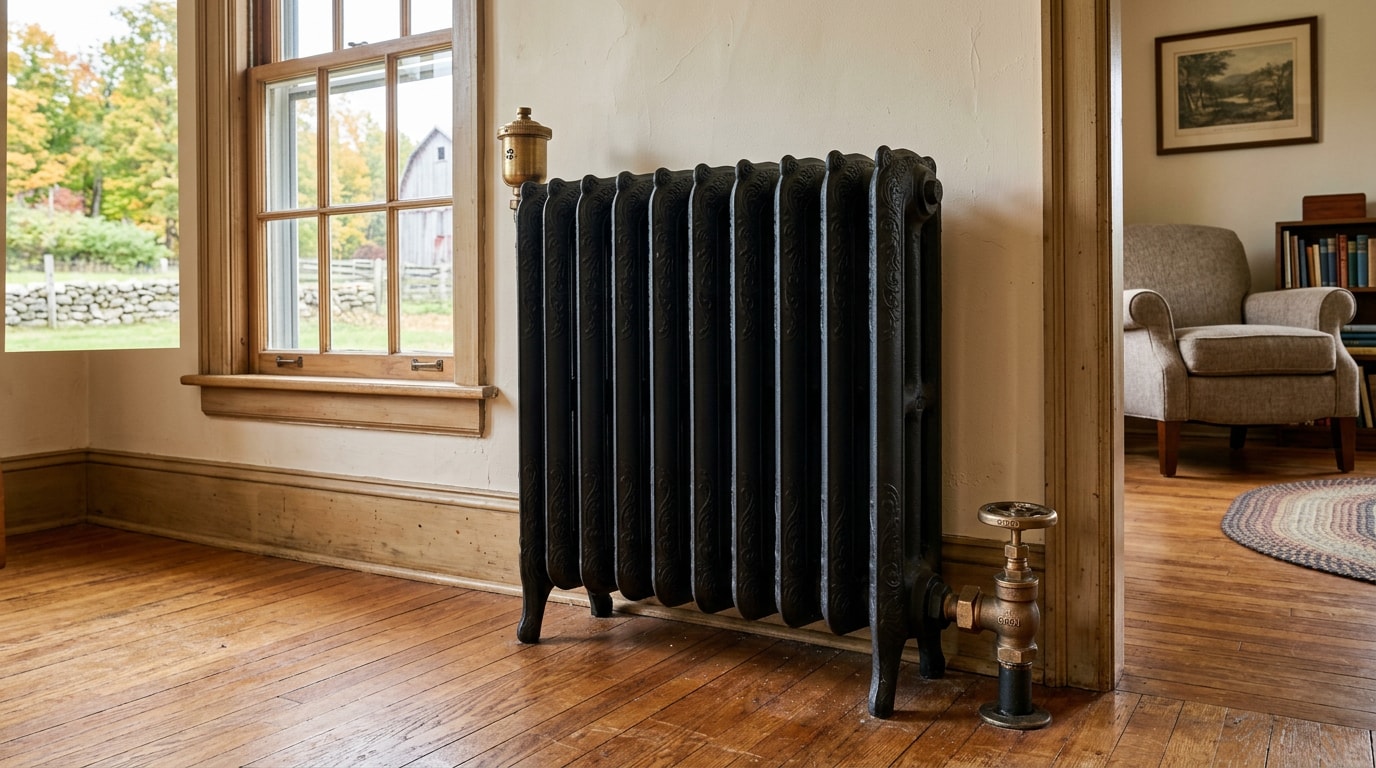
Steam radiators in Chippewa County, WI still heat a large share of the area's farmhouses, Victorians, and downtown Chippewa Falls two-flats, often running on the same vents and valves installed before World War II. Hissing, knocking, cold spots, and a puddle under one radiator almost always trace back to the same short list of causes: a clogged vent, a stuck valve, or pressure that's out of range. This guide walks through what's actually wrong, what you can fix yourself, and when a repair has crossed into replace-it territory.
Common Steam Radiator Problems in Older Chippewa County Homes
In the century-old two-flats around downtown Chippewa Falls, the same culprit shows up over and over: a vent that's been painted over one too many times and can no longer breathe.
Watch for these signs:
- Hissing or whistling from the vent
- Knocking or banging pipes, sometimes called steam hammer
- One room staying cold while others heat fine
- A puddle or rust stain at the base of a radiator
- A radiator that takes much longer than usual to get hot
Most of these point back to a vent, a valve, or boiler pressure, which is exactly where the maintenance steps below start.
How to Maintain a Steam Radiator Yourself
Steam radiators carry a lot of the heating load in these older homes, but they only keep performing well with regular upkeep. Skip maintenance and you'll eventually see leaks, weak heat output, and climbing fuel bills.
Clean or Replace the Air Vent
A clogged air vent is the single most common cause of an underperforming steam radiator. Cleaning or swapping it is usually a quick fix.
Steam radiator vents work differently than hot-water bleeder valves. They release air automatically as steam fills the system, then seal shut once steam reaches them. There's no manual bleeding involved, just a functioning vent.
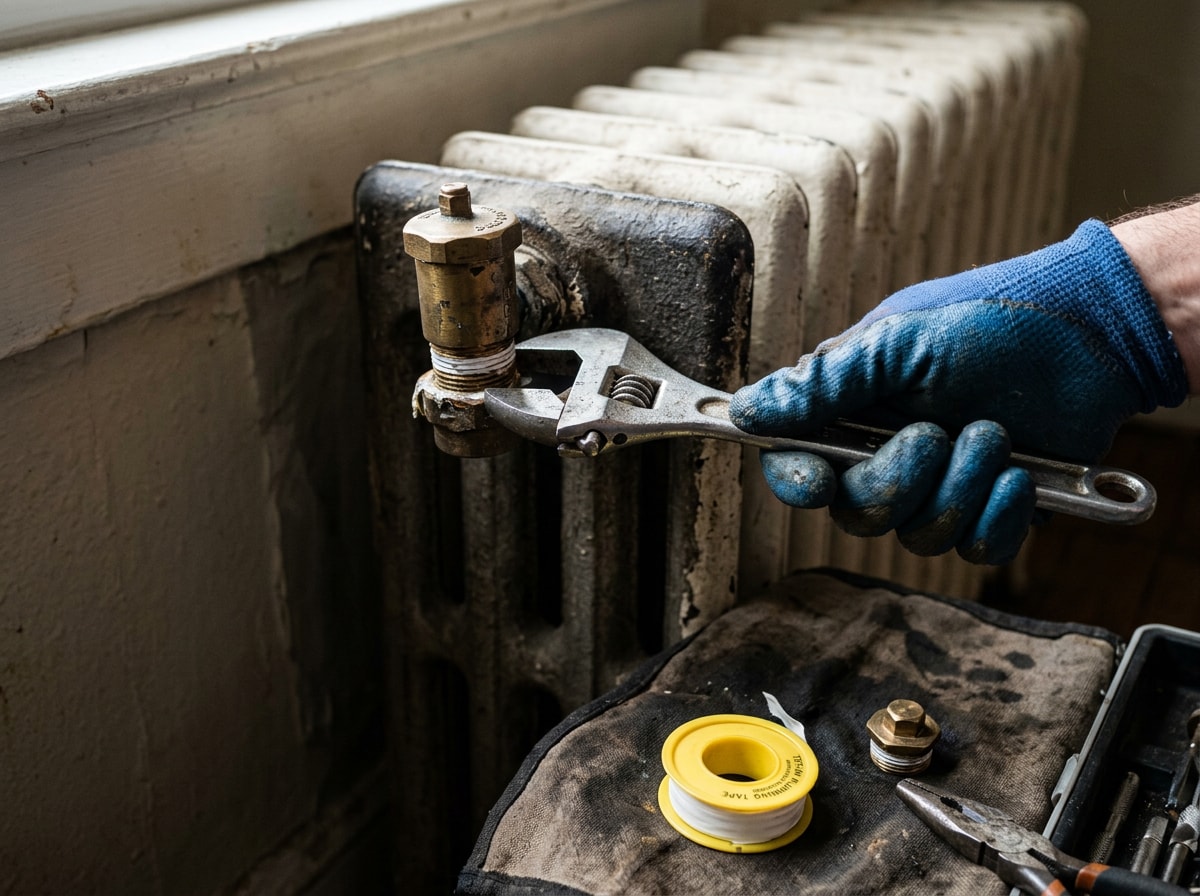
To replace one:
- Shut the system down at the thermostat and let it cool.
- Locate the vent, roughly halfway down the side opposite the inlet valve.
- Twist the old vent counterclockwise to remove it.
- Wrap the new vent's threads with Teflon tape.
- Thread the new vent in hand-tight, keeping it pointed straight up.
- Restore power and confirm the radiator heats evenly on the next cycle.
Fix a Leaking Valve or Radiator Body
Walk the length of every supply pipe periodically and check for cracks, corrosion, or damp spots. A small puddle at the base of a radiator is the telltale early sign of a leak.
Most leaks start at the valve stem or the vent connection. If the valve stem is dripping, tightening the packing nut often solves it; if that doesn't work, repacking the stem with fresh graphite packing usually will. For a minor crack or pinhole in the radiator body itself, a radiator-rated sealant can patch things temporarily, but let it cure fully before firing the system back up.
Check and Correct Boiler Pressure
This is where a lot of homeowner guides get it wrong, so it's worth getting exact. A residential steam system is a low-pressure system by federal definition: a low pressure steam boiler operates at or below 15 pounds per square inch gauge (psig) steam pressure . In practice, most home steam boilers are set to cycle far below that ceiling, often in the range of 1 to 2 psi, since that's all the pressure it takes to push steam through the mains and into the radiators. Every steam boiler is required to carry a working pressure gauge so you can monitor this: every steam boiler shall have a water-gauge glass and a pressure gauge, and the pressure gauge shall indicate the pressure within the normal range .
If your gauge is reading well above that low range, the pressuretrol likely needs adjustment or replacement; running high pressure strains joints, wastes fuel, and speeds up vent failure. If you're unsure what your system should read, our Boiler System Maintenance team can check it during a routine visit.
Tools You'll Need Before You Start
- Adjustable wrench and a large pipe wrench
- Protective cloth or rag (pipes and valves can still be hot)
- Graphite packing material
- Replacement air vent
- Screwdriver
- Teflon tape
If a job calls for anything beyond this list, or involves draining the boiler, it's usually worth bringing in a professional from our Boiler Repair team.
Repair or Replace? How to Decide
Repair handles most radiator problems. Full replacement really only makes sense for leaks that don't originate at the valve or vent, or for cast iron units with visible corrosion, warping, or repeated failures at the same spot.
Exact pricing depends on radiator age, accessibility, and whether parts need custom fitting, but these ranges reflect what Chippewa County homeowners typically see:
| Service | Typical Cost Range | Best For |
|---|---|---|
| Air vent replacement (DIY parts) | $15 to $40 per vent | Minor hissing, uneven heat, one cold radiator |
| Professional valve repack or vent swap | $150 to $300 | Persistent leaks, stuck valves, rental units |
| Full cast iron radiator replacement | $400 to $1,200 installed | Cracked sections, rust-through, repeated leaks |
| Pressuretrol service or replacement | $200 to $450 | High or erratic pressure, frequent short-cycling |
A well-maintained cast iron radiator can run for decades. Once structural rust sets in, replacement typically costs less over time than chasing repeated leaks, and our Boiler Replacement page covers what a full swap involves.
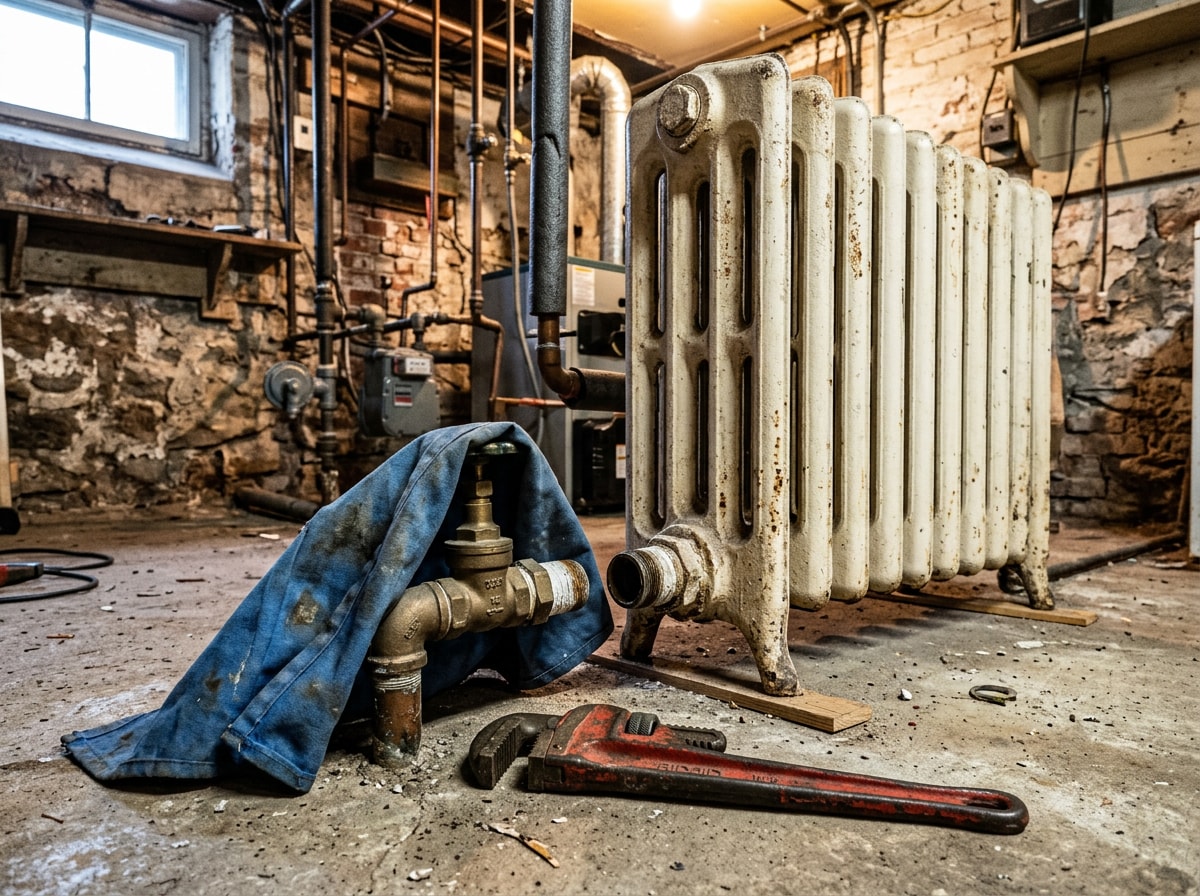
How to Replace a Steam Radiator: 6 Steps
- Shut off the boiler so no steam is moving through the system, and let everything cool.
- Close the supply valve feeding the radiator; it may still be warm, so use a cloth.
- Loosen the union nut connecting the radiator to the valve with a large pipe wrench, turning counterclockwise.
- Lift the radiator free once it's fully disconnected. Cast iron units are heavy; plan for two people.
- Size the replacement to match the room's existing radiators. An undersized radiator retains condensate, which blocks steam flow and causes the uneven-heat problems covered earlier.
- Reconnect the valve, open it, restart the boiler, and confirm the new vent cycles correctly on the first heat call.
When to Call a Chippewa County Heating Pro
Vent swaps and minor packing repairs are reasonable DIY jobs. Anything involving the boiler itself, a full radiator swap, or a system that's knocking despite a clean vent and correct pressure is worth a professional look. General maintenance also matters more than most homeowners expect: keeping equipment tuned up is one of the most effective ways to protect performance and avoid surprise failures, which is why replacing your old heating and cooling equipment with new, energy-efficient models is a great start, but to make sure that you get the best performance, the new equipment must be properly installed , the same way it was when the system was new.
Del-Mar Air's technicians service steam and hydronic systems throughout Chippewa County, WI, including Heating System Repair for radiators, valves, and boiler controls. If you need a quick turn on a seasonal issue, our guide to HVAC rental options for temporary heating in Chippewa County covers what's available while repairs are scheduled. You can see the full range of what we handle on the Del-Mar Air homepage, or get a free estimate for a radiator or boiler inspection.
FAQ
Why is my steam radiator knocking or banging?
Knocking or banging almost always means trapped water or air somewhere in the system. When either gets stuck, steam can't move freely through the pipe, and the resulting pressure buildup produces a loud knock, sometimes called steam hammer, as it forces its way through.
Why is my steam radiator not heating up completely?
A radiator that stays cold or only partially heats usually has a clogged air vent. This is especially common in one-pipe steam systems, which rely on the vent to bleed trapped air as steam enters and then seal automatically once steam reaches it.
What pressure should my steam boiler run at?
Low-pressure residential steam boilers are built to run at or below 15 psig, but most home systems are set far lower, typically 1 to 2 psi, which is plenty to push steam through the mains. If your gauge consistently reads higher, have the pressuretrol checked.
How long do steam radiators last?
A cast iron radiator in a properly maintained system can run 20 to 25 years between major issues. In systems where maintenance has been neglected, corrosion and vent failure accelerate wear, and realistic lifespan can drop well below that.
Is it cheaper to repair or replace a steam radiator?
Repair is almost always cheaper for vent, valve, and minor leak issues. Replacement becomes the better value once a radiator has structural rust, repeated leaks at new spots, or cracked sections, since those problems tend to recur after repair.